SMALL CRAFT, BIG ADVENTURE
Few forms of boating pack as much versatility, performance and outright fun into such a compact package as the modern personal watercraft. From high-performance machines that deliver serious thrills to comfortable three-seaters built for fishing, touring and family adventures, today’s PWC is a very different proposition from the simple stand-up machines that first introduced many New Zealanders and Australians to the sport.
Personal watercraft have come a long way. What was once seen primarily as a high-speed recreational toy has become one of the most versatile categories on the water. Modern PWCs can be sports machines, fishing platforms, touring craft, family runabouts and even long-distance adventure boats, sometimes all rolled into one.
That versatility suits New Zealand and Australian waterways particularly well.
With thousands of kilometres of coastline, countless lakes, sheltered harbours and waterways to explore, we have no shortage of places to launch a PWC. Whether it is an early morning fishing mission into the Hauraki Gulf, exploring the Bay of Islands, towing the kids around a lake, heading away with a group of mates or simply enjoying an afternoon blast around the harbour, few craft make getting onto the water quite so straightforward.
Accessibility has always been one of the PWC’s greatest strengths.
Compared with many conventional boats, a PWC requires relatively little storage space, is easily trailerable behind a wide range of vehicles, and can generally be launched and retrieved quickly. No lengthy preparation is required before heading away for the weekend and, once at the ramp, getting afloat can be refreshingly simple.
For anyone with limited room at home, or those who simply don’t want the commitment of owning a larger boat, that compact footprint is a major draw.
Yet small certainly does not mean basic.
The technology found aboard the latest generation of PWCs would have been almost unimaginable only a couple of decades ago. Sophisticated electronic controls, large colour displays, multiple riding modes, cruise control, braking and reverse systems, Bluetooth connectivity and integrated navigation are increasingly part of the equation. Hull design has also evolved considerably, improving stability, handling and comfort while allowing manufacturers to develop craft aimed at very different types of riders.
At one end of the market are lightweight, high-performance models designed to deliver maximum excitement. Their acceleration, agility and cornering ability can provide the sort of adrenaline rush few other forms of boating can match. But riders who want to go further are increasingly driving the category’s growth.
Larger three-seat PWCs offer impressive stability and comfort, with generous storage and fuel capacities making longer coastal journeys increasingly realistic. Add accessories such as navigation equipment, additional storage, coolers and purpose-designed luggage systems, and the humble jet ski becomes a surprisingly capable touring machine.
Fishing has also changed how many New Zealanders view personal watercraft. A PWC can give anglers quick access to fishing grounds while requiring far less investment, storage space, and preparation than a larger trailer boat. Fishing-oriented models and accessories now offer rod holders, fishfinders, GPS units, chilly bins, and extra fuel capacity, letting owners configure their craft around how they fish. Mobility is another advantage. A PWC’s shallow draft and jet propulsion allow it to explore areas conventional propeller-driven craft may struggle to reach, while its compact dimensions make moving from one fishing spot to another effortless.
Then there’s the fun factor.
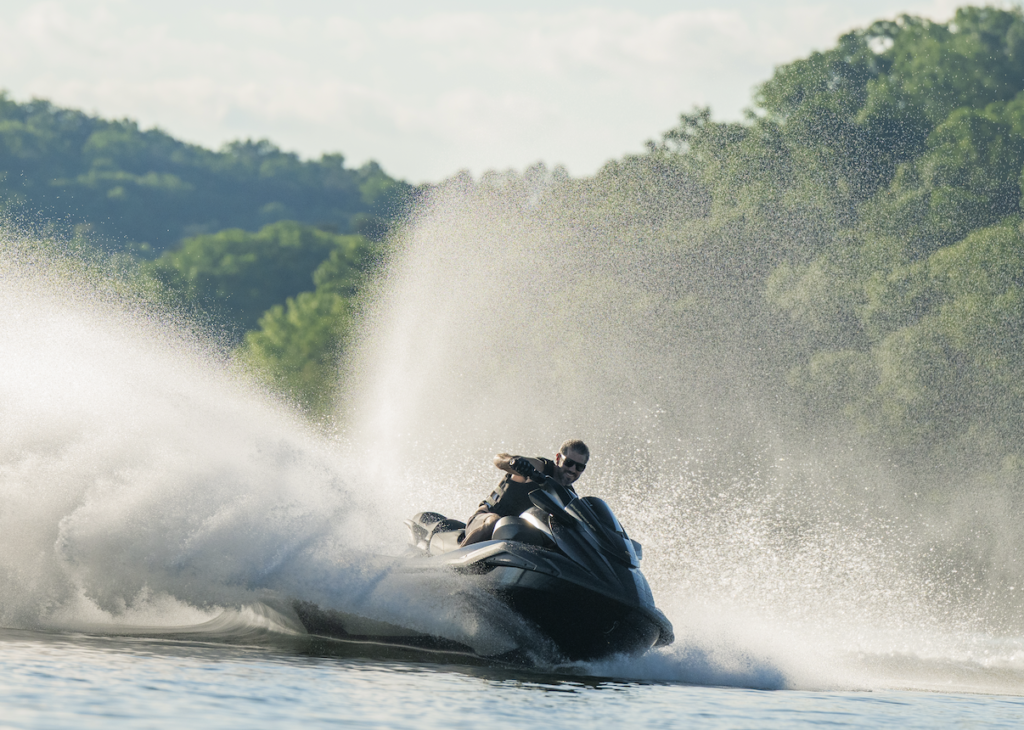
A PWC offers a very immediate connection with the water. There is little between the rider, the machine and the environment around them, and that is a large part of the appeal. Acceleration is instantaneous, handling is responsive, and even relatively modest speeds can feel exciting when you are sitting only centimetres above the water.
For families, that same craft can spend the morning towing a biscuit or exploring a bay before taking Mum or Dad out for an afternoon cruise. Some models are deliberately positioned as comfortable family machines rather than outright performance craft, delivering predictable handling, seating for up to three people and plenty of onboard storage.
The ownership equation can also be attractive.
Although increasingly sophisticated, PWCs remain relatively simple compared with larger boats. No propeller hangs beneath the hull, no large cabin or extensive onboard systems to maintain, and cleaning down after a day on the water is generally straightforward.
Modern four-stroke engines have also made today’s machines considerably more refined than earlier generations, with improvements in fuel economy, emissions, noise, and reliability broadening their appeal.
Safety technology has progressed alongside performance. Modern braking and reverse systems give riders far greater control around ramps, beaches and marinas, while electronic learner keys or adjustable riding modes available on some models can reduce performance for less experienced riders.
For 2027, the evolution continues.
Rather than competing solely on horsepower and top speed, manufacturers are now focusing on making PWCs easier to use, more comfortable, and more versatile. Electronics are becoming smarter, displays are getting larger, and accessories are increasingly integrated into the craft itself.
In New Zealand, the market is led by three names synonymous with personal watercraft: Yamaha, Sea-Doo and Kawasaki. Each brings its own approach to performance, comfort, technology and versatility, and each offers a range designed to appeal to very different types of riders.
From Yamaha’s broad recreational and performance line-up to Sea-Doo’s strong emphasis on innovation and lifestyle versatility, and Kawasaki’s long-standing performance heritage, buyers heading into 2027 have plenty of choice.
That expanding choice is perhaps the best indication of just how far personal watercraft have come. They remain one of the most exciting ways to spend a day on the water, but they have also matured into genuine all-round recreational craft capable of doing far more than simply racing from one end of the bay to the other.
Whether your idea of a perfect day involves carving through a set of turns, chasing snapper at first light, exploring a remote stretch of coastline or taking the family away for an afternoon adventure, there is almost certainly a PWC designed to do it.
Over the following pages, we take a closer look at what Yamaha, Sea-Doo and Kawasaki are bringing to the New Zealand market for 2027.
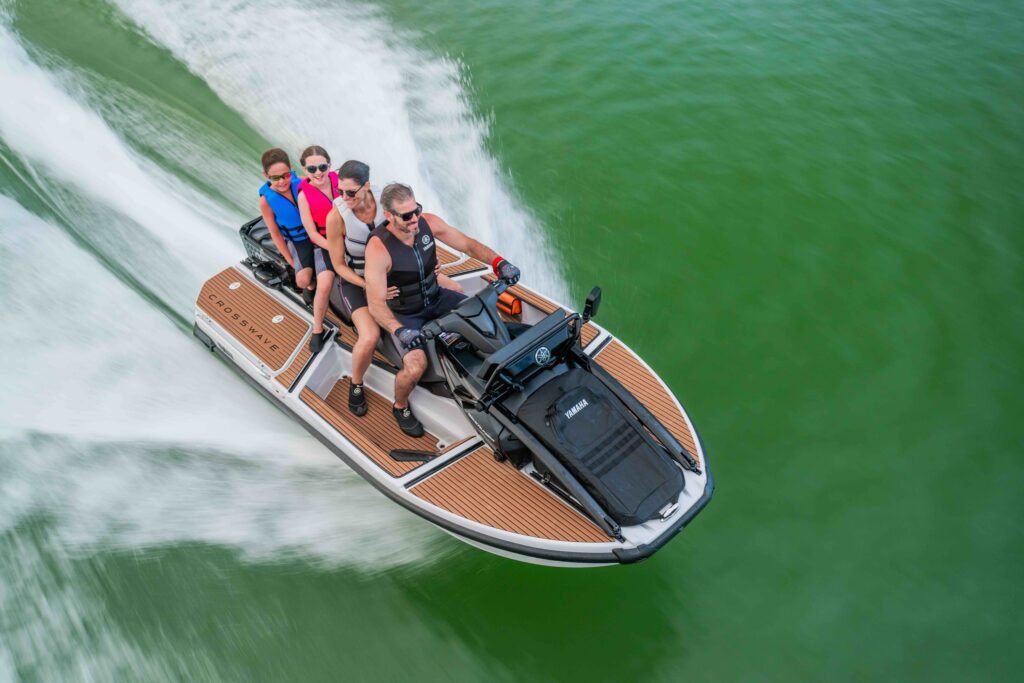
YAMAHA WAVERUNNER: MORE WAYS TO ENJOY THE WATER
Yamaha heads into the 2026/27 boating season with a WaveRunner offering spanning affordable family fun, freestyle riding, fishing and luxury performance. Following the brand’s 40th anniversary in 2026, fresh colours and graphics accompany familiar models, while the CrossWave introduces a substantially different way to enjoy the water.
The compact JetBlaster family provides the entry point. The two-seater JetBlaster pairs Yamaha’s 1049cc TR-1 engine with a lightweight, compact platform, while the three-seater JetBlaster DLX adds RiDE dual-throttle controls, bow storage, mirrors and a reboarding step. For riders who want more playful handling, the JetBlaster Pro 3-Up combines the TR-1 High Output engine with electronic trim, footwell chocks, and motocross-inspired handlebars for freestyle manoeuvres.
For general recreation, the VX Deluxe, VX Cruiser and VX Cruiser HO offer a practical blend of storage, comfort and performance. The Deluxe and Cruiser use Yamaha’s 1049cc engine, while the Cruiser HO steps up to the naturally aspirated 1.9-litre engine. RiDE controls and a 4.3-inch Connext display feature across the published VX range.
The GP 19HO offers a sportier focus, while the FX family caters to buyers seeking more space, equipment, and cruising comfort. The FX HO uses the 1.9-litre engine, with the FX Cruiser SVHO and FX Limited SVHO delivering supercharged 1.8-litre performance. The FX JetFish caters to anglers, combining 1.9-litre power with Yamaha’s RecDeck, fishing accessories and Garmin electronics.
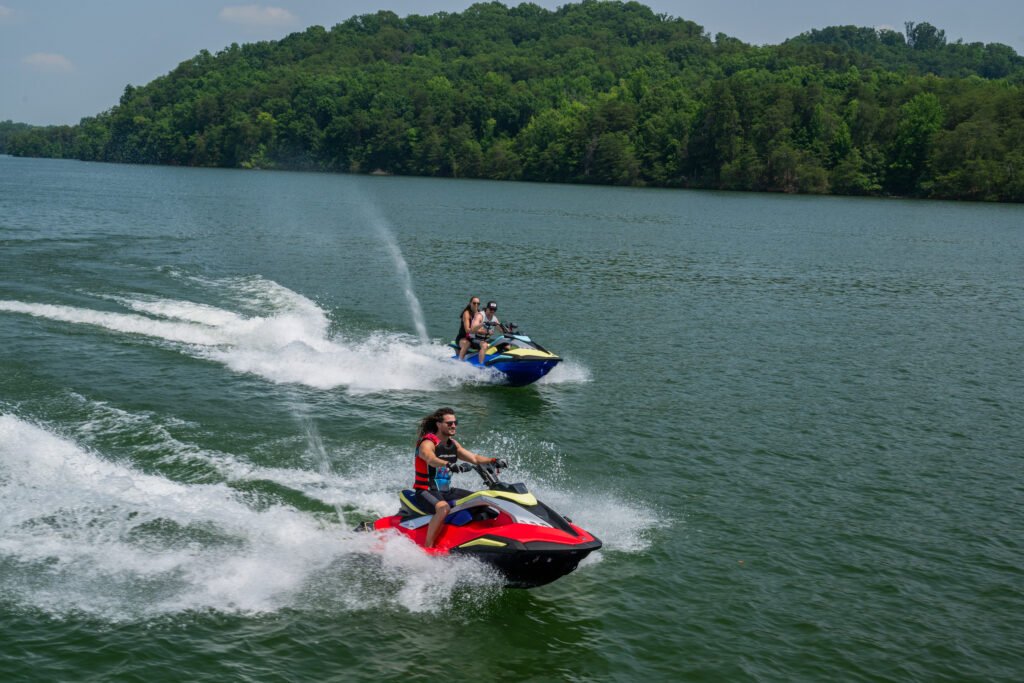
SEA-DOO: MORE POWER, MORE PLAY FOR 2027
SEA-DOO’s 2027 New Zealand range covers everything from compact recreational riding to fishing, touring and watersports, with two major developments leading the season: the new Spark X and Spark X Trixx models, and a 350hp boost for its flagship performance and luxury craft.
At the accessible end of the range, the Spark 2UP 60 remains the starting point for buyers seeking a lightweight, easy-to-manage PWC. Joining it are the new Spark 1UP X Trixx, Spark 3UP X Trixx and Spark 3UP X Convenience, all specified with sound systems in the local line-up.
The new X models feature the Rotax 1000 ACE engine, producing 110hp and delivering stronger acceleration and more responsive performance than the compact Spark platform. They also get SEA-DOO’s Intelligent Debris Free system, letting riders clear pump debris with handlebar-mounted controls. The X Trixx versions build on the established freestyle concept, offering a playful option for riders who enjoy tricks and manoeuvres, while the X Convenience provides a more recreational alternative.
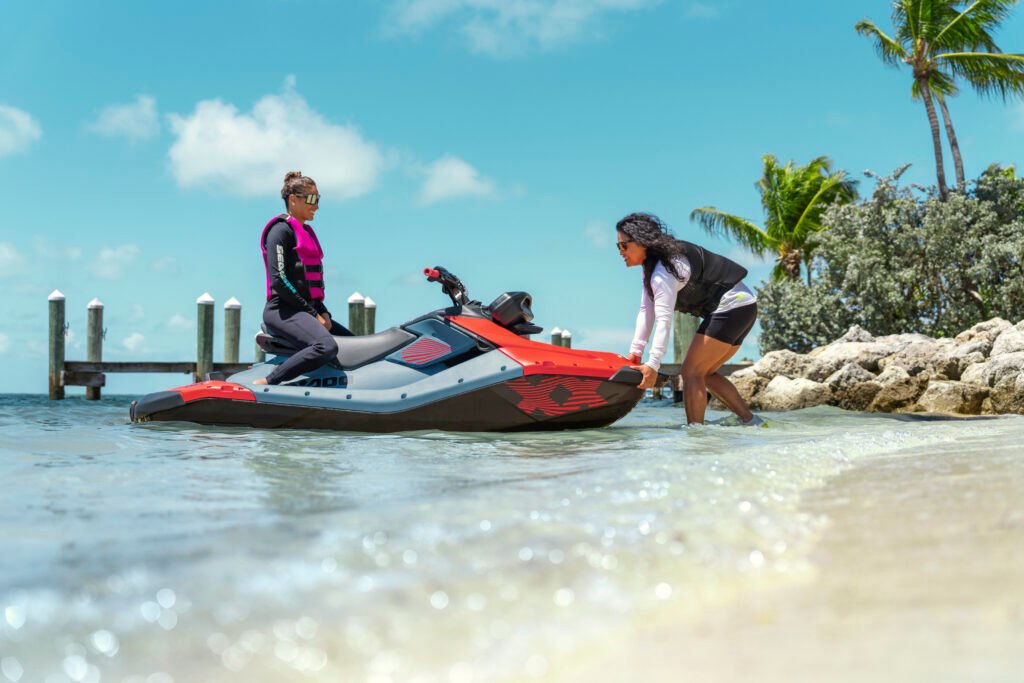
For family boating and general recreation, the GTI 130, GTI SE 130 and sound-equipped GTI SE 170 provide the next step up. Buyers seeking supercharged performance can choose the GTR 230, available with or without a sound system, or the GTR-X 300 with Tech Package.
The headline power upgrade comes with the new Rotax 1630 ACE 350hp engine in the RXP-X 350, RXT-X 350 and GTX Limited 350. The RXP-X focuses on precise handling and sporting performance, while the RXT-X combines its power with a larger platform suited to open-water riding. The GTX Limited brings the same output to Sea-Doo’s premium touring offering.
The supplied NZ range also lists an RXP-X Platinum S 350, alongside GTX 170 and GTX 230 models with Tech Packages.
Specialist applications remain well covered. The FishPro Sport 170 and FishPro Trophy 170 cater for anglers, while the Explorer Pro 170 and 230 target adventure and longer-distance exploring. Completing the line-up is the Wake Pro 230 with Tech Package, designed around towing and watersports.
SEA-DOO watercraft across the range use a purpose-designed ROTAX marine engine with a closed-loop, freshwater-cooled system, eliminating saltwater corrosion.
Together, these models give Kiwi buyers a broad choice, with the new 110hp Sparks and 350hp flagships bringing the biggest changes this summer.
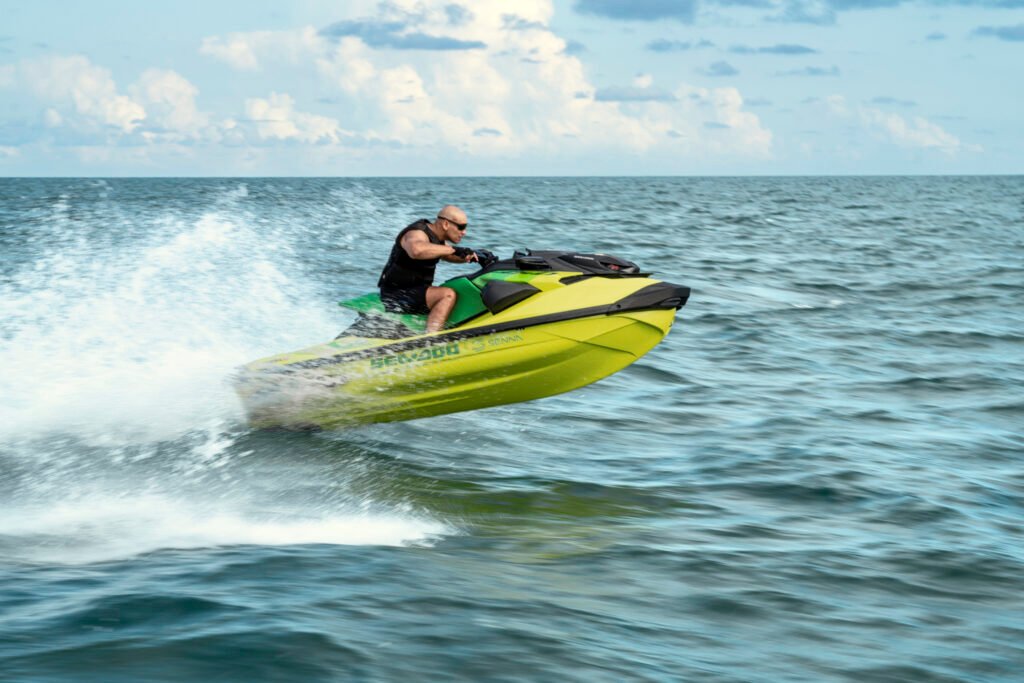
KAWASAKI JET SKI: A FRESH LOOK FOR SUMMER
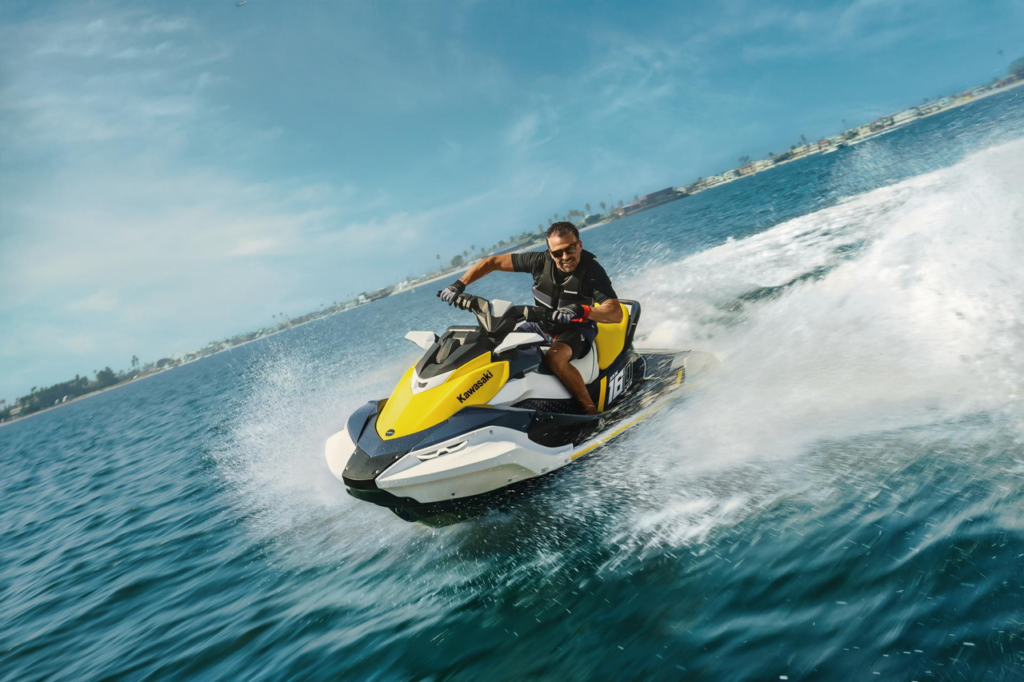
Kawasaki’s New Zealand Jet Ski offering for the 2026/27 boating season combines an updated STX family with the established Ultra platform, covering recreational riding, fishing, and supercharged performance. The main news is the arrival of the 2026 STX 160R, STX 160LX-S and STX 160LX, bringing sharper styling and additional technology to Kawasaki’s compact, agile runabout range.
Powered by a naturally aspirated 1498cc four-cylinder marine engine, the STX models retain a focus on responsive performance and manageable power delivery. Their compact hull is designed for nimble handling and sporty riding, particularly in calmer water.
The updates extend well beyond appearance. Features include a seven-inch colour TFT display with Bluetooth connectivity, selectable power modes and adjustable electronic cruise control. Kawasaki Smart Reverse with Deceleration provides electrically operated reverse control and helps slow the craft, adding convenience when manoeuvring and docking. LED accent lights and a sculpted bow give the updated range a family resemblance to Kawasaki’s larger Ultra models.
The STX 160R brings a sporting emphasis, with a sport-type handlebar and electric trim control that lets riders adjust the hull’s attitude to suit conditions and riding style. The LX-S and LX broaden the recreational appeal with an extended rear deck, a wide reboarding step, and accessory-mounting rails. The STX 160LX also features Kawasaki’s JETSOUND Bluetooth audio system, while a rear-view camera provides an additional view when docking or towing.
For buyers seeking a larger platform, the Ultra 160LX-S combines naturally aspirated 1498cc power with Kawasaki’s 22.5-degree deep-V hull. Its Ultra Deck and twin Multi-Mount Rails provide a practical base for carrying accessories and enjoying a variety of activities on the water.
Anglers have a dedicated option in the Ultra 160LX-S Angler, which brings a fishing focus to the same Ultra family. Completing the locally listed range is the Ultra 310X, pairing a supercharged, intercooled 1498cc engine with a deep-V hull and Kawasaki Smart Reverse with Deceleration. At the time of printing, we were told that Kawasaki will also add two new models to the line-up in early 2027: the Kawasaki Wakesport and Kawasaki Adventure.
Together, the current six models give Kiwi riders a choice between compact sporting agility, larger-platform versatility, and supercharged performance, with the refreshed STX trio providing the main new-model story for summer.