
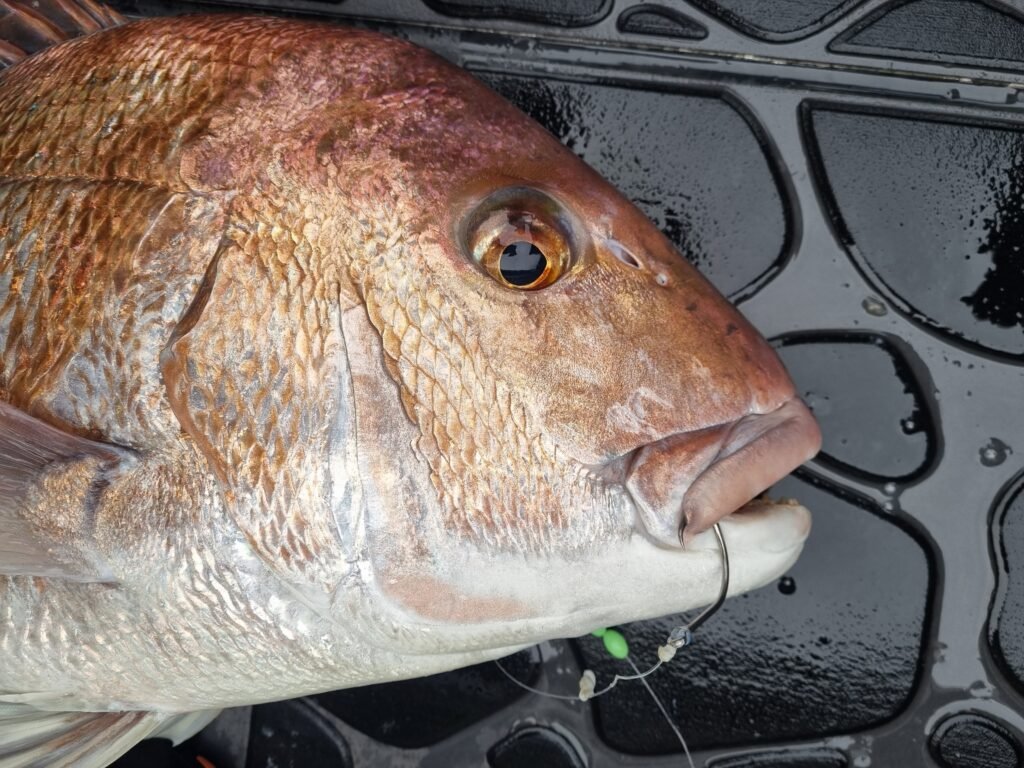
Which hook is best for fishing? I’m asked this often, and the answer depends on several factors. It’s an important choice because the hook is what connects you to the fish.
When you go into a tackle shop and stare at the wall-to-wall options of hook packets, it can be tricky to know where to start. Firstly, do you use circle or non-circle hooks? A straight or offset hook, and then there are straight or turned up eyes.
Let’s go over the options and when best to use them.
Circle vs. non-circle.
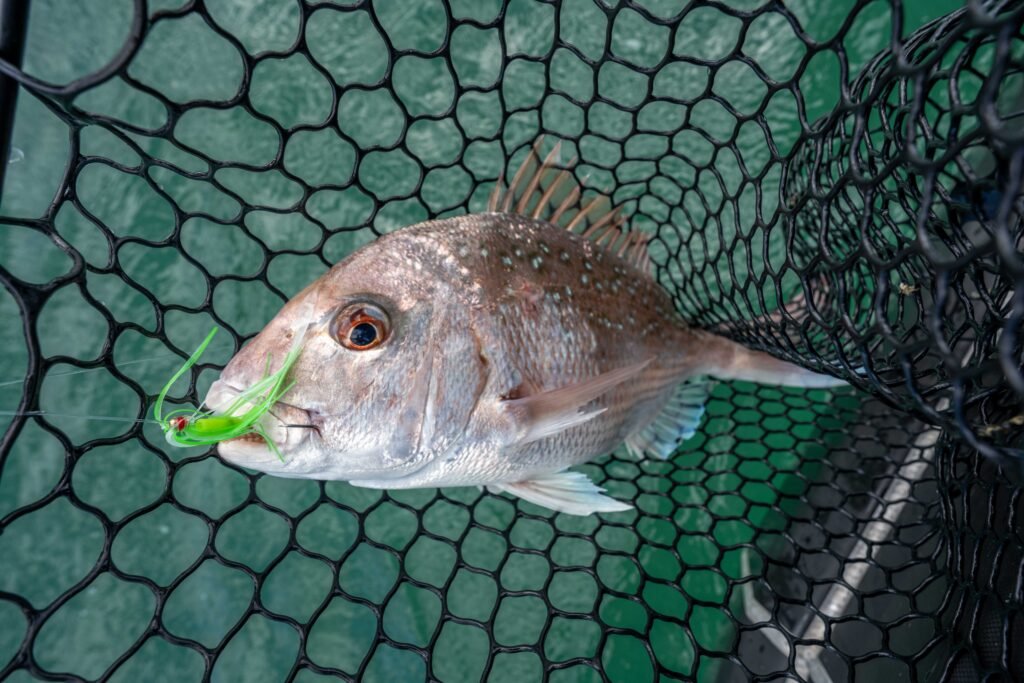
With circle or non-circle hooks (often called suicide or octopus hooks), the main difference is that a circle hook is designed to slide or roll into the corner of the mouth to lip hook a fish or hook through the jaw.
A key benefit using circle hooks is when small undersized fish are hooked, they can be released with less risk of harming them. It also means when dealing with larger legal fish the hook removing process is much easier, by simply flicking the hook out of the mouth using your hands or pliers.
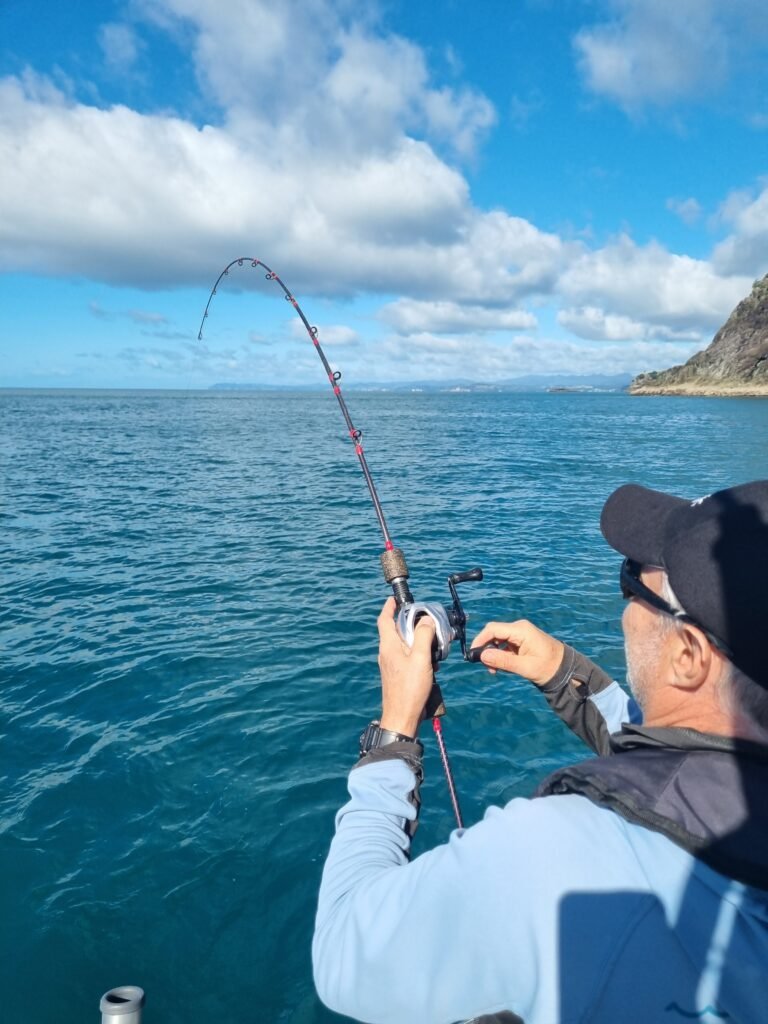
Circle hooks require a different approach when setting the hook on a bite. Simply apply steady pressure to set the hook, don’t strike hard when using circle hooks. I usually fish with a light drag on my Daiwa Free Swimmer reel to let the fish take the bait on a run and then engage the reel while lifting the rod slowly to let the circle hook do its job and pin the fish through the mouth.
Circle hooks are an excellent choice when deep water fishing (for hapuka or blue nose) and for bait fishing with ledger rigs or running rigs. They are also best choice for live baiting for kingfish and putting through the back or top lip of kahawai, this will help reduce the loss of your live bait getting off and more easily hook up to a kingfish when swallowed.
There are many variations of circle hooks available on the market (circle or recurve styles), and I am a fan of Black Magic’s KLT Tournament hook. The Japanese made KLT hooks are a non-offset recurve that have a special non-stick PTFE coating that resists rust and increases hook penetration. They have proven on many trips to be a durable, sharp hook that provides a good hook up rate when bait fishing.
Straight vs. Offset
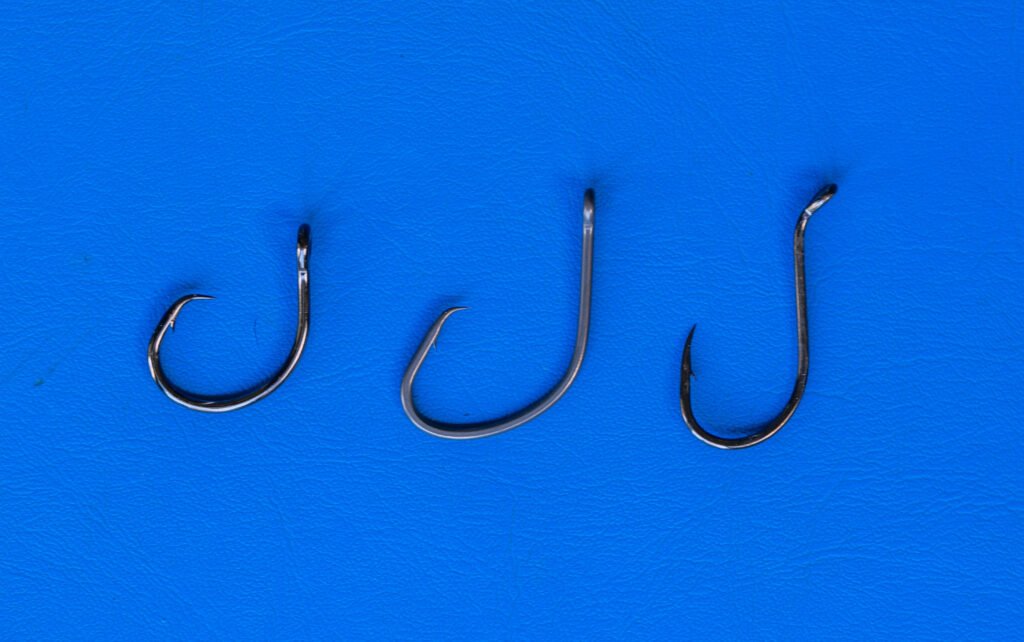
An offset shank simply means the hook is angled or offset, and not straight. This enables offset hooks to set better when striking hard to set the hook.
Most Kiwi baitfish anglers looking to target our popular species like snapper will go with non-circle hooks like octopus or suicide styles. They naturally want to strike on fish that pick up their baits, but it really comes down to a matter of choice.
For example, when fishing by yourself and you have a rod left in the rod holder while you fish with a second rod in hard. It is a good idea to have the rod in the holder rigged with a circle hook and light drag on the reel, as often the fish will hook itself and is less likely to swallow down the hook.
Using a non-circle (suicide) offset hook such as Black Magic’s DX Point is a good option when straylining baits down a berley trail. As you want to stay connected with your bait as it drifts down through the water column to the seabed and be able to strike on any good bites.
The DX Point hook is ultra sharp and coated with a “super slip” PTFE coating to enhance penetration while improving rust resistance.
Straight vs. Turned up Eye.
This really comes down to what knot(s) you are planning to tie on the hook. A straight eye hook is best fished on a single strand of line when using a Uni knot or Improved Clinch knot, so the line doesn’t cause the hook to sit at an angle.
An upturned eye can also be fished with a single strand knot but is best used with a loop knot, like when tying a two-hook ledger rig and you want the hook to sit point up and keep the baits out from the main line. This will help increase your hook-up rate. The upturned eye is also good for when tying a long line knot as the line sits naturally and doesn’t cause the hook to sit at an angle.
Most octopus or suicide hooks are usually offset with an upturned eye, and I would recommend using 7/0 or larger sized hooks to help reduce the risk of gut hooking undersized fish which can then be returned unharmed. You can even go further if you want to and flatten down the barbs on your hooks so unwanted fish can be easily removed off the hook.
Hooks are relatively cheap and so after a good session and catching several fish on the same hook, I will cut off the hook and retie with a fresh one. You want to fish with sharp hooks and give yourself the best chance of hooking up on the next fish. If your hook looks fine and is still sharp and you plan on fishing with it again, wash it well with freshwater and spray it down with Inox or Lanox to help prevent rusting.
Always keep your hooks in a dry compartment in your tackle box and ensure they aren’t wet when you return them to the box or packets.