CARRYING THE LEGEND FORWARD
For many New Zealand boaties, the Rayglass Legend series has been a constant presence on the water for almost four decades. Built on a reputation for offshore capability, practicality and family-friendly versatility, the Legend 2350 in particular became one of the country’s most recognised and respected trailer boats. But even legends evolve. Freddy Foote checks out the all-new Rayglass
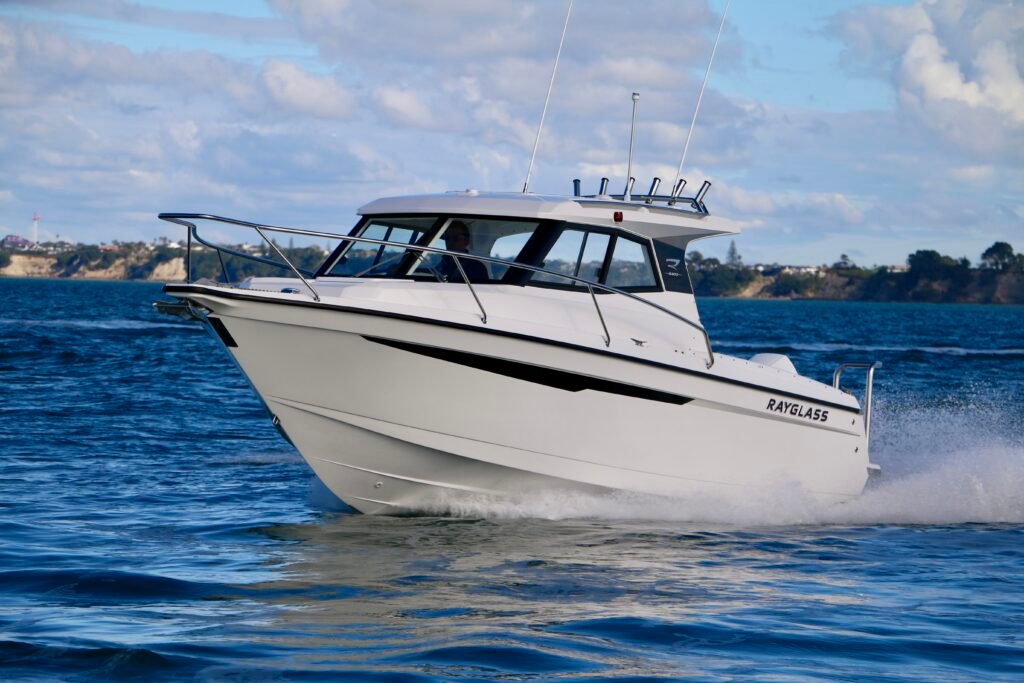
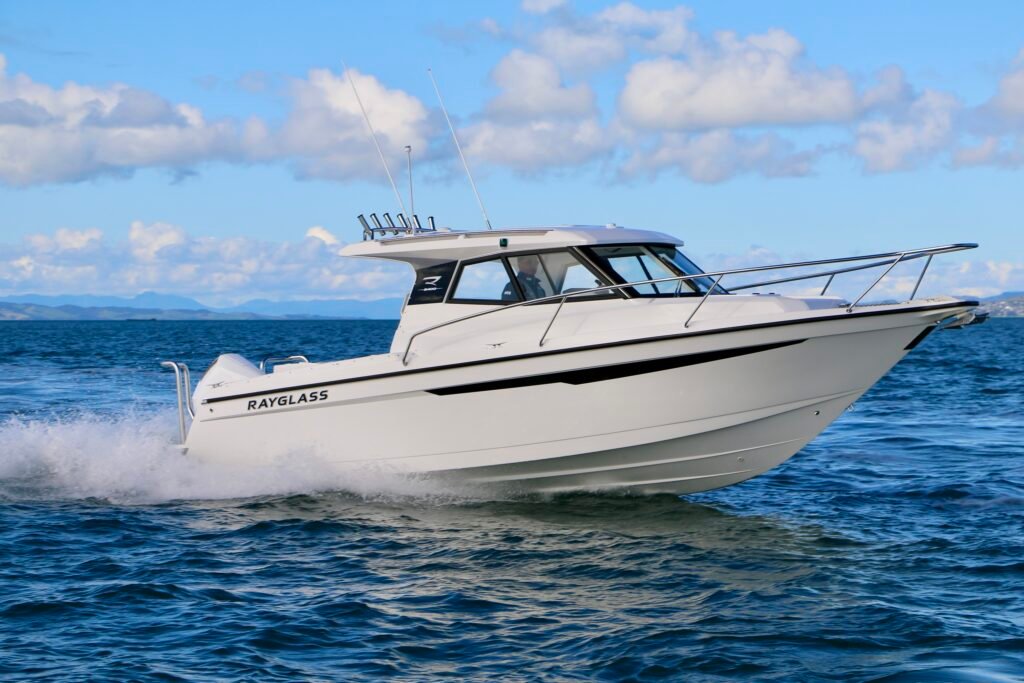
With the introduction of the all-new 2400 Legend, the company is ushering in a new generation. Following the launch of the Rayglass 2700 and 3000, the 2400 completes a family of boats that share a common design philosophy, contemporary styling and a more efficient modular construction approach.
NEW DIGS
Three new models in just a handful of years is no mean feat; add to that the company has expanded and built an all-new and purpose-built manufacturing facility in South Auckland, in addition to the Sales & Service HQ in Mt Wellington.
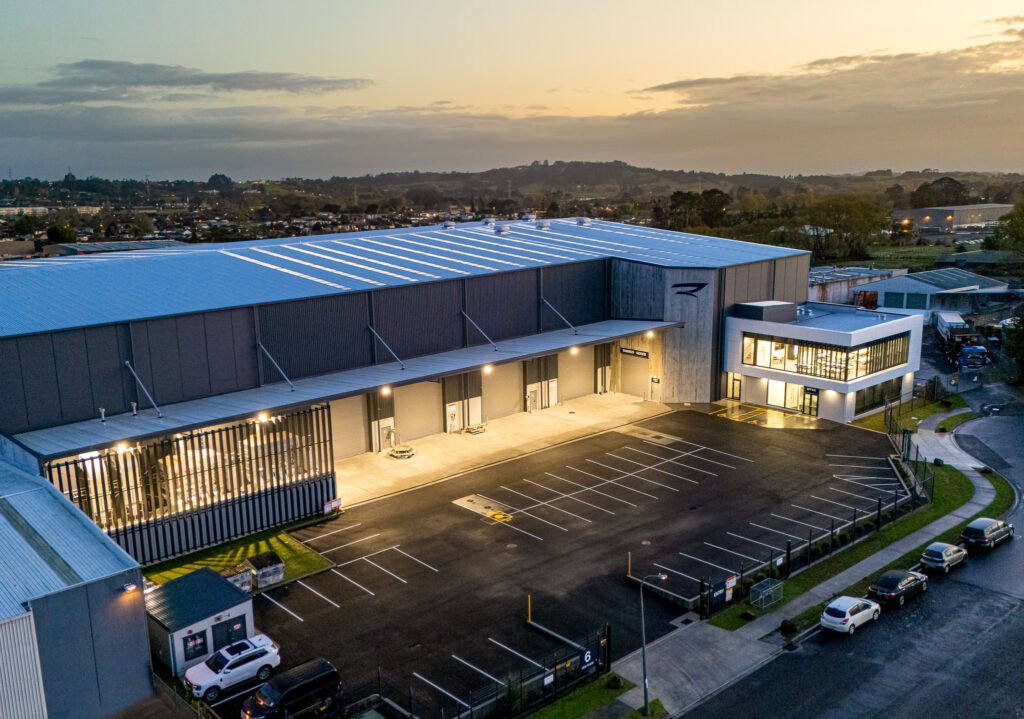
Following our on-water test of the new 2400, I had the opportunity to tour the company’s impressive new 7,000-square-metre manufacturing facility in Takanini, Auckland. The scale of the operation immediately highlights a company that is firmly focused on the future.
Representing one of the largest investments in Rayglass’ nearly 40-year history, the purpose-built factory has consolidated production that was previously spread across multiple locations into one highly efficient manufacturing hub. Every stage of the build process, from composite construction and hull lamination through to systems installation, fit-out, quality assurance and final testing, now takes place under one roof.
The streamlined production flow not only improves efficiency and quality control but provides the capacity to support Rayglass’ ambitious growth plans. Expansion is firmly on the agenda. Having recently established a dealer network in Australia, Rayglass is strengthening its presence across the Tasman while laying the foundations for future entry into the United States.
Rayglass CEO Dean Harris says the new facility has been built with that international growth firmly in mind.
“This investment is about much more than increasing production,” Harris says.
“We’ve recently established a network of dealers in Australia with more to come, and that’s already creating exciting opportunities for the Rayglass brand. At the same time, we’re preparing the business for the next stage of growth, including potential expansion into the United States.
This facility gives us the manufacturing capability, quality systems and scalability to support those ambitions without compromising the craftsmanship we’re known for.”
The factory has also been designed to foster innovation, with dedicated areas for product development, engineering and continuous improvement. Improved workflow, modern manufacturing processes and increased production capacity will help reduce lead times while maintaining the premium finish that has become synonymous with both Rayglass and Protector boats.
“We’re incredibly proud to build our boats in New Zealand,” Harris adds.
“Bringing our entire manufacturing operation together under one roof gives us greater control over every stage of the build and positions Rayglass for sustainable growth for many years to come.”
Walking through the facility, it’s clear this is more than just a new factory. It’s a statement of intent. With modern manufacturing capability, room for future expansion and a growing international footprint, Rayglass is positioning itself to compete on the world stage while continuing to build premium boats from its home in Auckland.
Building on a Proven Reputation
When developing the 2400, Rayglass faced a familiar challenge: how do you improve on a boat with an already loyal following?
With almost 200 Legend 2350s built since 2013, the answer wasn’t to start from scratch, but to retain what owners loved while rethinking almost everything above the waterline. The proven deep-vee hull remains, carrying forward the offshore capability that made the 2350 such a respected performer in New Zealand conditions. Everything sitting on top of it, however, has received significant attention.
Starting at the stern, the biggest distinction between the sterndrive and outboard models is found in the transom design – everything forward of the cockpit is identical.
The sterndrive version features an engine box that houses the MerCruiser diesel engine and while it occupies some cockpit space, it doubles as a practical work station and incorporates a plush forward-facing seat. A live bait tank, sink and hot/cold cockpit shower are all integrated into this transom area, creating a tidy and functional fishing station.
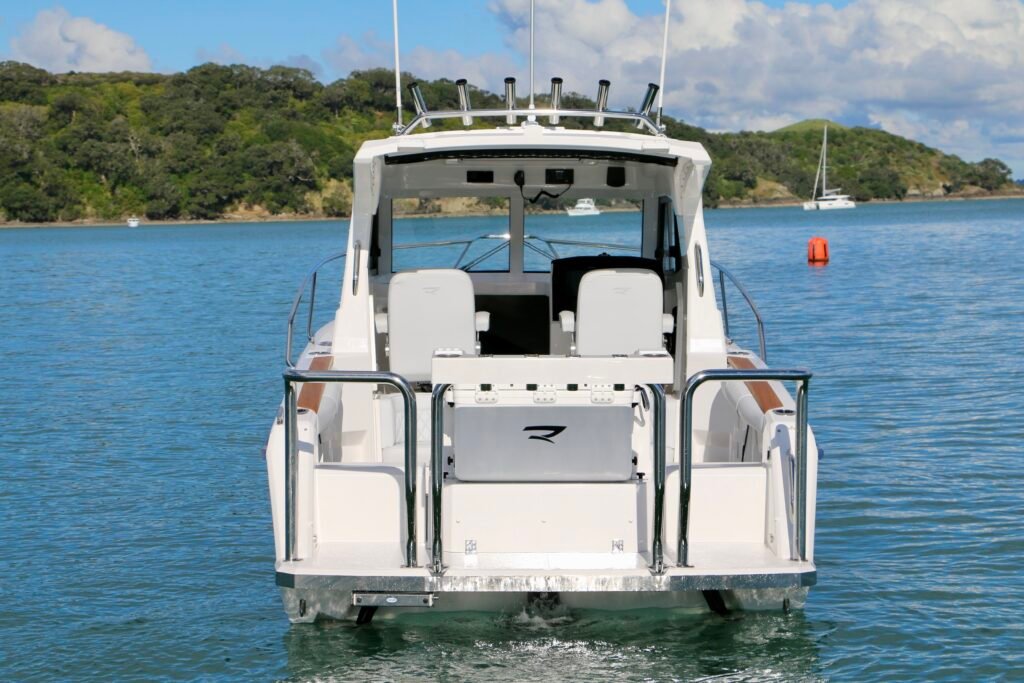
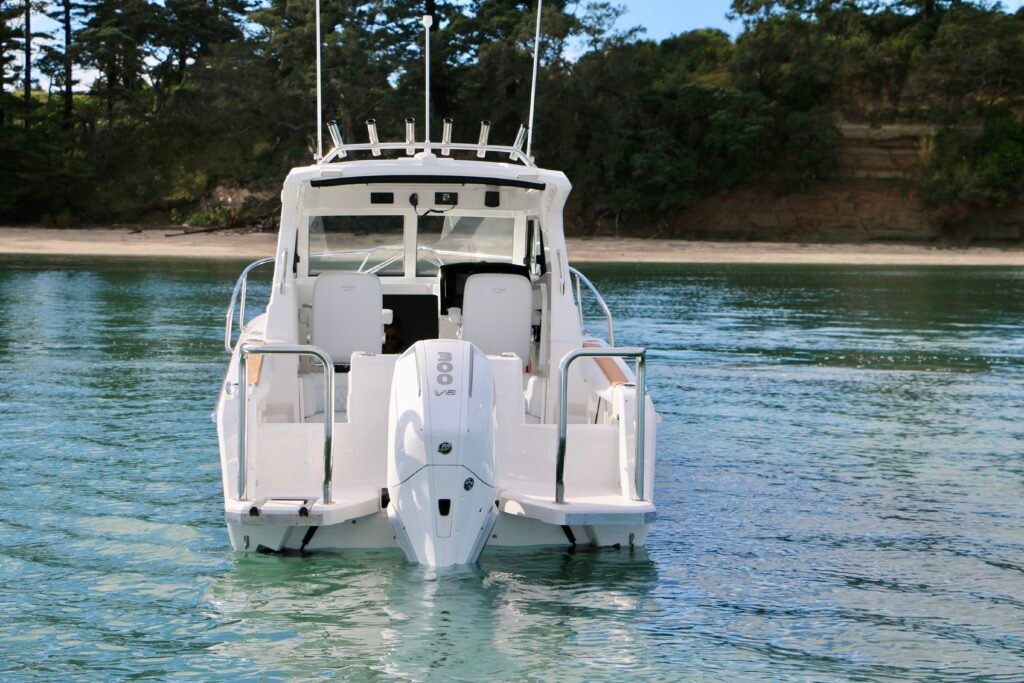
The outboard model takes a different approach, replacing the engine box with a redesigned transom that creates an additional 300mm of usable cockpit space. The transom module combines a bait station, cutting board, live bait tank, tackle storage, cockpit shower and a slide-out Icey-Tek fish bin that stows neatly beneath the transom locker itself.
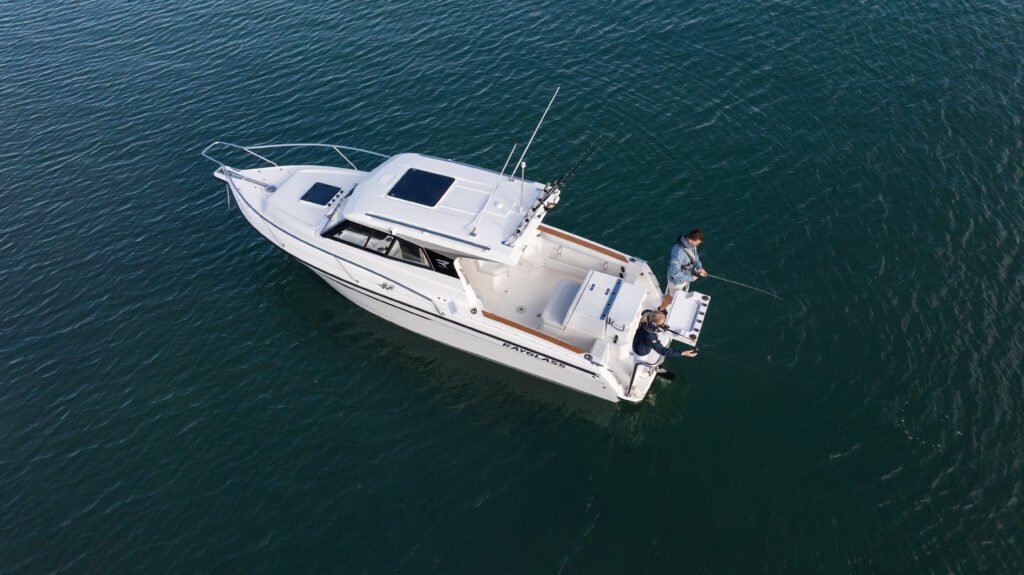
Twin swim platforms either side of the outboard provide easy boarding and double as excellent fishing platforms for those who need to get out further and battle the bigger fish.
The extra space continues throughout the cockpit, where Rayglass has adopted a modular design philosophy shared across its latest models. Large storage lockers are built into the seat bases, while lockable compartments beneath each side deck provide secure storage for rods, fenders and other gear. Overhead, the extended hardtop features integrated mounting points for radar, aerials and lighting, complemented by dual sliding side windows and a large opening skylight that floods the cockpit with light and fresh air.
Looking underneath, storage has always been one of Rayglass’s strengths, and the 2400 continues that tradition. Beneath the cockpit sole, a large hatch opens to reveal a generous removable storage tub, ideal for everything from wet gear to ropes and safety equipment. Lift that clear and you’ll uncover a second hidden compartment extending forward beneath the floor to the cabin bulkhead, providing an impressive amount of additional storage that’s neatly tucked away and easy to access.
Add to that there is a mounting plate for a cockpit table, that can be fitted/removed easily. The aft facing seats and the forward facing stern seat providing a comfortable social hub aboard.
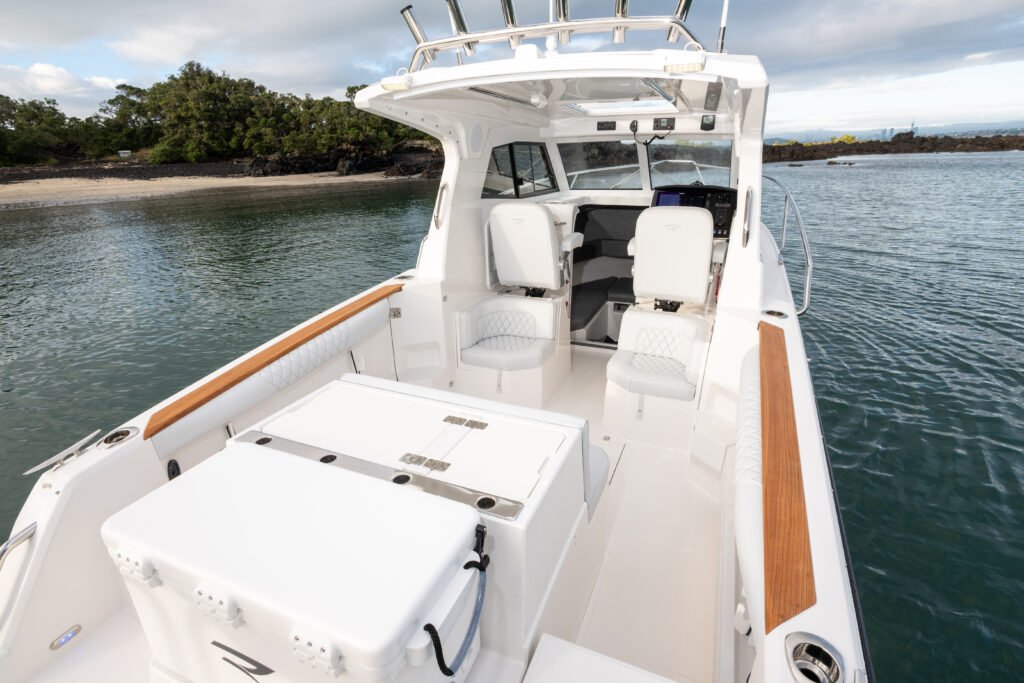
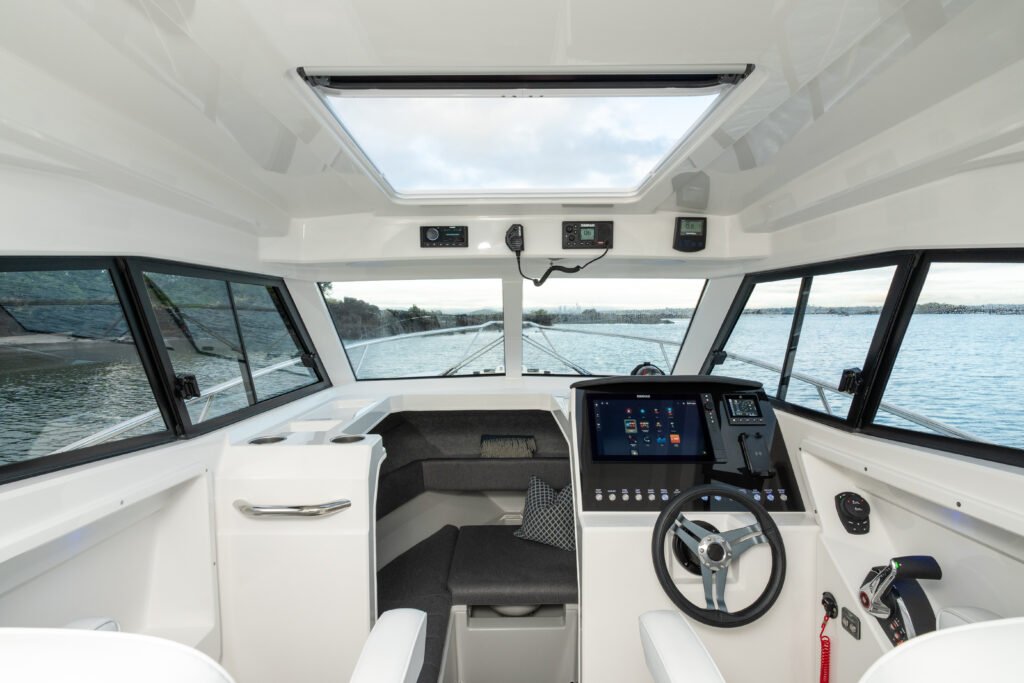
At the helm, the 2400 has a thoroughly modern feel. There’s space for a 16-inch Simrad NSS4 multifunction display alongside Mercury’s latest digital instrumentation, while a Scanstrut wireless phone charger, illuminated push-button switch panel and thoughtfully positioned controls create a clean, uncluttered layout. VHF, Fusion stereo and windlass controls are mounted overhead. Small Details such as USB charging ports, dedicated storage trays, multiple cup holders and excellent all-round visibility make the helm as comfortable as it is functional.
Forward of the helm, one of the 2400’s biggest improvements is the way it makes use of its available space. By carrying the beam further forward, Rayglass has created a noticeably larger cabin that feels far bigger than the boat’s dimensions suggest.
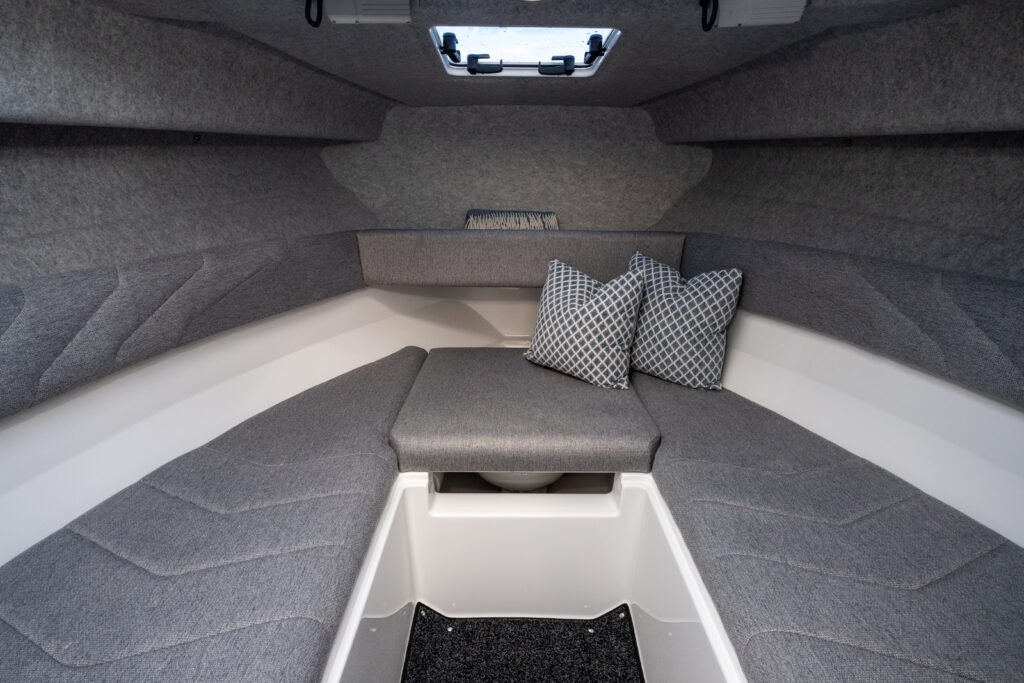
The wide companionway makes access easy, while increased standing room and generous natural light create an open, airy feel. Longer V-berths provide more sleeping space than the previous model, seated headroom has been improved, and a removable table transforms the cabin into a comfortable area for dining or escaping the weather.
Storage is plentiful beneath the berths and along the side shelves, while an infill converts the V-berths into a generous double. Provision has also been made for a marine toilet beneath the forward squab, and a full-width shelf in the bow is large enough to accommodate a 60-litre portable fridge or additional gear, rounding out a cabin that is every bit as practical as it is comfortable.
On The Water
For our test day, I had the opportunity to drive both versions of the Rayglass 2400 back-to-back: one powered by Mercury’s 300hp Verado V8 outboard and the other fitted with the 270hp MerCruiser 3.0-litre diesel sterndrive. While these are likely to be the most popular configurations, buyers can also choose a petrol sterndrive or twin 200hp outboards should they wish.
Although the Hauraki Gulf served up relatively calm conditions, it provided an ideal opportunity to appreciate the 2400’s refinement rather than simply its rough-water ability.
Stepping into the outboard boat you can expect a spirited 27-knot cruise while burning around 48L/h.
The combination of Mercury’s electric steering, automatic trim and the optional Seakeeper Ride system made the boat feel exceptionally composed. The active ride control constantly adjusted the hull’s attitude, reducing bow rise and keeping the boat level through turns without any input from the helm.
This was my first experience with Seakeeper Ride and I came away seriously impressed. You could have zero boating experience and handle a boat of this size in varying conditions with absolute ease.
Unlike conventional trim tabs that require driver input, the system automatically adjusts the boat’s running attitude hundreds of times per second. The result is a noticeably flatter, more composed ride with reduced bow rise, less roll and greater stability through wakes and changing sea conditions. It’s one of those systems you quickly stop noticing because it simply does its job so well.
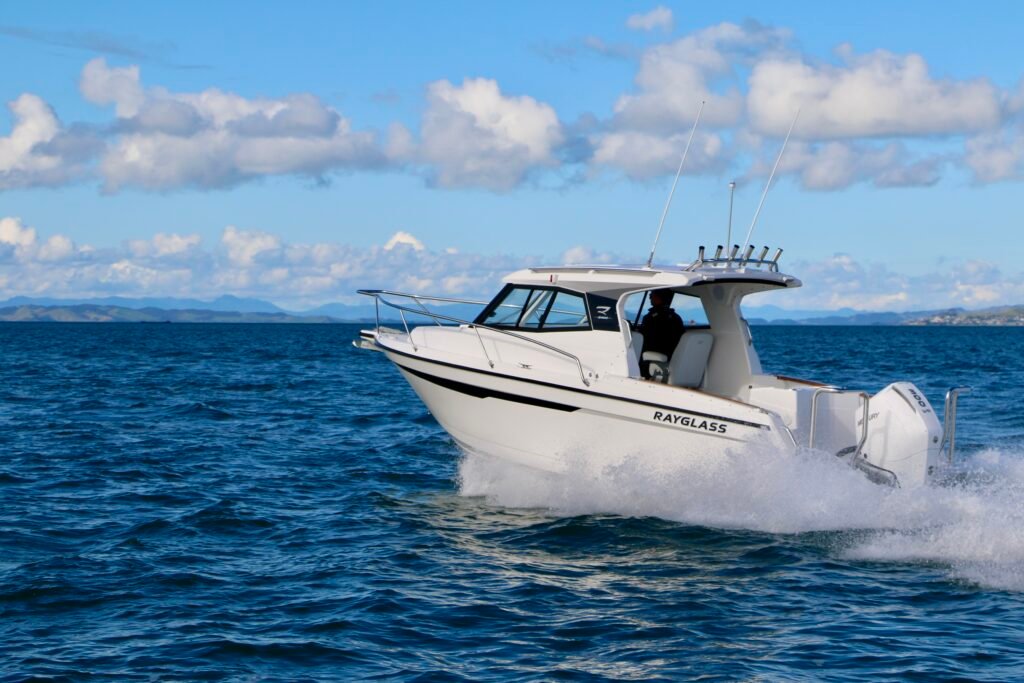
Performance was strong, with the 300hp V8 delivering brisk acceleration and a top speed of around 37 knots. Just as impressive was its refinement, remaining remarkably quiet throughout the rev range.
Stepping aboard the diesel sterndrive version immediately highlighted a different character. Equipped with Mercury’s 3.0-litre 270hp diesel, the 2400 feels more settled on the water. The hydraulic steering delivers slightly more feel through the helm, while the diesel’s abundant low-end torque launches the boat onto the plane with minimal effort. Lenco Pro Control Auto Trim Tabs continuously adjust the boat’s running angle.
The biggest difference between the two comes down to their intended purpose. The petrol outboard is the stronger performer, delivering quicker acceleration, higher cruising speeds and a 37-knot top speed, making it ideal for covering distance or towing water toys.
The diesel, however, is built for efficiency. It cruises comfortably at around 21 knots while consuming just 29L/h, offering significantly greater range than the petrol.
That advantage grows when trolling. At 6.5 knots the diesel burns only 6.6L/h, compared with around 13.5L/h for the petrol at a similar speed. For anglers and offshore cruisers, those fuel savings can make a substantial difference over a full day on the water. If range, economy and extended offshore capability are your priorities, the diesel is the standout. For stronger performance, quieter running and faster cruising, the Verado outboard takes the honours.
The Rayglass 2400 builds on the legacy of the popular Legend 2350, combining its proven offshore hull with a modern design that delivers more space, versatility and refined performance on the water. Supported by a state-of-the-art manufacturing facility and a growing international dealer network, Rayglass is entering an exciting new chapter as it expands beyond New Zealand. Approaching its 40th anniversary in 2027, the 2400 is a fitting example of a brand that continues to innovate while staying true to the qualities that have made Rayglass a favourite among Kiwi boaties.
SPECIFICATIONS
LOA 7.7m
Beam 2.5m
Deadrise 24 degree
Trailerable weight 3200 – 3500kg
HP Range 200hp-400hp
Fuel 300-320L
PERFORMANCE DATA (STERNDRIVE)
RPM KNOTS L/PH RANGE (NM)
1000 4.7 2.5 602
1500 6.5 6.6 315
2000 8 12.2 210
2500 13 21.6 193
3000 21 29 232
3500 26 38 219
4200 33 57.6 183
270hp MerCruiser diesel sterndrive
PERFORMANCE DATA (OUTBOARD)
RPM KNOTS L/PH RANGE (NM)
1000 3 5.2 173
1500 5.4 7.9 205
2000 7 13.5 156
2500 8 19.5 123
3000 10 26 115
3500 13 38 103
4000 20 42 143
5000 31 62 150
6000 37 89 125
300hp Mercury Verado V8 Petrol outboard