A Kiwi Original – Still Setting the Standard
In an industry where brands rise and fall with the tide, reaching half a century is no small feat. In 2026, Buccaneer Boats celebrates 50 years of building fibreglass trailer boats for New Zealanders, a milestone that speaks not only to longevity but to relevance. From the family farm shed in the Waikato to one of the country’s most respected GRP trailer boat manufacturers, the Buccaneer story is a distinctly Kiwi blend of grit, innovation and family commitment.
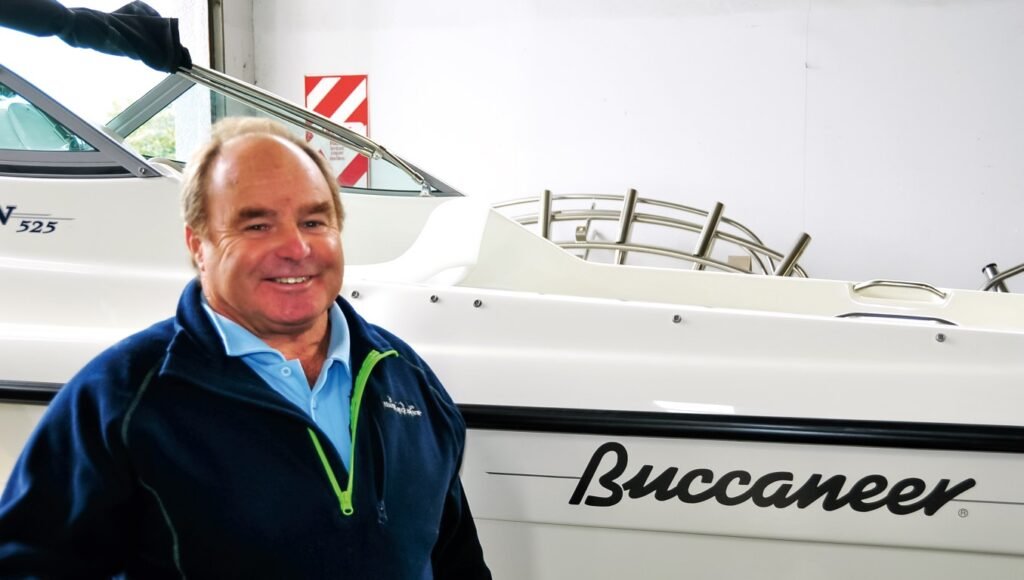
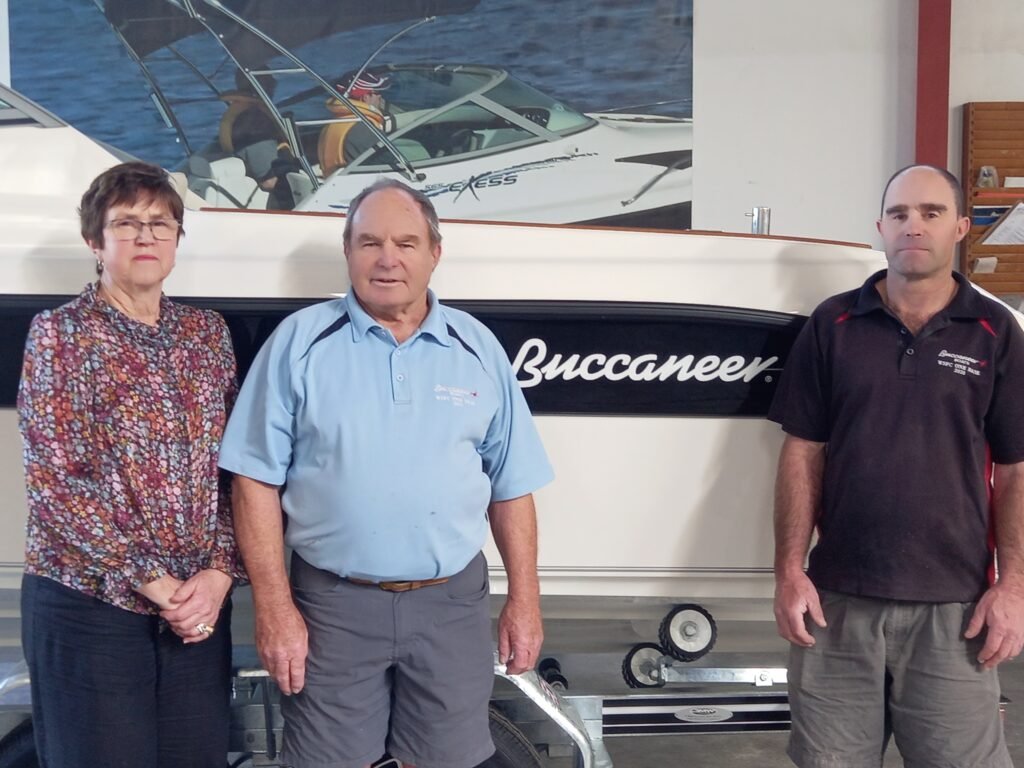
Buccaneer Boats was established in 1976 by Gerry and Jenny Gerrand. Like many great New Zealand marine stories, it began with experience earned the hard way. Gerry Gerrand cut his teeth at Rollo’s Boats in the late 1960s as an apprentice building wooden boats and in the early 1970s, learning the craft of fibreglass boatbuilding during a formative period for GRP construction in this country. That grounding in practical design and production would prove invaluable. Gerry also learnt the art of boat design through trade school block courses taught by some of New Zealand’s leading boat designers at the time. Gerry was recently inducted into the Hutchwilco New Zealand Boat Show Marine Industry Hall of Fame.
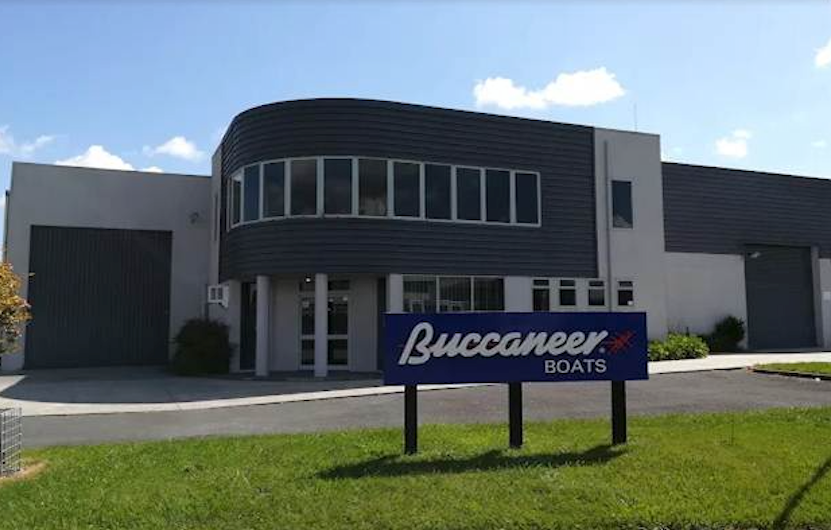
The first Buccaneer boat, a 4.7-metre cabin model, was released in January 1977. Built in a shed on the Gerrand family farm in Taupiri, it set the tone for what the brand would become: practical, well-finished, family-friendly trailer boats designed specifically for New Zealand conditions.
In 1981, as demand grew, Buccaneer shifted operations to Hamilton. That move marked the transition from a determined start-up to a serious production builder. Over the decades that followed, the company has produced more than 6,000 GRP trailer boats, a figure that reflects both scale and consistency in a highly competitive sector.
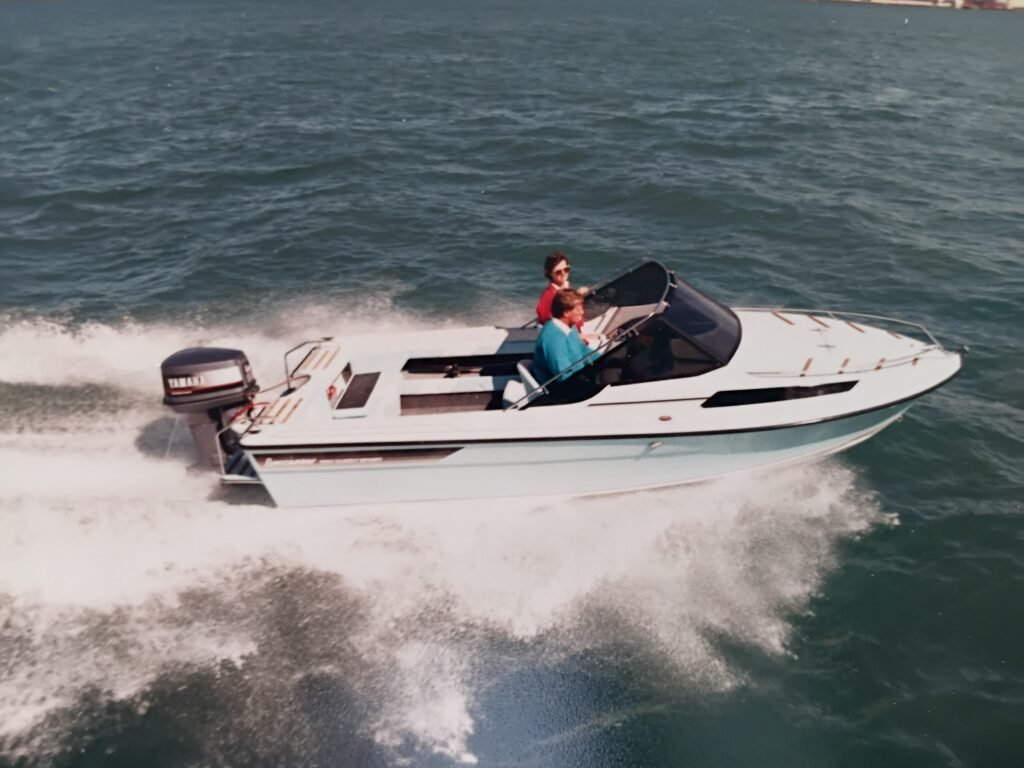
From the outset, Buccaneer’s philosophy was clear: build boats that handle real New Zealand conditions while delivering comfort, safety and longevity. That balance, between performance and practicality, became a hallmark of the brand.
Throughout the 1980s and 1990s, as trailer boating boomed across the country, Buccaneer refined its hull designs and broadened its model range. Cabin boats became more sophisticated. Layouts evolved to accommodate overnighting, family cruising and serious fishing. Fit and finish improved as customer expectations rose.
While some builders chased trends, Buccaneer focused on refinement. Hull shapes were developed to provide soft rides in chop without sacrificing stability at rest, a critical factor for Kiwi fishermen. Cockpits remained generous and usable. Cabin spaces became brighter and more comfortable. Importantly, the brand maintained a strong emphasis on structural integrity, which still resonates in the resale value of older Buccaneer models today.
Glass Reinforced Plastic (GRP) construction was still relatively young in the 1970s, and Buccaneer was part of the generation that helped cement GRP as the dominant material for trailer boats in New Zealand. The advantages were clear: durability, reduced maintenance compared to timber, and the ability to produce consistent hull shapes at scale.
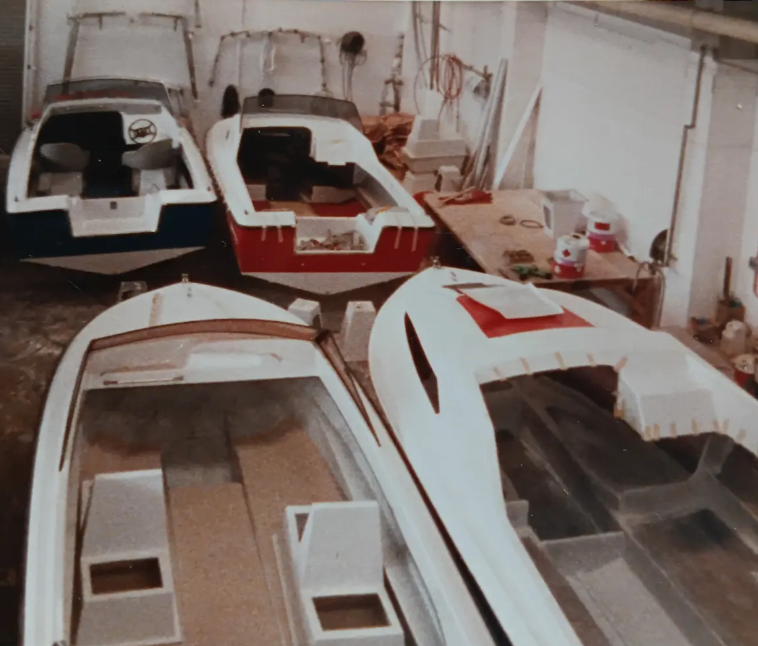
Over 50 years, production methods have evolved significantly. Lamination techniques have advanced. Resin systems have improved, along with the advancement of better adhesives, which has meant less wood in construction. The attention to weight distribution and structural reinforcement has become increasingly sophisticated. Yet the core principles remain: strong hulls, well-engineered internal structures and attention to finish.
Producing more than 6,000 GRP boats over five decades is more than just a number; it represents thousands of families enjoying time on the water, countless fishing trips, overnight adventures, and memorable summer holidays. It also reflects a production system that has proven both adaptable and sustainable.
Gerry is quick to point out that this achievement would not have been possible without the dedication and expertise of his skilled, long-serving staff, some of whom have been with the company for more than 30 years and have played a vital role in the Buccaneer brand’s success.
The company’s ongoing investment in training young people entering the industry has also paid dividends, with several former staff members going on to establish and run their own successful marine manufacturing businesses.
A Family Business at Heart
While Buccaneer Boats has grown into a nationally recognised brand (with a smattering offshore), its roots as a family-founded business remain central to its identity. Gerry and Jenny Gerrand’s early commitment to quality and customer relationships set a culture that has endured, making it one of the few manufacturers that does not retail from the factory. Rogers Boat Shop was one of the first dealers appointed, and they still are a dealer today.
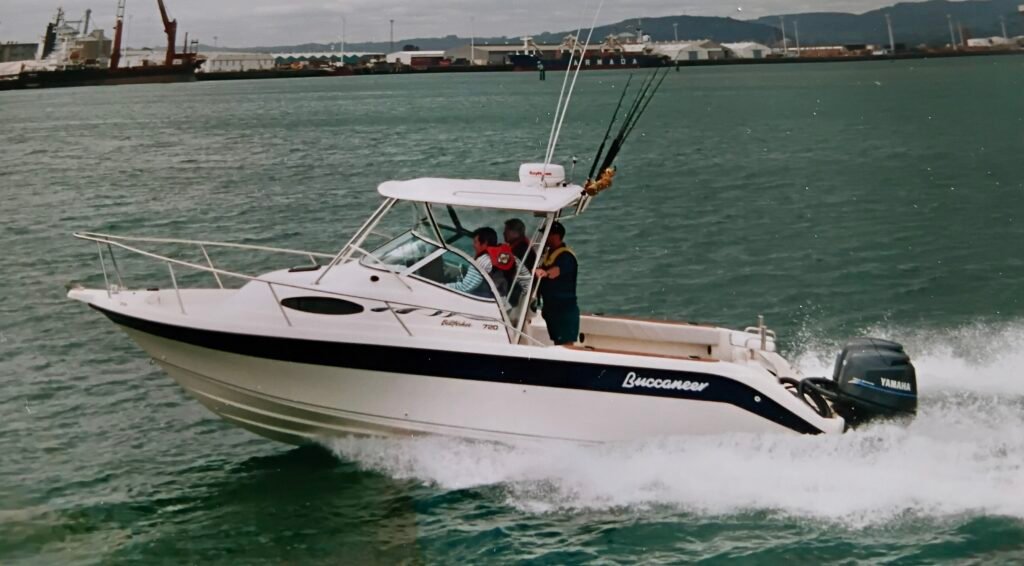
In the New Zealand marine industry, reputation travels fast. Builders survive not just on marketing, but on word of mouth at boat ramps, in marinas and at fishing clubs. Buccaneer’s longevity owes much to that earned trust, the confidence that a Buccaneer hull will perform as expected and hold its value over time. In our 30 years of PowerBoat Magazine (and Propeller Magazine), we have owned a few ourselves as magazine photo boats, and loved every minute with them. These included a Buccaneer 550 Billfisher, a Buccaneer 685 Exess and the Buccaneer 635 Esprite (Bowrider), which we absolutely loved and ran for many seasons. Our very first issue of Propeller Magazine in June 1996 featured the Buccaneer 720 Elite on the cover, being one of our very first boat tests.
Fifty years in boatbuilding means navigating changing technologies, economic cycles and consumer expectations. Buccaneer has seen the shift from carburetted two-stroke outboards to modern four-stroke and high-tech direct-injection engines. It has adapted to the rise of large horsepower ratings on trailer boats. It has embraced modern electronics, integrated helm systems and contemporary interior design standards.
As the broader industry moved toward larger, more feature-rich trailer boats, Buccaneer evolved accordingly. Models grew in length and sophistication, with improved ergonomics, enhanced storage solutions and higher-quality finishes. At the same time, the brand retained accessibility, continuing to produce boats that remain practical for everyday Kiwi boaters.
The company’s move to Hamilton in 1981 made it one of the first to establish operations in this key marine manufacturing hub, providing access to skilled labour and supplier networks. That geographic foundation has helped Buccaneer remain agile in sourcing materials and adapting to industry shifts.
New Zealand’s boating culture is uniquely suited to trailer boats. With extensive coastlines, countless estuaries and a network of inland lakes, the ability to tow, launch and explore remains central to the Kiwi experience. Buccaneer has consistently targeted this sweet spot, building boats that are substantial enough for offshore confidence yet practical enough to tow behind a family vehicle. The Gerrand family, now with Gerry and Jenny’s son, Wade, joining the company in 2004, and, more recently, his wife, Rebecca, truly understands family boating and fishing because they are their passions, too!
Rather than chasing extremes, Buccaneer has traditionally occupied the well-considered middle ground: boats large enough to inspire confidence, refined enough to satisfy discerning buyers, and robust enough to endure years of use.
Across five decades, Buccaneer Boats has played a meaningful role in New Zealand’s marine manufacturing landscape. It has provided employment, supported supplier networks and contributed to the broader ecosystem of trailer manufacturers, marine electronics providers and engine distributors.
Just as importantly, it has helped normalise quality GRP production standards in the country. The lessons learned since that first 4.7-metre cabin model in 1977 have shaped processes that continue to influence local boatbuilding practices. Buccaneer was an inaugural member of the Coastguard-approved NZ Boat Building Standard CPC Group and was also instrumental in introducing the specialised Composite Trailer Boat Building apprenticeship, all of which placed people and product at the forefront of its priorities.
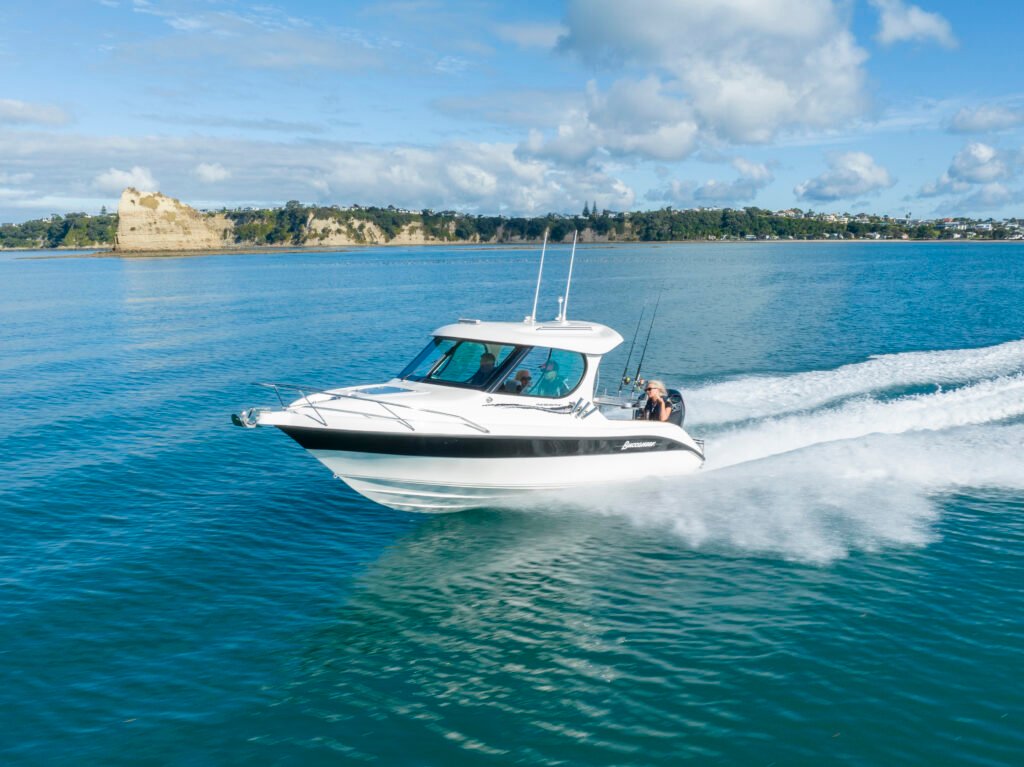
Reaching 50 years is both a celebration and a moment of reflection. The marine industry continues to evolve, with growing interest in sustainability, lighter materials, hybrid propulsion concepts and ever-increasing digital integration at the helm. Customer expectations around finish, performance and customisation are higher than ever, and Buccaneer has met these demands.
With an impressive 23 Buccaneer models across five ranges, there is a model to suit every trailer-boat application. I doubt there is another Kiwi boatbuilder that can match this breadth of range. PowerBoat Magazine’s website currently features 20 Buccaneer reviews, but over the years, we’ve done many more than that.
A Legacy Measured in Wakes
Ultimately, anniversaries in boatbuilding are measured not just in years, but in wakes left behind. More than 6,000 Buccaneer GRP boats have slipped off trailers into New Zealand waters since 1976. Most are still in service, a testament to build quality and enduring design.
From a farm shed in Taupiri, in the Waikato, to a recognised national brand, the journey of Buccaneer Boats mirrors the broader story of Kiwi marine manufacturing: resourceful, resilient and proudly independent.
At 50, Buccaneer Boats is not simply celebrating a birthday. It is marking half a century of helping New Zealanders get out on the water, and that, in this country, is a legacy worth honouring.