
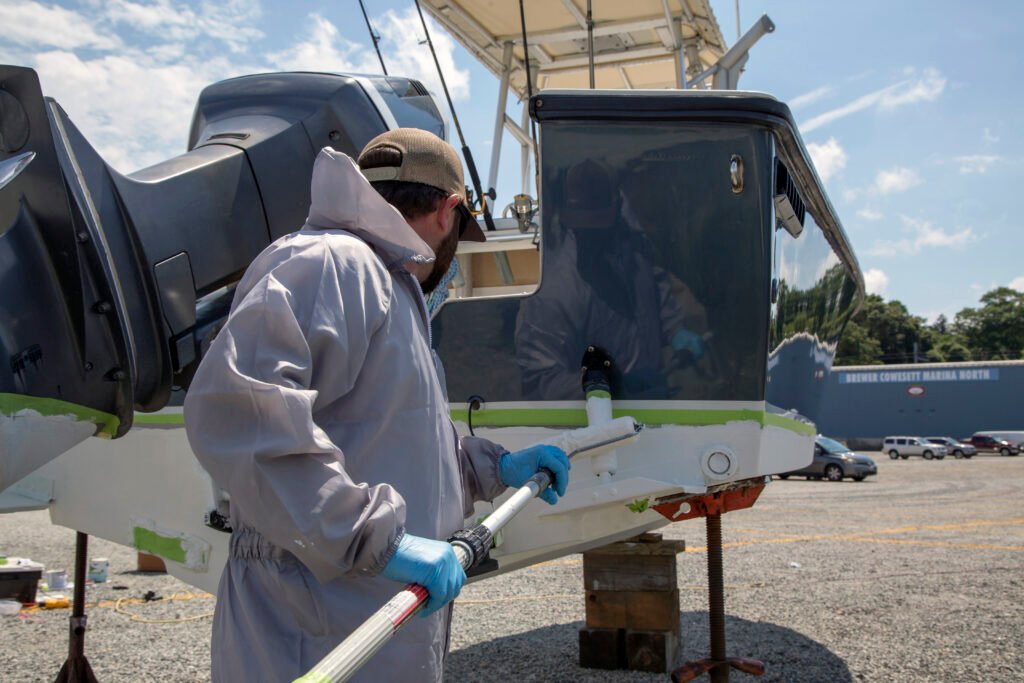
Protecting the hull of a powerboat can be one of the most challenging maintenance tasks that owners can undertake. In the first instance, choosing the right coating for the boat’s intended uses can seem like a daunting process, as new products that comply with constantly shifting market demands, both in terms of regulations and advances in product performance, hit the market. Furthermore, once the right coating has been selected, ensuring the technology is applied precisely is fundamental to achieving the highest level of antifouling performance.
For boat owners on New Zealand and Australian waters, the diversity in environments poses a distinct challenge. Warm subtropical sea temperatures accelerate the growth of barnacles, slime, algae, mussels and weeds, making the issue of persistent fouling even greater, leading to higher maintenance burdens and decreased hull efficiencies. Whereas temperate waters across southern coastlines will lead to a less aggressive build-up of fouling, depending on the season.
It is not simply environmental considerations that dictate the availability of antifouling products. In addition, regulatory frameworks have been introduced that restrict the raw materials that can be used in antifouling technology, alongside significant controls over the application process itself. In Australia, for instance, boat owners must adhere to multi-layered regulatory frameworks that differ depending on whether the boat is used in home waters or arriving from overseas.
In New Zealand, updates to the Environmental Protection Authority’s (EPA) rules in 2023 restricted the use of antifouling paints containing certain chemicals, including thiram, diuron, octhilinone and ziram. The EPA also heavily regulates the application process, introducing stringent operational controls to ensure coatings are applied using a standardised practice. These include the need for controlled work areas using screens, containment and spray guards to ensure paint residue does not impact the surrounding environment, adjacent vessels and personnel. In addition, boat owners are restricted in where antifouling coatings can be applied, as applications on careening grids, slipways and beaches are prohibited in favour of designated hardstand environments to support containment.
The EPA has also introduced specific waste disposal processes that align with the Hazardous Substances and New Organisms (HSNO) Act’s waste requirements, as well as the need for mandatory PPE and the introduction of detailed safety data sheets for every antifouling product.
The regulatory landscape continues to evolve as the New Zealand Government seeks to introduce a new bill that will prompt significant amendments in the HSNO Act. Although these changes are ultimately designed to accelerate the validation and supply of new products to the market, the likely introduction of further restrictions on product ingredients could also lead to greater pressures on the availability of current antifouling products.
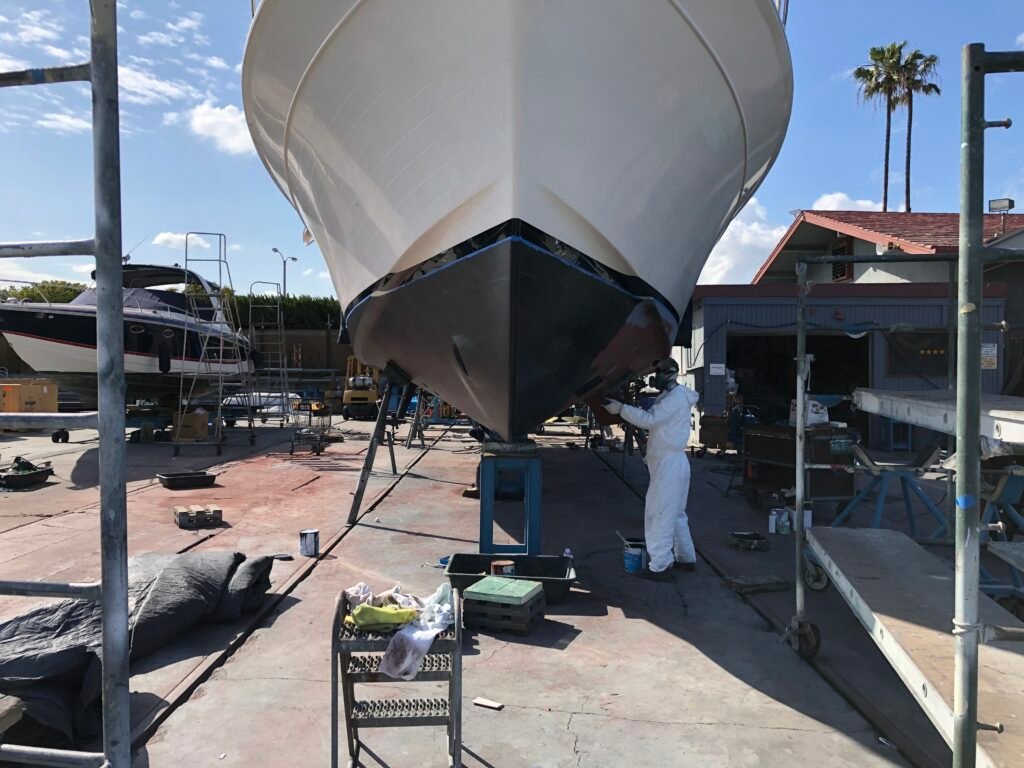
Hans Slegtenhorst, Senior Product Manager, Global Yacht, Sustainability, AkzoNobel, said: “The regional fragmentation of the current regulatory landscape means that the provisions governing biocidal coatings vary significantly by country. This poses a distinct challenge for boat owners travelling between jurisdictions when selecting an appropriate coating that meets their needs and supports compliance. Boats travelling to diverse regions may have to ensure no fouling is present to secure entry in places with sensitive marine ecosystems and strict biosecurity requirements such as Australia and New Zealand.”
Sailing in these demanding conditions, both environmental and legislative, makes the critical decision regarding the most effective antifouling systems even more important. However, to ensure that boat owners are achieving the antifouling performance they expect, they must first understand the impact that the type and frequency of boating, boat use, and the differing types of maintenance have on product selection.
Coatings for all conditions
Self-Polishing Copolymer (SPC) systems are widely regarded as the highest performing coatings available and are suitable for multi-season use within the harshest fouling environments. These products undergo a chemical reaction that is optimised in seawater, delivering consistent polishing and biocide release rate. SPC coatings are most suitable for vessel owners who require longer periods between maintenance, cruising yachts, and boats kept afloat year-round.
Kane Barfoot, Regional Technical Service Manager, AkzoNobel, said: “Self-polishing copolymer (SPC) antifoulings, such as the recently launched International® Micron 350, are the leading coating technology that is specifically designed for the most demanding fouling conditions. They gradually wear away in seawater, ensuring a consistent release of active ingredients and a smooth surface over time. These coatings are ideal for boats that stay in the water year-round, cruising yachts, and owners who want longer intervals between maintenance, as well as reliable, all-round performance.
“For faster boats, or for those who like to race, hard antifouling, which can be burnished or wet sanded to a smooth finish and does not wear easily, is a good option. Also, trailered or dry-stored boats that are regularly transported overland will require a hard antifouling coating that creates a durable surface to withstand repeated pressure on the hull. For boat owners looking for a balance between performance and value, traditional ablative antifouling technology offers reliable protection against marine growth throughout the season. As the coating gradually wears away during use, it continuously releases active ingredients to help keep the hull cleaner and reduce the build-up of marine growth.
“It is important that maintenance and cleaning methods are tailored to the antifouling product. For instance, premium systems are not designed for cleaning methods such as soft towels and high-pressure freshwater washing, or bristle brushes and hard scrapers. These methods, if conducted frequently, can damage SPC antifoulings. Conversely, hard antifouling tolerates scrubbing and frequent cleaning.”
In light of the ongoing tightening of regional regulations, innovations in antifouling technology are reframing the industry’s approach to biocide-release systems. Antifouling solutions have traditionally relied upon the use of one or more biocides, which are released gradually over time to prevent fouling organisms from attaching to the boat. However, the current landscape has prompted a greater focus on the development of a new generation of antifouling technology that places a greater emphasis on surficial film management that improves vessel performance and longevity, whilst reducing the coatings’ impact on the marine environment.
Kane continues: “When it comes to antifouling product selection, AkzoNobel understands that these complex external factors may seem overwhelming to boat owners. That is why relying on an experienced partner with the knowledge and expertise to match the right system to the right application is vital.
“When selecting an antifouling system, it is important to consider boat type, usage and maintenance plans, along with the specific fouling challenges presented by the local environment. These may include water conditions – whether brackish, fresh, or seawater – as well as factors such as water flow, tidal exchange, and shading from trees or buildings.
“Checking the product is approved for use locally before purchase is also essential. Fouling control is tightly regulated, and biocide rules vary from market to market, so regional compliance must be confirmed to avoid a costly mistake.
“For boat owners travelling internationally, sailing plans and intended destinations are relevant. It is not only local fouling severity and local compliance which should be taken into account, but also the conditions and market regulations within all planned locations.”
Even when all manner of due diligence is undertaken, the challenge extends beyond the product itself. Once a boat owner has chosen their antifouling solution, it is then imperative that the technology is applied correctly.
Smooth sailing relies on accurate application
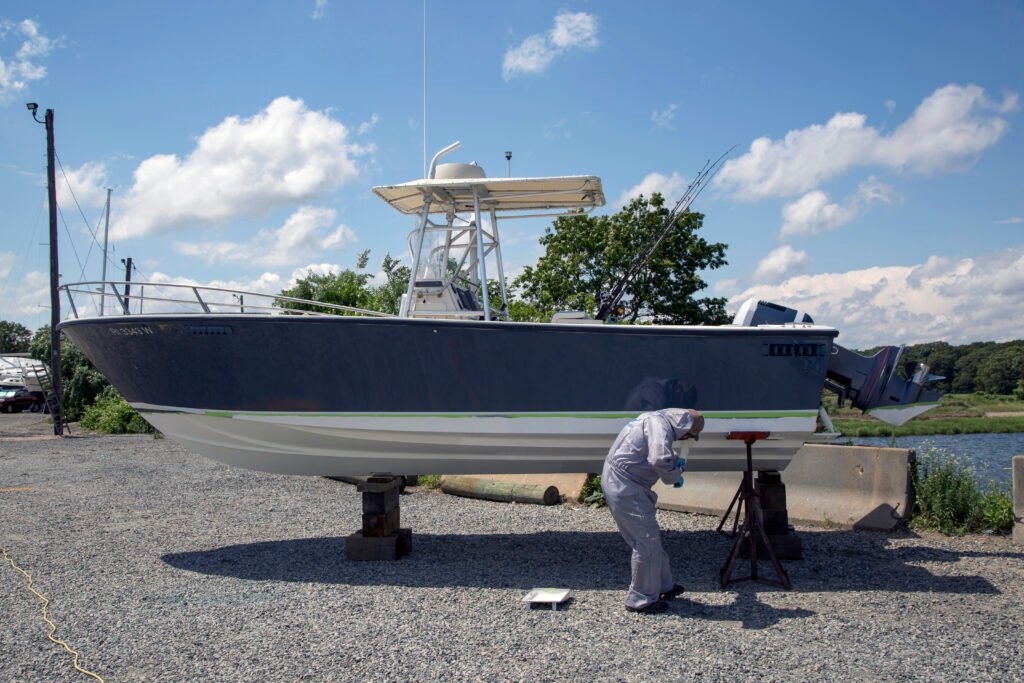
Extracting the most value from the chosen antifouling solution requires a meticulous multi-step, multi-layered approach to the project in which preparation is key. The hours spent ensuring that the antifouling coating is well-applied, or reapplied, will unlock a myriad of benefits throughout the season, including reduced drag and increased fuel efficiency, to less frequent maintenance, enhanced performance and longevity.
Before tackling the antifouling application process, boat owners need to ensure they have the appropriate personal protective equipment (PPE), including gloves, overalls with a hood, goggles or glasses, as well as a mask if the removal of old coating layers is required. A tarpaulin is also recommended to be placed under the boat to collect scrapings and dust from sanding.
A thorough cleaning of the hull with a specialised cleaning product will remove salt smears, dirt, and general grime. When flushing with fresh water, you can tell the surface is properly degreased when the water spreads across the surface without forming small droplets.
This is the time to check the hull for signs of osmosis and treat any blisters that may weep a fluid resembling vinegar. Also, it is a good idea to examine the keel and rudders for impact damage, cracks, or sections where the coating may have become loose. Address and grind out the affected areas thoroughly and ensure they are fully dried out after treatment.
It is good practice at this stage to take moisture readings with a hull moisture meter, particularly on fibreglass. If they come back high, let the hull dry out fully before coating, since sealing moisture in is a common cause of blistering. For any small repairs that are necessary, it is recommended to apply a layer of primer before the application of filler.
If there is any peeling and flaking paint, an excessive buildup or an uneven surface, it is important to scrape it away while saving any layers that are in good condition. This type of flaking is likely to be caused by using antifouling paints that are not compatible with each other, or when too much paint has been applied over several seasons.
For existing primer, sand using P80–P120 grit sandpaper, changing the paper regularly to ensure consistent results. Any bare substrate needs to be sanded with P80-P120 grit sandpaper to improve adhesion, unless the hull is made of aluminium or steel, in which case P60-P80 grit sandpaper is required to remove oxidation.
Prime and protect for best performance
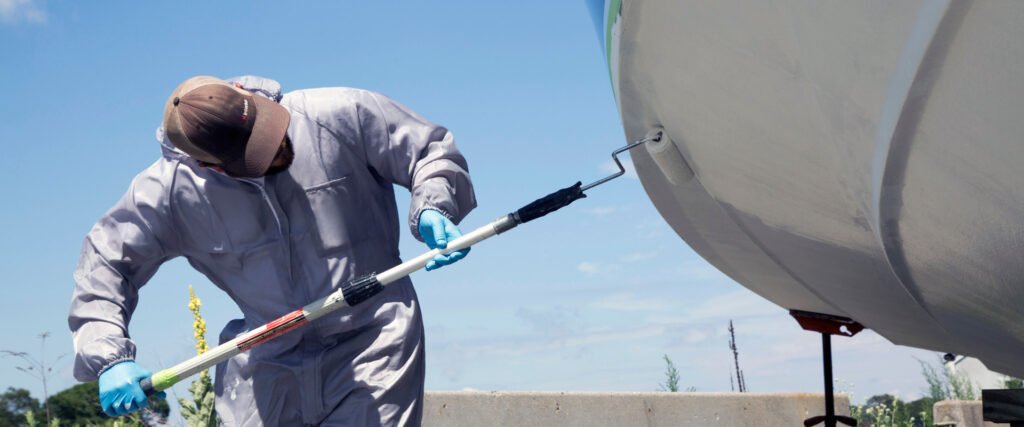
Priming is a vital part of the painting process as it is the foundation on which the whole system will be applied. When changing brands of antifouling products, it is important to consult the appropriate compatibility charts to confirm that the new paint will adhere correctly. Bare substrate or osmosis repairs generally need an epoxy primer, while a vinyl-based anti-corrosive primer is ideal as a tie-coat over most existing coatings.
On a still, windless day, mask off the areas that are not going to be painted, such as topsides on the waterline. Stir the product thoroughly before use and keep restirring during application, because the biocides settle and an unmixed coating will not perform evenly. Mix and thin your paint in line with the label or technical data sheet.
Ensure that the interval time between the end of the application of the epoxy primer and the first coat of antifouling is no longer than stated on the datasheet or label.
For those choosing to do the job themselves who are not spray experts, applying paint with a roller is a fast way to cover large areas, while brushes are best for small areas. If you are applying product with a brush, a good technique is the criss-cross method with paint applied to the surface with diagonal brushing from left to right. Spread the paint further with horizontal strokes before finally laying off with light vertical strokes to ensure a uniform layer of paint. Apply enough paint to achieve an even application, but not so much that it sags or runs, as this can be difficult to remove later.
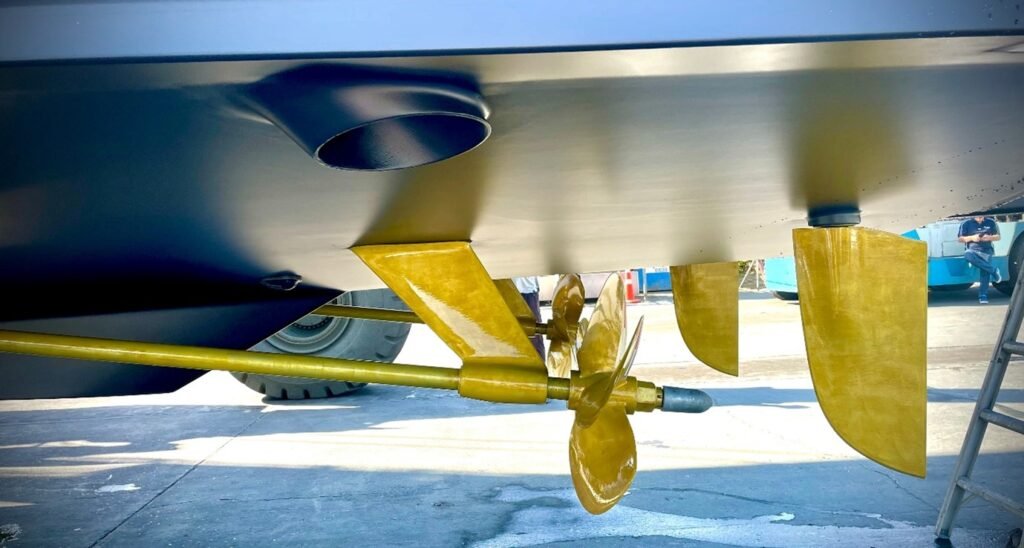
For propellers, shafts and running gear, specialist foulrelease coatings such as Propspeed are specifically designed to prevent marine growth without relying on traditional biocides, helping maintain fuel efficiency and performance. Similarly, Foulfree offers a proven silicone-based coating for transducers, preventing marine growth while ensuring sonar and fishfinder performance isn’t compromised. Using purpose-designed coatings on these critical underwater components helps maximise efficiency, protect valuable equipment and reduce ongoing maintenance.
The proper partner will enhance performance
When selected and applied correctly, expert antifouling can unlock significant gains in performance and savings in costs, whilst also reducing its impact on the marine environment. In a complex, crowded, and rapidly evolving market with many variables to consider, marine paint companies recognise that boat owners need more than a coatings manufacturer. This is why they have teams of experts on hand to provide a dedicated consultative service designed to assist customers and partners in selecting the best solutions for their boat, with insight into the diversity of products, regulatory developments, and the latest technologies available for both above and below the waterline; don’t be afraid to ask.