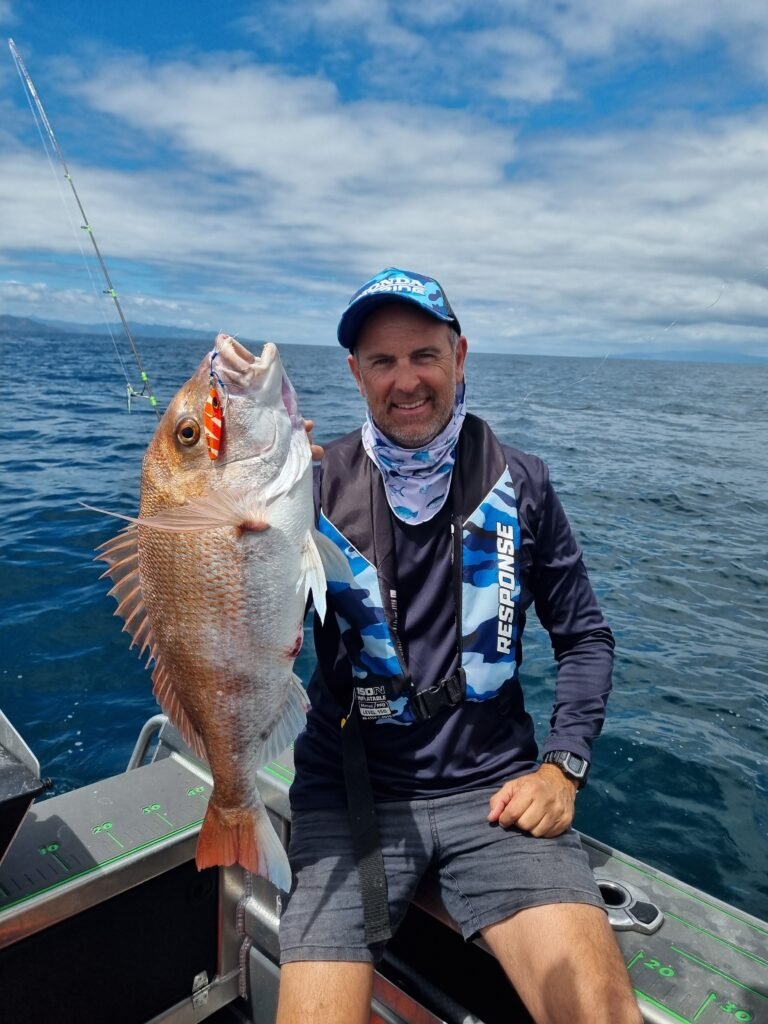
Springtime in the Hauraki Gulf is a popular time for anglers to get back on the water after winter to enjoy longer daylight hours and with warmer water temperatures, the snapper fishing can be first class.
After winter and daylight savings returns at the end of September, many Auckland fishos are getting ready to hit the water again and enjoy the better fishing the wider Hauraki Gulf provides anglers.
From the top of the gulf in the north up around Mangawhai, down past Omaha and Little Barrier, the large schools of pilchards swim down the coastline and spread right throughout the Hauraki Gulf and over to the western side of the Coromandel. With the arrival of these huge baitfish schools, the schooling snapper aren’t far behind.
FIND WORKUPS
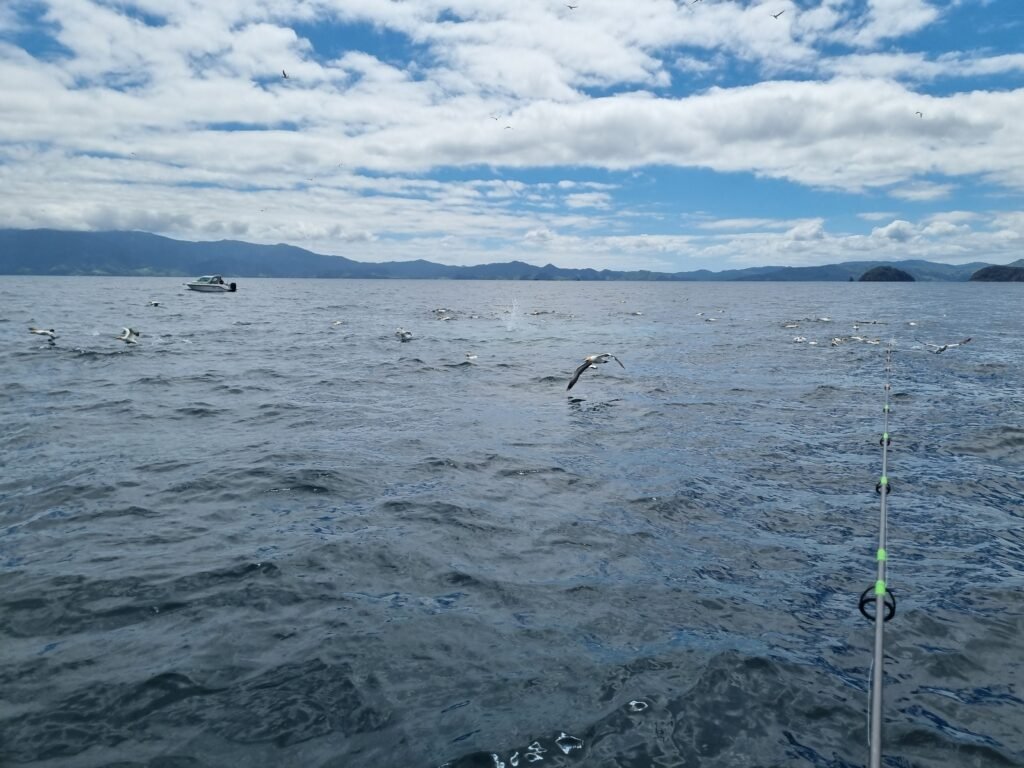
Spring workups are a big attraction for anglers as they are an amazing natural experience where gannets rain down from above into the baitfish schools, while dolphins and whales are helping to round up and feed on the pillies underneath.
When heading out wide in the gulf over spring looking to find workup action, we always look to find dolphins first and track them by shadowing along behind with the help of binoculars and no doubt the gannets will also be tagging along, waiting for them to find the pilchards.
Most anglers will go out into the middle of the gulf from 30-40m to look for the workup action but often they are also found closer in and off the western Coromandel, often just out off the Coromandel harbour.
When you locate a workup, remember don’t drive through the middle of the action. It’s best to hang back and try to get in front of the workup by quietly moving into position at low speeds. You don’t want to put off the diving birds and dolphins to disturb their feeding activity.
We typically fish ahead of the moving workup and drop down our lures to the bottom to work back up, but often the best snapper fishing can be well behind a workup as they are slower moving and collect the leftovers on the bottom.
If you arrive late to a workup but find gannets all sitting on the water, this can also be a good time to drop your lures amongst the resting birds. The snapper can still be found in good numbers underneath and we call this the “after match function”.
Use your sounder as you move around the sitting birds to find patches of sign and send down your lures, slow jigs with skirts work well in this situation as you drift the area and keep the jig hard on the bottom.
SOUNDER & JIG COLOURS
Keeping an eye on your sounder while out in deeper water (30m+) is a must and look out for good fish sign hard on the bottom, or any baitfish marks down deeper for potential snapper targets lingering around the area.
With so much baitfish encountered in spring for predators like snapper, this is a great time to use jigs which resemble the bait as the fish are homed in on feeding on this food source.
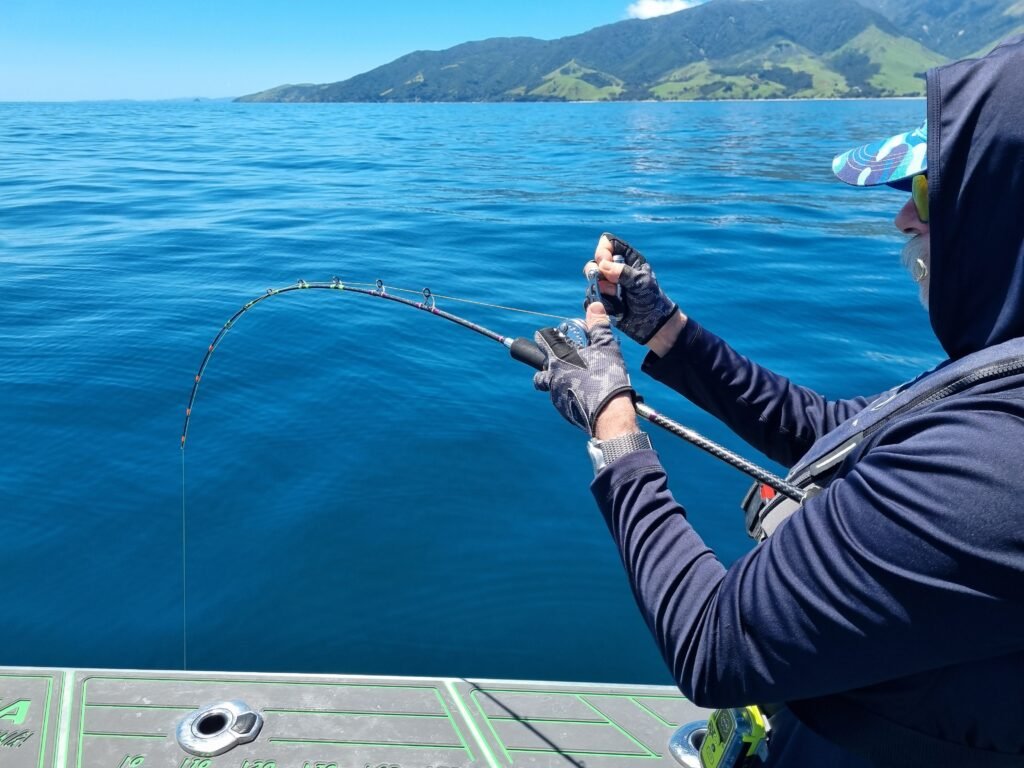
There are many types of jigs on the market but my go to jigs around workups are the slim designed jigs that will reach the bottom faster and have a quicker action on the drop. While slow pitch jigs are also good to use with an erratic action when on the drop through the water column.
Slow jigs or sliders are best to use when on the drift working areas around good sign on the bottom or at the “after match function” as mentioned above.
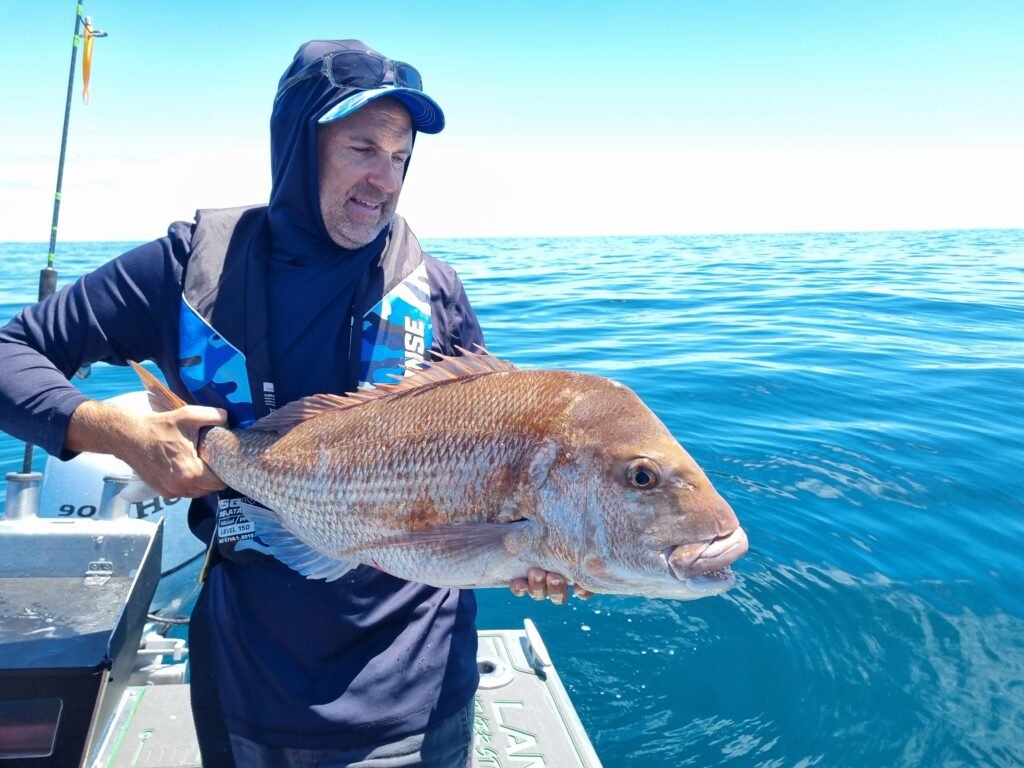
It is a good idea to take a range of colours and weights from 60-150gm, however bright orange and yellow jigs have proven to be the best colours on our springtime trips. The weight is also important as you will need to go up to heavier jigs in deeper water and when the current or drift speed increases.
The best action when using slim or slow pitch jigs is to simply lift them high off the bottom and let them drop back down, with their erratic action and flashing colours helping to attract strikes. I have noticed the jigs with twin assist hooks that use tinsel also help with hookups on slow days with the extra bling.
ELECTRIC ANCHOR ADVANTAGE
We are fortunate to use a Lowrance Recon electric trolling motor on our centre console, and I can’t talk more highly about the benefits of using this tech when fishing.
A key advance it provides is being able to spot lock and anchor over a spot or fish sign when fishing. Often when we come across good sign below, we simply deploy the Recon and lock our position above so we can keep dropping onto the fish below.
We can then turn off the Recon to drift along and then activate it again when we come across good sign again. Keeping your line vertical as you jig is key and when you drift as the wind or current picks up, as the jig gets more horizontal out the back you can’t work the lure as effectively.
When fishing in the gulf in spring, make sure you also take a good pair of binos for spotting birds, a pair of pliers to help remove the small assist hooks and a quality rubber mesh net that will save you time when dealing with landed fish.
Also remember that although the springtime snapper fishing can be epic, remember the snapper are gathering in such big numbers to spawn, so limit your catch, don’t catch your limit. Try and return the bigger healthier 6kg+ fish if in good condition for release to help the stocks for the future.