NICK FENTON
DESIGNER, BOATBUILDER, INNOVATOR
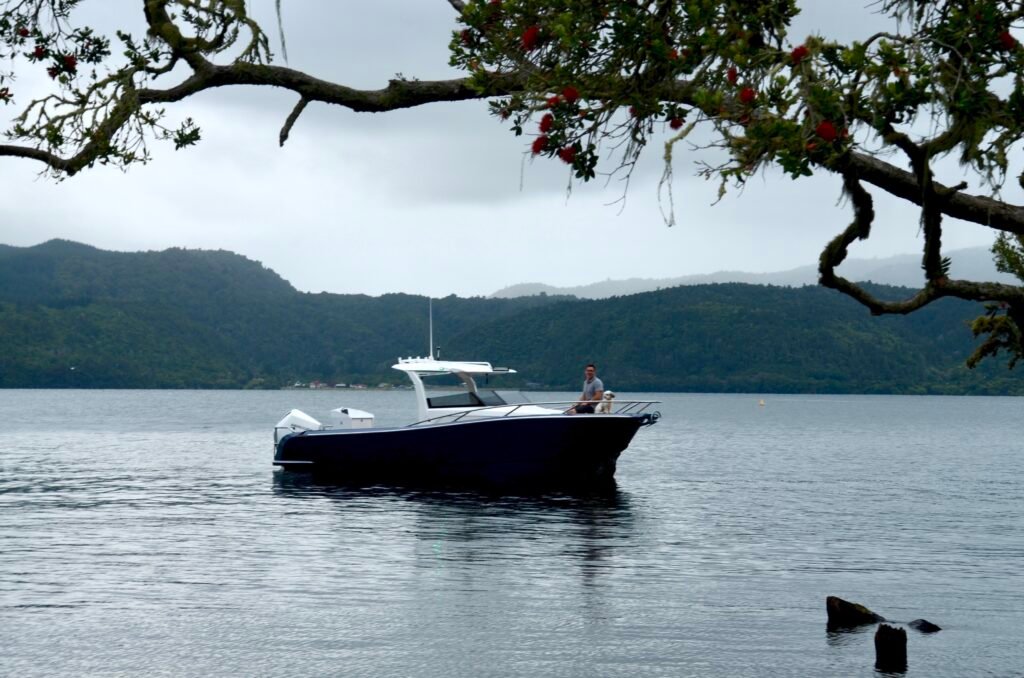
From composite boatbuilding in Hamilton to overseas superyacht yards and aluminium boats in Papamoa Beach, Nick Fenton’s career has brought design and practical construction together. His work at Flyfin reflects an interest in how boats perform, how they are built and how owners use them.
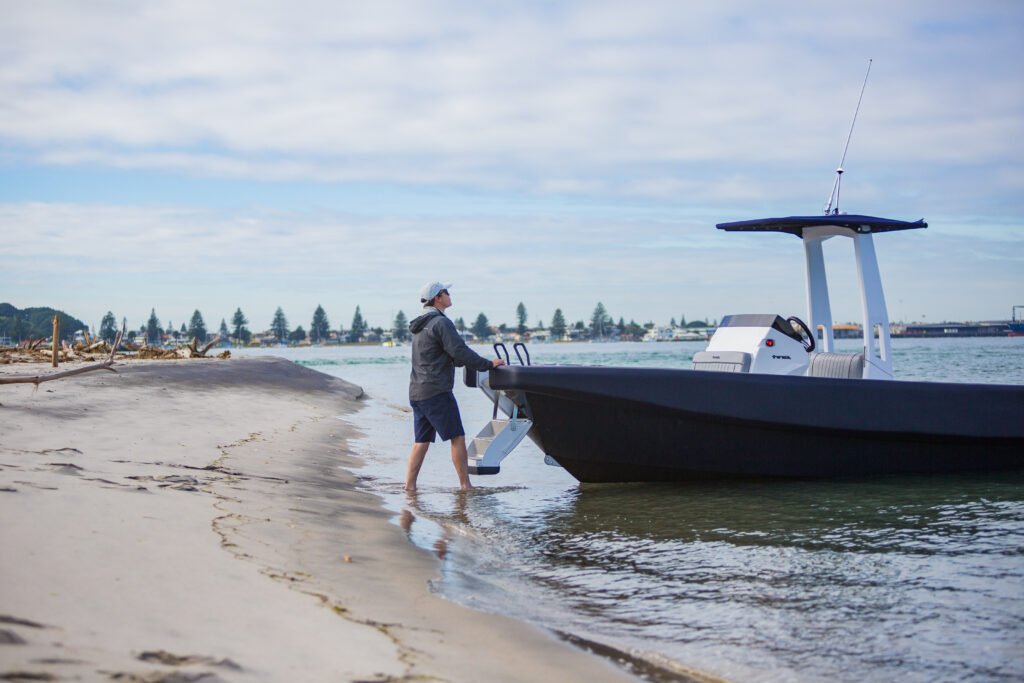
For Nick Fenton, designing a boat involves considerably more than drawing a hull. The position of a throttle, access to a battery, the shape of a cockpit edge and the way a vessel comes back onto its trailer all deserve attention. Each contributes to the experience of owning and using the finished boat.
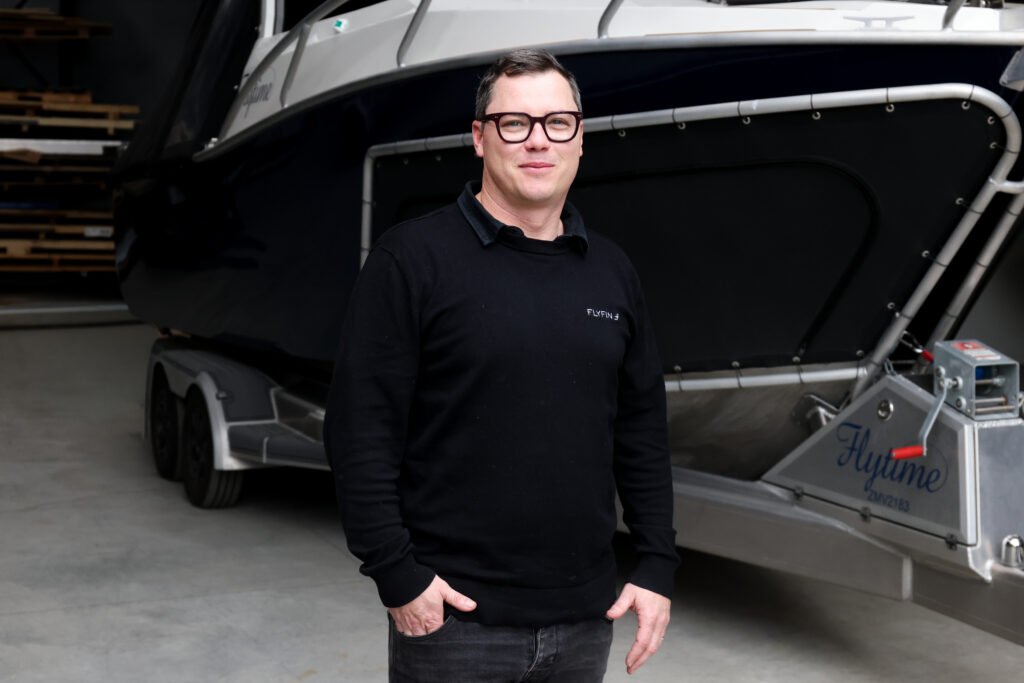
It is an approach shaped by time on both sides of the drawing board. As co-founder and designer of Flyfin Boats, Nick combines formal design training with a boatbuilding background that began more than two decades ago. Returning to New Zealand, Nick and his wife Maddy founded Tino Marine in 2015. He builds and designs; she runs the administration side of the business “I am definitely both a boat builder and a designer,” he says. “To get the best boat design, for performance and function, you have to have an element of both.”
Nick Fenton was put on this planet to build boats.
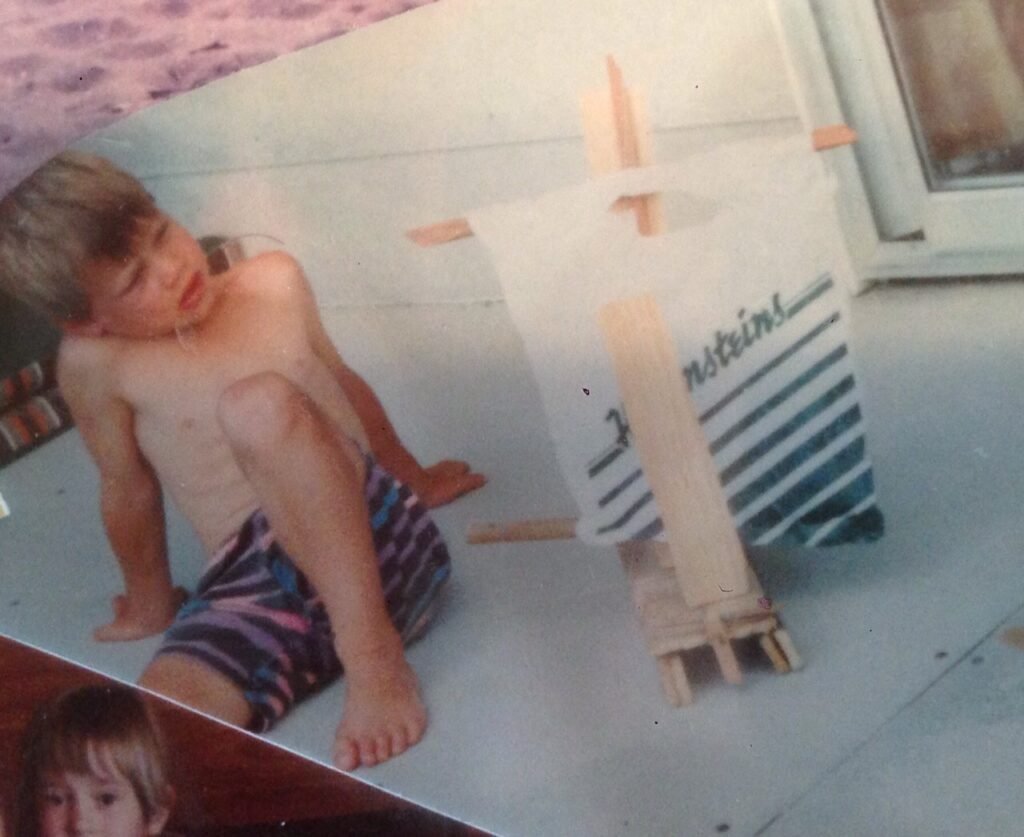
As a little boy, he was crafting boats from sticks and wood, and backing trailers into the water. It was never a phase. It was who he was. In 2002 he left school and joined Tristram Marine in Hamilton. Working in composite construction, including mould and plug making and woodwork, gave him a practical understanding of how designs become boats.
He went on to complete a Bachelor of Design with Honours in Marine Design at Massey University. Hydrofoil projects and aluminium hull design followed, then several years in the overseas superyacht sector that broadened his experience even further.
Today, every Flyfin is the result of that lifelong obsession: a boat built by someone who has never wanted to do anything else.
LEARNING FROM LARGER BOATS
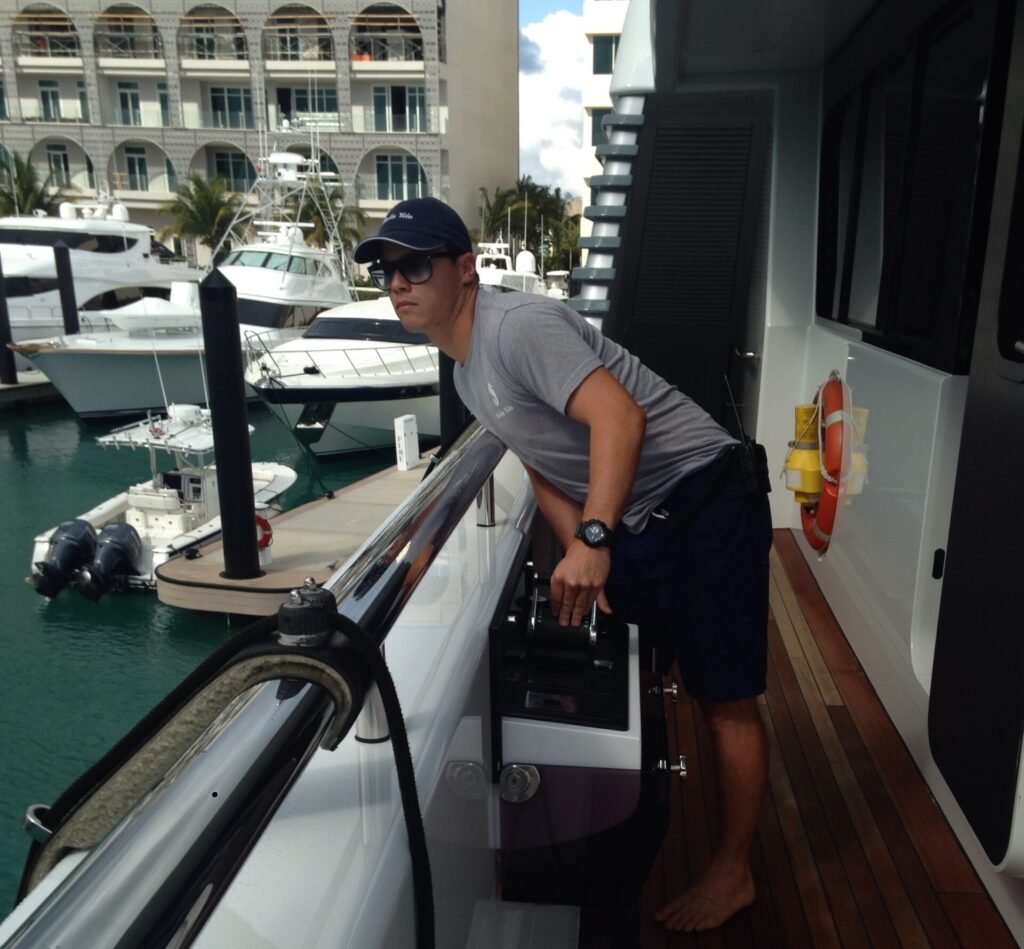
The superyacht years left a lasting impression, particularly the finish standard achievable in aluminium. Nick saw vessels built from the same basic material used in New Zealand trailer boats, yet presented with carefully considered surfaces, detailing and systems.
“It wasn’t the medium that we were building them out of. It was the way we were finishing them.”
That observation helped shape his subsequent work. Aluminium offered scope for a more refined finish, provided the details were addressed during design and construction.
Returning to New Zealand in 2014, Nick founded Tino Marine the following year. Early projects centred on specialist tenders and RIB-style boats, with a strong export focus. The Tino Marine 660 Beachlander, a custom superyacht tender, remains a particularly memorable project for him.
His work later developed into aluminium trailer boats. His custom builds under Fenton Marine adopted the Tectrax electric amphibious system in 2018, and the Flyfin brand arrived in 2019. Today the range covers Amphibious, Hardtop and Sport Open models, with matching trailers, all built in Papamoa Beach.
A boat that works as a whole
Nick describes a successful design as one in which appearance, function and construction have been considered together. Good looks have their place, but the boat also needs to ride well, offer suitable stability, be straightforward to maintain and work effectively on its trailer.
At the helm, that means considering the relationship between the seat, wheel and throttle. Elsewhere, it means considering boarding, upholstery, storage, and equipment accessibility.
He applies the same thinking to spaces an owner may seldom inspect. Wiring behind the dashboard, battery compartments and underfloor lockers should be orderly and accessible. Their presentation matters, but so does the ability to understand and maintain what is inside them.
Construction details contribute too. Folding and returning aluminium can create softer edges, while weld placement and finishing affect the appearance of the completed boat.
Nick acknowledges the depth of boatbuilding skill in New Zealand. His particular interest is in ensuring that individual systems, from anchoring arrangements to canopies and bilges, fit into the overall design. These are decisions he prefers to resolve before construction begins.
Keeping design close to production
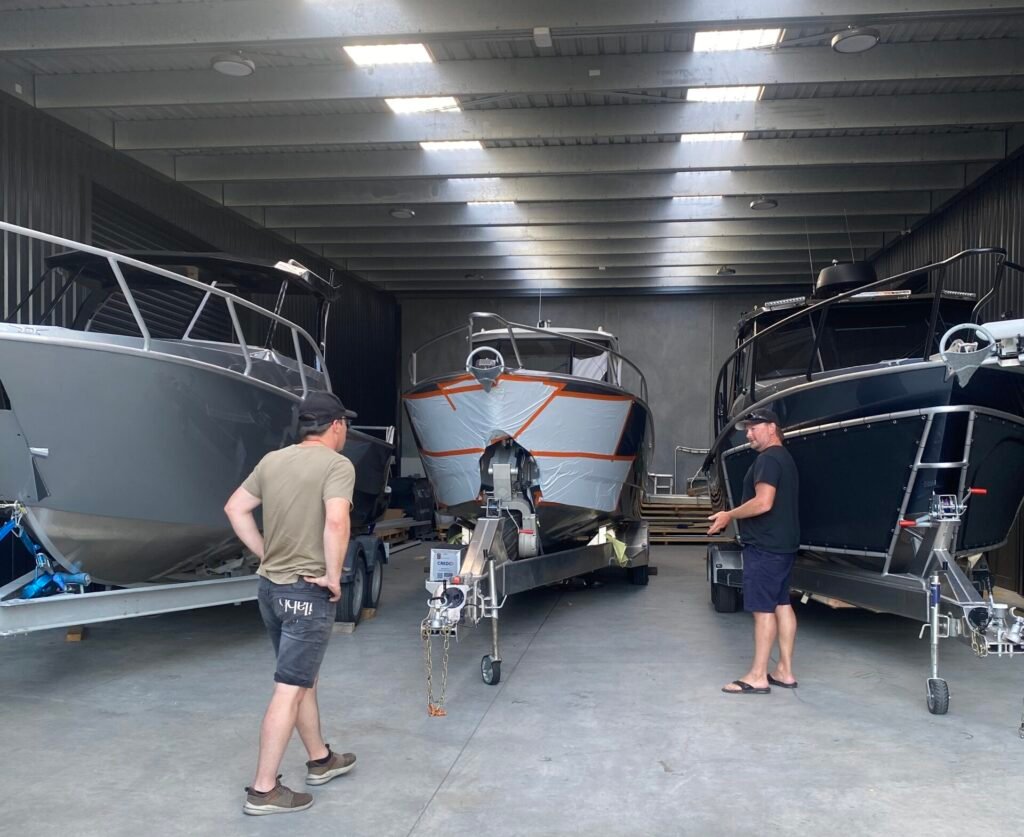
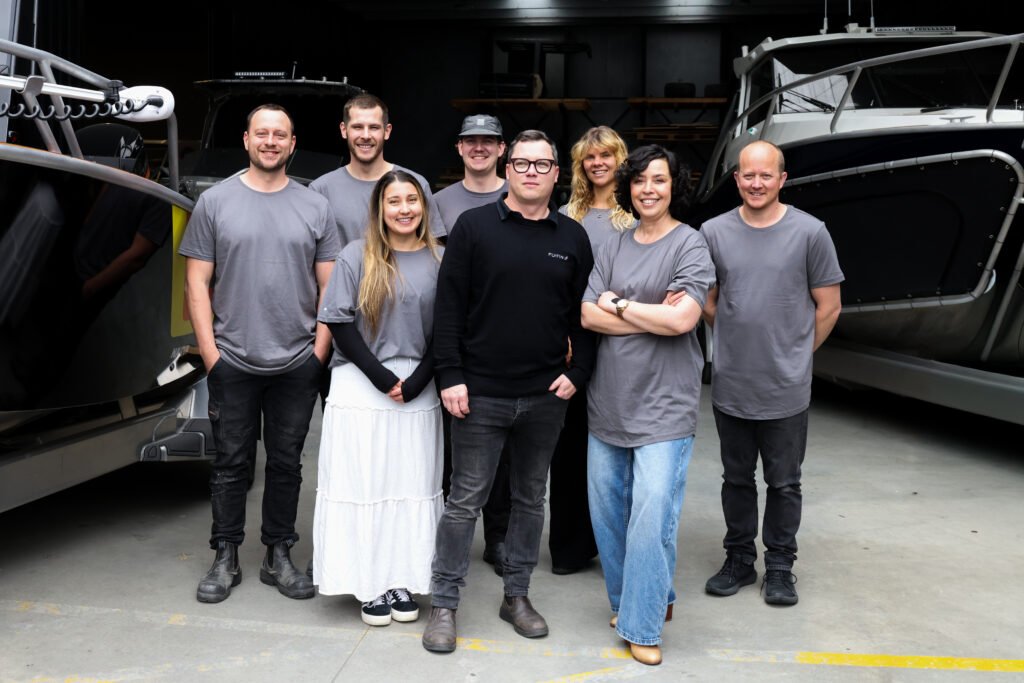
Flyfin manufactures most of its products in-house, with upholstery and paintwork handled externally. Its production capability extends to components such as cleats and sliding windows.
For Nick, the value lies in having designers and builders close enough to identify a problem and work through its cause. If a component is difficult to fit or a welding sequence creates an issue, the response can involve changing the part or the process.
The factory uses two CNC routers: one for six-metre aluminium plate and another for materials including plastics, foam, rubber decking and upholstery panels. Accurate part preparation helps reduce the adjustments required during assembly.
Material use is another consideration. Nick reports that some sheet layouts achieve around 92 per cent utilisation, although the result depends on the parts being cut.
Purpose-built quality-control and process-management software records checks through the build. These include pressure checks, on-water testing and checks for rainwater ingress. Alongside the machinery and systems, Nick places considerable importance on a tidy workplace and a team that takes pride in its work.
Taking the boat ashore
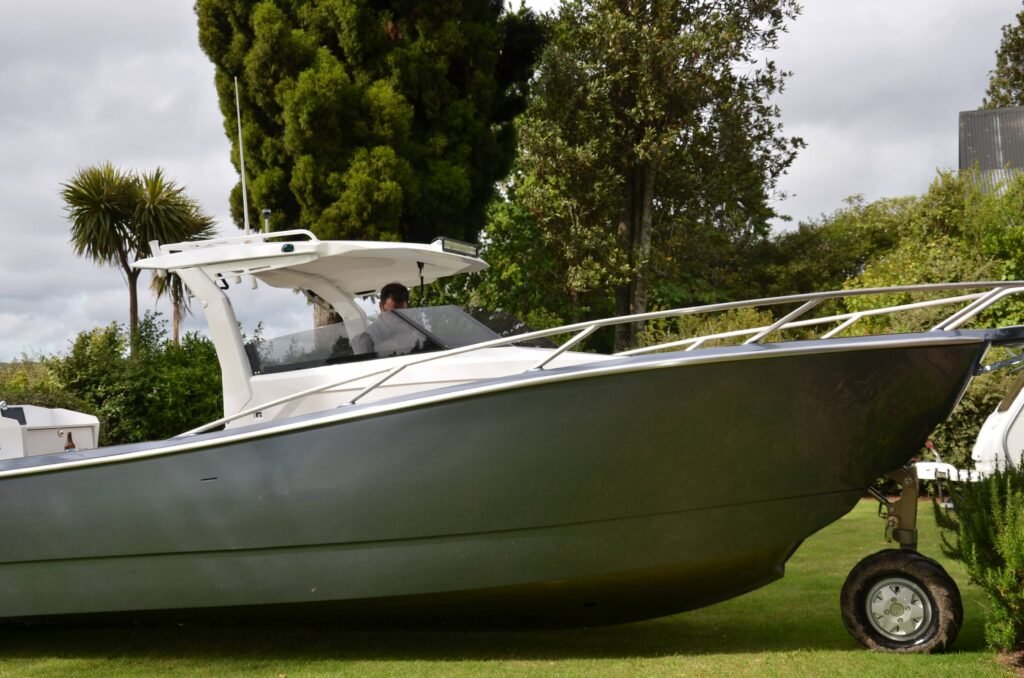
Amphibious capability adds another layer to the design brief. Wheels, drive equipment, and batteries add weight and take up space, and their installation must meet the demands of a saltwater environment.
Nick’s starting point is that the vessel must remain a practical boat. Convenient launching has limited value if the equipment compromises the cockpit, maintenance access or something as everyday as getting back aboard after a swim.
The Tectrax system provides electric drive for travelling on land and during launching and retrieval. Integrating it into the boat requires attention to both its operation ashore and its effect on the vessel afloat.
Weight remains a compromise, and Nick readily acknowledges it. Much of the development effort goes into managing its effect, arranging equipment sensibly and reducing spaces where saltwater can collect.
Experience has also prompted changes in direction. On earlier Fenton Marine amphibious boats, the wheels were recessed into the hull. Although visually appealing, the arrangement added complexity and cost, and reduced internal volume and cockpit space.
Customer feedback helped persuade Nick that exposed wheels were an acceptable part of an amphibious boat. The lesson was useful: a tidy-looking solution still has to justify what it asks the owner to give up.
For customers, the attraction is often easier access to the water. Nick says some use their boats more often when launching becomes simpler, while others appreciate the reduced physical effort of handling a conventional trailer boat.
A different way to launch
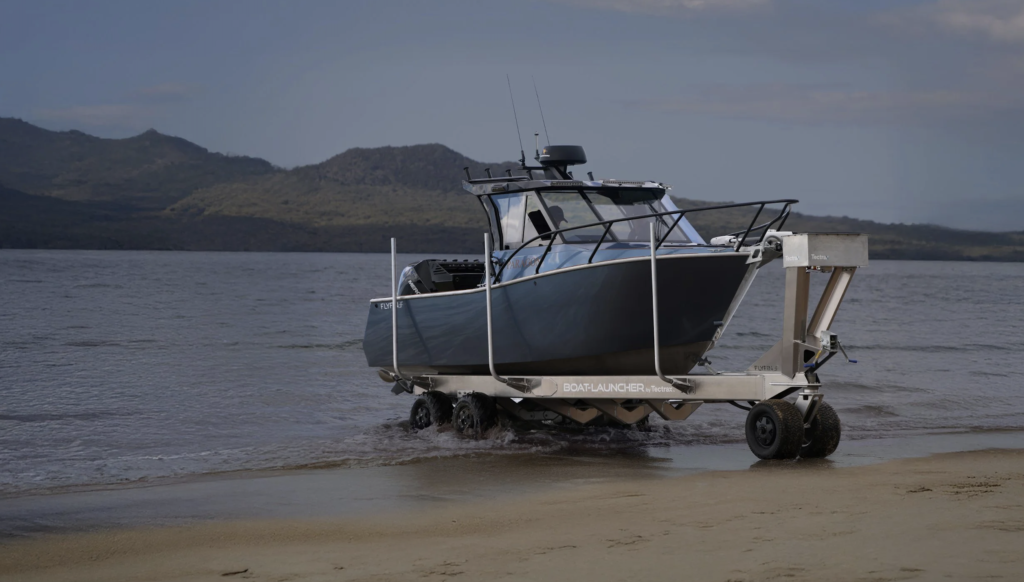
The Boat Launcher grew from a customer’s question. After deciding an amphibious boat didn’t suit his needs, the owner wondered whether the wheels could instead be fitted to a trailer.
Nick initially saw little prospect of making the idea work with the available technology. A later conversation over a beer with James, managing director of Tectrax New Zealand, reopened the possibilities.
An unexpected piece of inspiration then appeared at Fieldays in Hamilton. Nick, whose family background is in horticulture, noticed a three-wheeled cherry-picker designed to straddle a tree. He could picture a boat occupying the space beneath the frame.
Turning that image into a working launcher required full-size prototypes and repeated development. Weight distribution, traction and frame stiffness all needed attention, as did accommodating different hull shapes.
The resulting concept offers a separate launching platform for owners who want beach or off-road access while retaining a conventional boat. Potential applications range from recreational powerboats to sailing dinghies and rescue vessels, depending on the launcher configuration.
It also illustrates how Nick develops ideas. Inspiration may come from another industry, but the work lies in testing whether it can solve a boating problem.
Performance and perspective
The R Series takes that process back to hull design. Intended to explore offshore performance, it uses a different hull form and construction approach from the corresponding non-R models. Features include a fine entry, deep-V sections and variable deadrise.
Nick recognises that the design involves trade-offs, including additional weight and greater beam. He aims to offer an option for owners whose priorities favour that approach to boating.
Although he draws inspiration from architecture, aircraft, cars and nature, two sources remain especially influential: time on the water and conversations with customers.
Listening, he says, was one of the more valuable lessons of his early career. Designing what he thought people wanted was only a starting point. Understanding what they actually needed could lead to quite different decisions.
That outlook also shapes his advice to younger builders and designers. Pursue an idea, but be clear about its purpose. A change should improve something, whether strength, performance, appearance or ease of use.
Asked what makes him proudest, Nick points to the team around him and the customers who enjoy their boats. A photograph of a Flyfin on a beach, sent by an owner with the message “no words needed”, is the sort of feedback he values.
There are further ideas in development, and Nick sees an expanding role for electric technology. For now, he focuses on the relationship between design, construction, and ownership, and the steady improvements that emerge when all three are considered together.
“We can always do better.”