
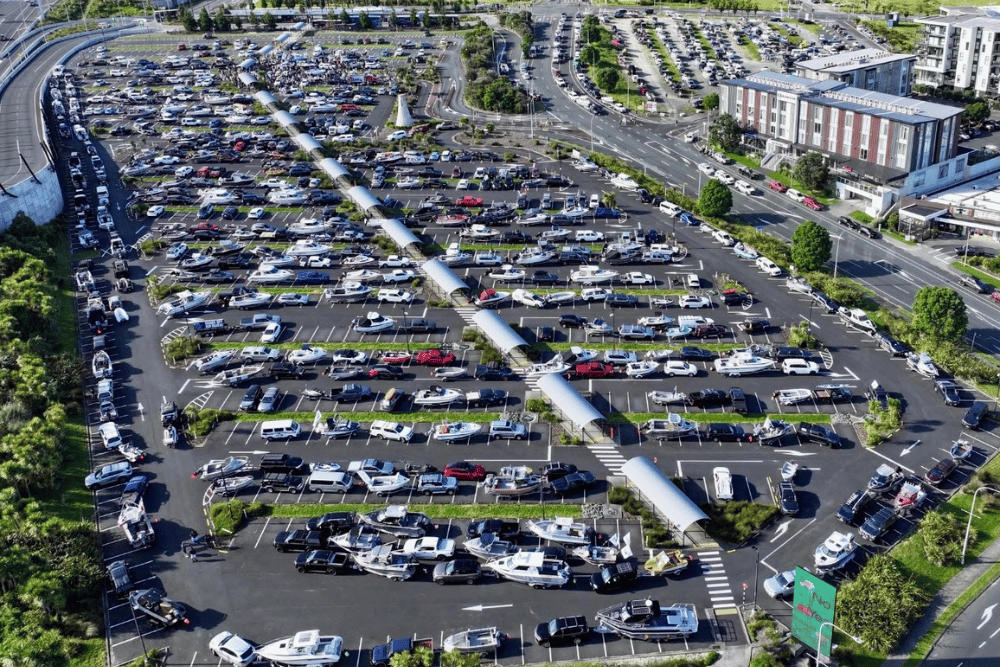

- The One Ocean Protest was held on Saturday, 22 November 2025, when hundreds of recreational fishers and boating community supporters from around Auckland and beyond took part in a mass convoy – towing their boats, jet-skis, and trailers – to voice concerns about recent changes under the Hauraki Gulf / Tīkapa Moana Marine Protection Act.
- The convoy journey covered roughly 30 km: departing from the Albany Park ’n’ Ride, then heading to the waterfront at Mission Bay via the harbour bridge and coastal roads. Observers estimated around 500 vehicles towing boats, with many more people gathering at key points – total attendance reached well over 1000. The protest was peaceful, organised, and coordinated with local authorities. Participants were asked to obey road rules, secure flags/banners, and respect safety conditions.
Why people protested
The heart of the protest was opposition to parts of the new protection-zone law that protesters argue are unfair or contradictory. Key grievances included:
- Under the new Act, 12 new “High Protection Areas” (HPAs) across the Gulf have been designated – intended to restrict fishing and protect marine ecosystems. Yet in a late-stage amendment, limited commercial fishing (specifically ring-netting) was still permitted inside two of those HPAs. Many recreational fishers see that carve-out as undermining the protection those zones were meant to deliver.
- Protesters argue that if an area is declared a “High Protection Area,” then all fishing should be banned – irrespective of commercial or recreational status. Their slogan: “If it’s a marine reserve, it needs to be a marine reserve for everyone.”
- There’s also growing concern over proposals to open up certain vulnerable reef-fish species and even game-fish (like marlin) to commercial sale – a move many fear will erode fish stocks and harm long-term sustainability.
- The protesters argue that fish are a public resource, and that decisions about fishing access or species protection should involve transparent public consultation – rather than opaque quota systems that favour certain commercial operators.
What it means for boaties, fishers, and the Hauraki Gulf
- For many recreational fishers and small-boat users, the protest highlights a sense of being left out of decisions – especially when big commercial operators receive exemptions or quotas. If you fish or boat in the Hauraki Gulf, the outcome could affect where you’re allowed to drop a line or anchor.
- The event signals rising pressure on regulators to reconsider rules and exemptions. Indeed, after the protest, the government opened a short public-submission window on controversial proposals, especially those to allow the commercial sale of marlin and certain reef-fish species caught as bycatch.
- The protest’s message is not necessarily anti-commercial; rather, it is a call for fairness, transparency, and shared stewardship. Many participants emphasise that the Hauraki Gulf’s health – fish stocks, reef ecosystems, and marine biodiversity – benefits everyone, and should not be undermined by a few loopholes.
Where things might go from here
- The protest organisers – led by figures like Ben Chissell, have promised further action if their demands aren’t addressed. This could include more protests, submissions to government consultations, and public campaigns.
- We’re likely to see ongoing scrutiny of regulations around commercial quotas, bycatch, and protections for vulnerable species. The short submission window indicates regulators are at least (for now) offering a chance for public input.
- For recreational fishers and boat owners, this may mean a period of uncertainty, which makes awareness, participation, and staying informed all the more important.