Part One: Corrosion is an unavoidable reality of boating, but catastrophic damage is not. By understanding the different types of corrosion and how they affect various vessel types, you can move beyond guesswork and quick fixes. Jessica Gatt explains.
Corrosion is one of the most persistent, costly, and misunderstood problems in the marine environment. Boats operate in a uniquely aggressive setting where different water environments (saltwater, brackish & freshwater), humidity, oxygen, electrical systems, coatings and materials all combine to create a unique combination for corrosion risk. Left unchecked, corrosion can compromise safety, reduce performance, shorten asset life, and significantly increase maintenance and repair costs.
While corrosion is often spoken about as a single issue, in reality it encompasses several distinct mechanisms, each with different causes, warning signs, and solutions. Adding further complexity, the way corrosion manifests varies considerably depending on vessel type, construction materials, berthing arrangements, usage patterns, and onboard electrical design. A one-size-fits-all approach rarely works.
However, achieving balance through understanding these individual mechanisms and the best approach for mitigating this risk can significantly improve and reduce the opportunity for degradation and unnecessary destruction.
This article explores the most common types of corrosion affecting boats, explains how they impact different vessel categories, and highlights why an educated, system-level approach is essential to effectively diagnose problems and implement the correct long-term solutions.
At its core, corrosion is an electrochemical process, as the man-made metal material is essentially wanting to return to its natural form as it was pulled out of the ground, its ore.
The first type of corrosion we’ll discuss is GALVANIC CORROSION. Galvanic Corrosion is a passive process – if the fundamentals are achieved, then this action will happen naturally and with no influence from electrical systems, marinas, “the boat next door”.
To understand this properly, the fundamental principle is that all metals create a DC voltage when submerged in an electrolyte, this is called the Galvanic Series of Metals. This is known as a Potential Voltage. When two or more dissimilar metals are submerged in the same electrolyte and connected, either electrically (through bonding) or mechanically (physically joined), the more active metal (anode) will deplete its electrons to “protect” the more passive material (cathode). This results is a measurable DC current flow (mV) between the anode and the cathode, causing metal loss at the anodic areas. The anode is sacrificing if it is the most active material in the common connection.
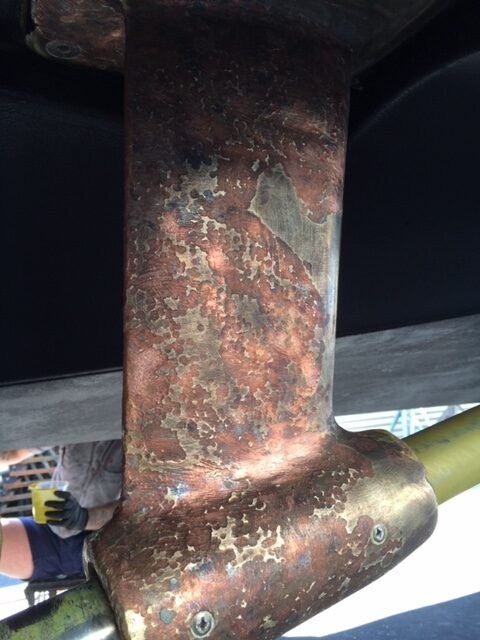
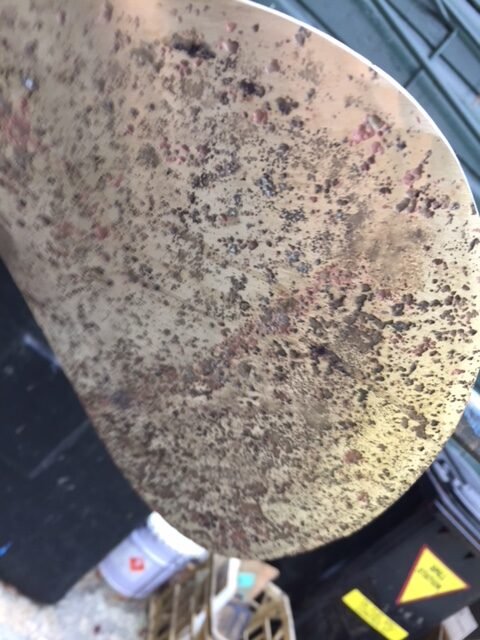
A good example is a stainless steel shaft and a bronze propeller, which are mechanically joined and submerged in the same electrolyte. The Potential Voltage of the stainless steel is approximately -50mV and bronze is -250mV. The bronze has a potential difference of -200mV more than the stainless steel and it will degrade and give up its electrons in order to protect the stainless steel. This results in de-alloying of the bronze, where it becomes pink, brittle and develops pitted sites of metallic loss. The stainless steel will suffer no ill-effects.
This is where sacrificial anodes are used – they are installed as a sacrificial piece of metal material to preferentially degrade over your precious and expensive parts – to stop them from becoming an anode. Using the example above, the addition of a zinc anode on the shaft will mean the anode will now be the zinc. The zinc anode has an approximate potential voltage of -950mV – so is -700mV more active than bronze. The zinc will degrade in order to protect any lower potential material it is connected to within the same electrolyte.
So what is the best anode for my boat? Fundamentally you first need to know – am I operating in fresh exclusively, or brackish or salt water? Then what metals it is that you’re protecting. Using this great resource www.marineprosystems.com/anodeguide will then direct you to the best anode for optimal protection against galvanic corrosion.
Depending on your type of vessel, the drive type and berthing (trailer or in-water) will depend on the correct anode setup. Aluminium boats kept on trailers will usually have OEM anodes fitted just on the outboards. Fibreglass/composite or timber vessels with shafts will have under-hull anodes bonded (electrically connected) to the metallic parts for protection. Considerations for environment, protective coatings and exposed metals will determine size, volume and location of anodes.
Galvanic corrosion is predictable and manageable when understood correctly. Sacrificial anodes, material selection, and electrical bonding play a major role—but incorrect anode choice or bonding can worsen the problem rather than fix it. Our next article will explore bonding further.
Importantly – anodes only protect against galvanic corrosion. Anodes are also a good indicator that you may have another problem on board. Accelerated anode loss, either externally mounted on your boat, or within cooling systems or engines, can indicate the presence of an electrical influence, that is essentially accelerating the electron migration. However fitting more anodes will not fix it. Although you can see acceleration of anode loss on a cheap zinc anode, does not mean that you are protecting all sites of electron loss from other sites. And you may be in for a surprise at your next service interval, so identification of early warning signs is essential for quick diagnostics and rectification of this influence.
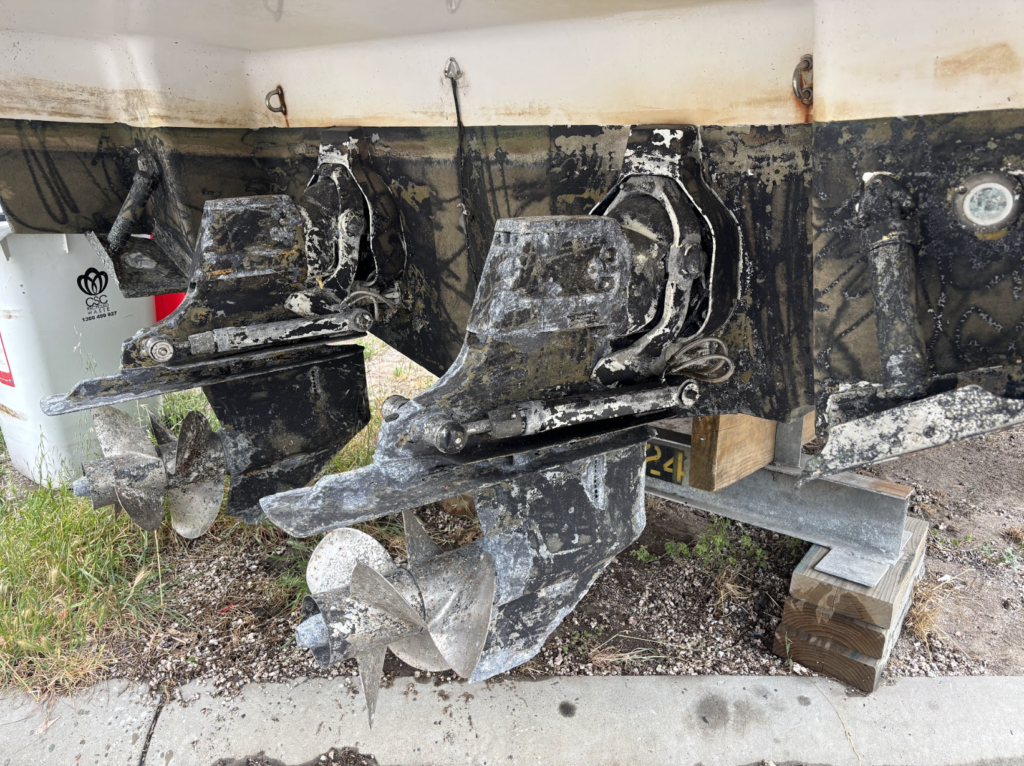
Furthermore, significantly slowed or NO anode loss can indicate also a serious electrical influence, where the polarity (or potential voltage) of the anodes are flipped. Through an external power source, the cathode becomes the anode and the anode becomes the cathode – so like here in this image, the anodes are unworn and the drives are actively corroding.
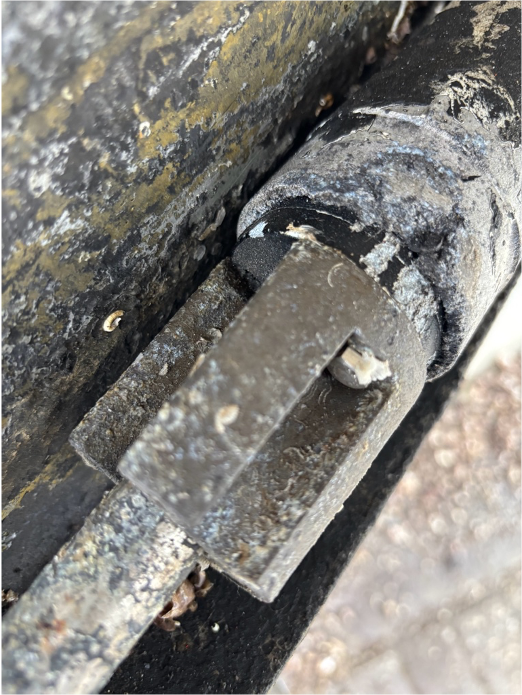
On twin motor vessels, signs of uneven anode wear between port and starboard can also indicate the presence of an electrical influence that is flowing between engines.
This leads us to ELECTROLYTIC CORROSION, or stray current corrosion.
Electrolytic corrosion occurs when unintended electrical currents leak into the water from a vessel’s DC electrical systems. Unlike galvanic corrosion, this process can cause extremely rapid and localized metal loss.
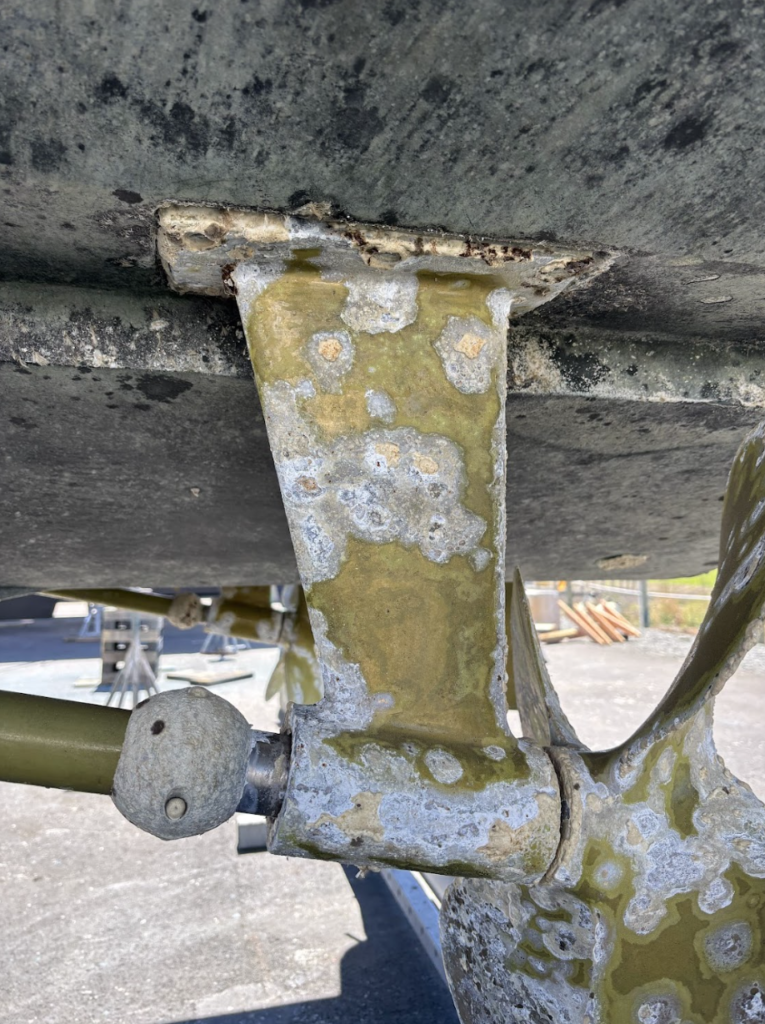
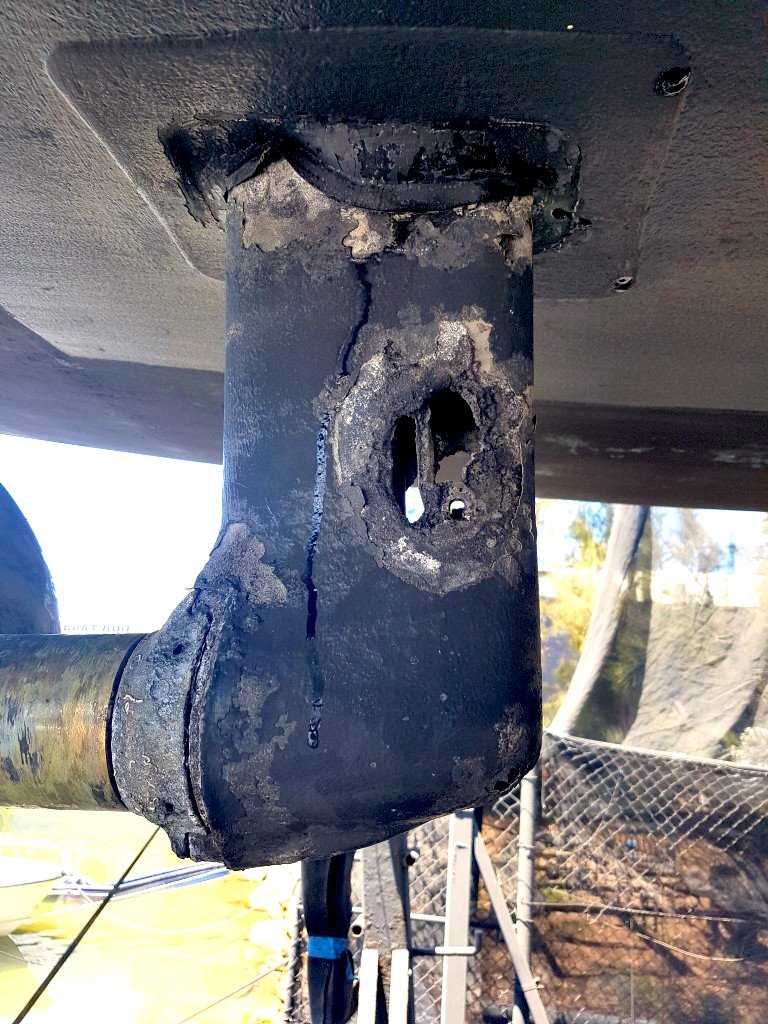
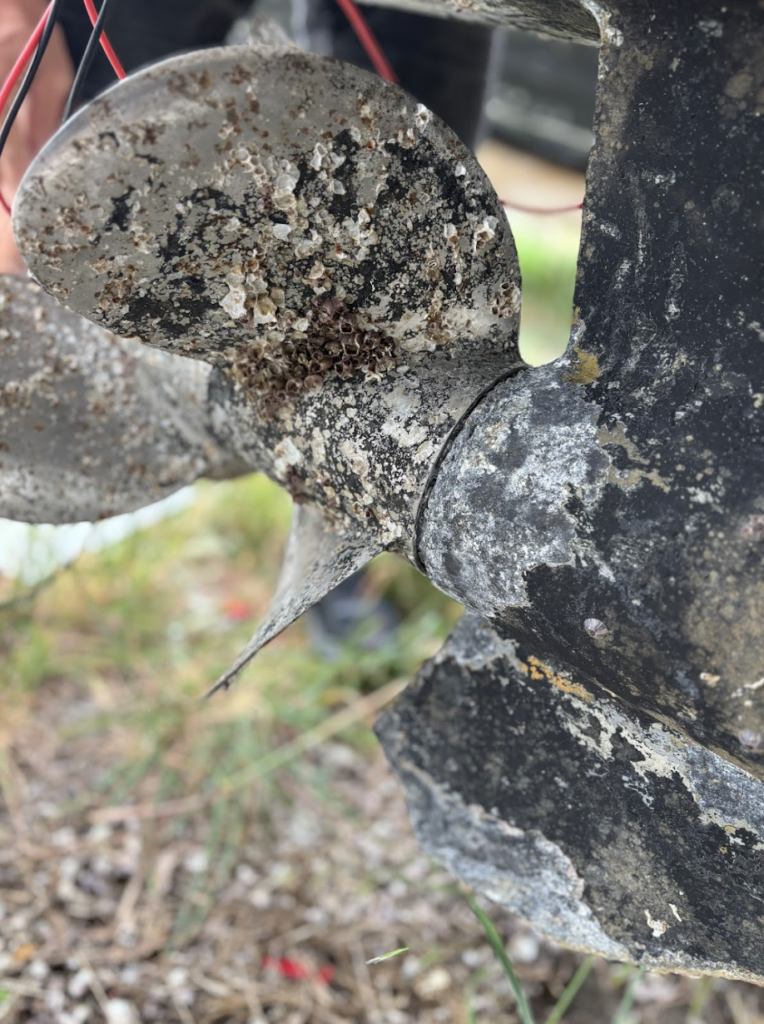
Common sources include faulty wiring, insulation breakdown or faulty appliance from onboard equipment.
Commonly AC stray current is lumped into this activity, but it is important to know that it is DC current that is the source of the most aggressive electrical influences. DC = Direct Current flowing from one site to another, in the process will take metallic material along for the ride. AC leakages can cause influences, but will typically cause acceleration of marine growth, coating loss and can affect normal anode function – where corrosion is a secondary affect due to the breakdown of the primary protection. This distinction is important as it is commonly blamed for aggressive corrosion.
The warning signs of an electrolytic corrosion event includes very rapid metal loss (weeks or months rather than years), severe pitting with a “chewed” or “swiss cheese” appearance, unusual and accelerated coating losses, corrosion concentrated near electrical components – remembering that it may or may not be represented on the anodes. Stray current corrosion is often misdiagnosed as galvanic corrosion. Installing larger anodes without addressing the electrical fault can mask the symptoms while allowing ongoing structural damage.
There are localised types of corrosion that will not be affected by anodes or electrical systems. These will occur locally in materials, not necessarily submerged. Typical protection is through protective coatings, isolation and correct material selection.
Oxidation of particularly aluminium surfaces is a big topic for aluminium boaters. Localised reaction to oxygen, and combined with some salt, moisture and sometimes localised galvanic reactions between fasteners are all at the top of the list for aluminium boat owners to overcome. Simple measures like keeping the surface salt free and dry with the right cleaners create a huge net benefit in reducing surface oxidation. This includes within bilges and sealed sections!
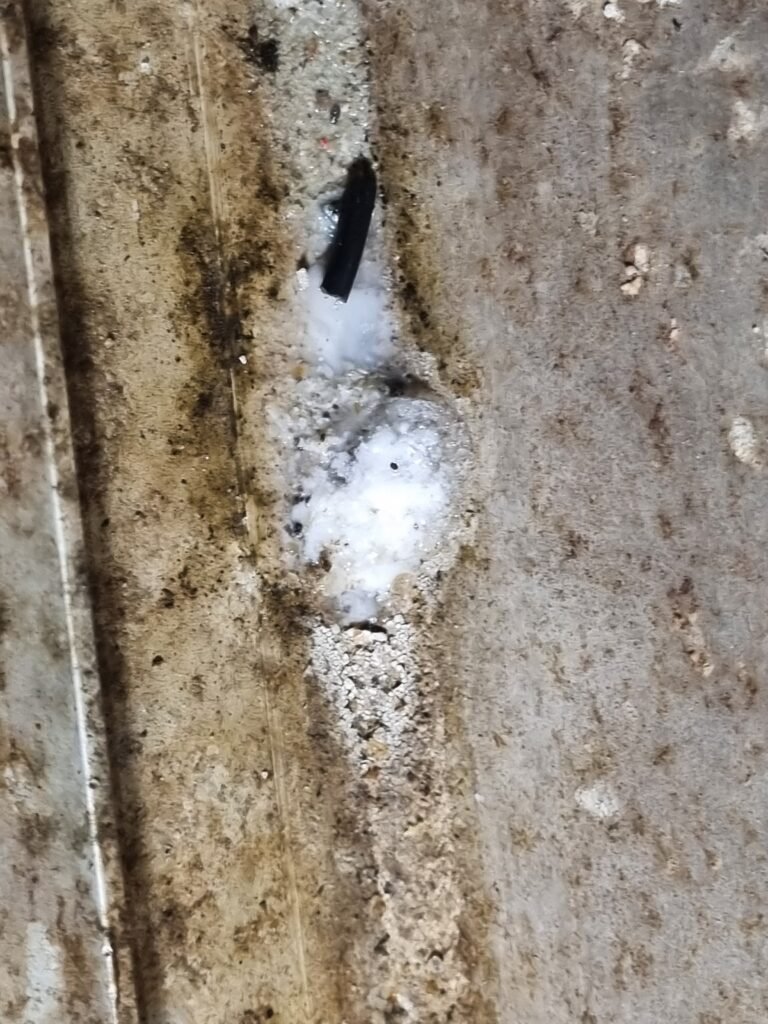
CREVICE CORROSION occurs in shielded areas where oxygen levels are depleted, such as under gaskets, within threads, under washers, in stern tubes, or beneath fastener heads. Stainless steels are particularly vulnerable in stagnant conditions.
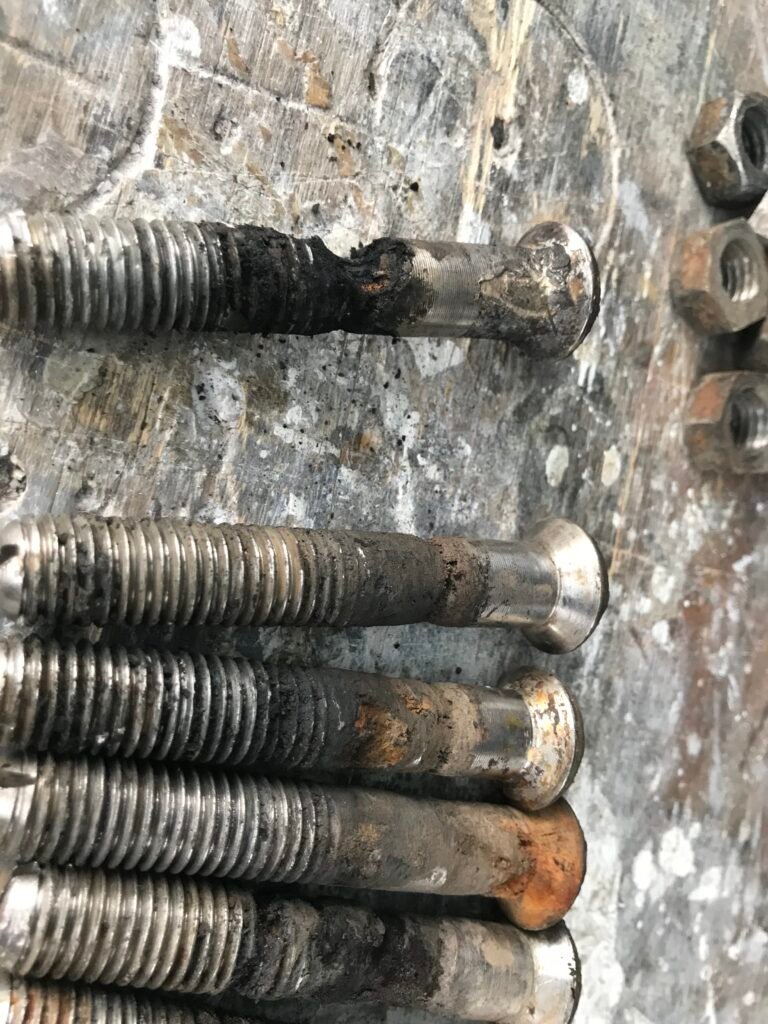
If you see weeping of rust from threads, pipes or fixtures – pull it apart and take a look at the areas you cannot see. It may be that you have a significant weakening of the material with substantial metallic loss. This corrosion will be hidden beneath intact surfaces.
CAVITATION CORROSION is another localised corrosion that commonly affects bronze surfaces, such as propellers and pumps. Tiny bubbles form and collapse violently in a liquid, damaging the metal surface over time.
Think of it like this: When water moves rapidly around propellers, pumps, or impellers, the pressure can drop. That pressure drop causes small vapour bubbles to form in the water. When those bubbles move back into a higher-pressure area, they collapse suddenly. Each collapse creates a tiny shock against the metal surface, with millions of collapses over and over, act like microscopic hammer blows. This can look like small pits or craters in the metal.
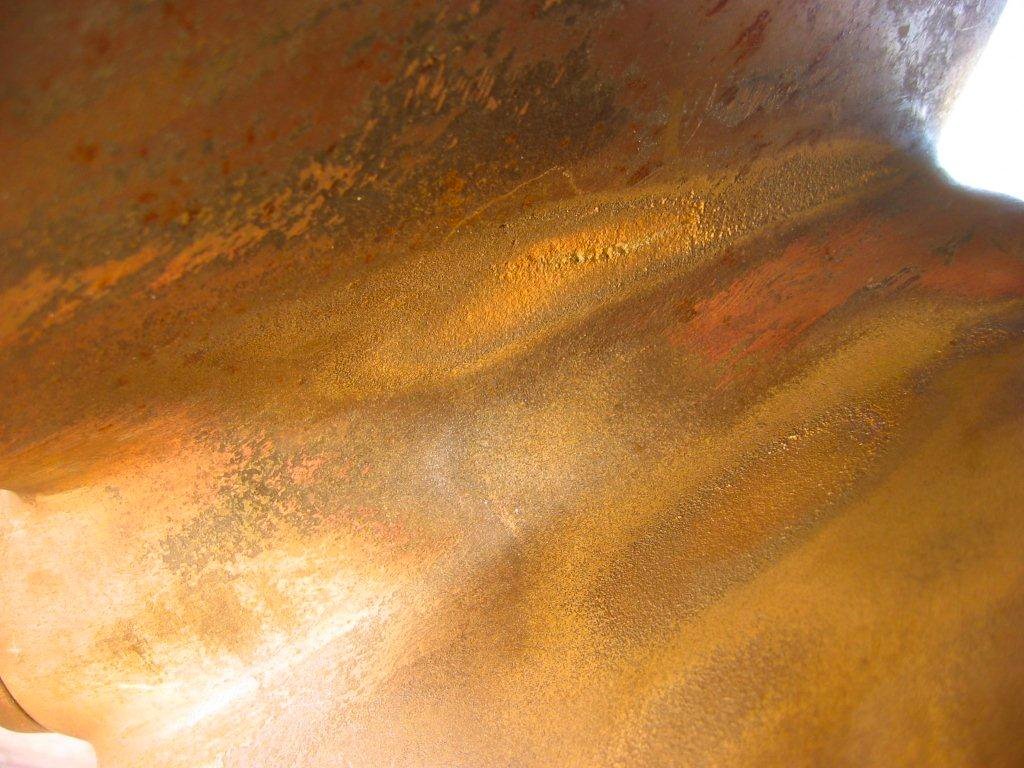
Improving propeller pitch, reducing irregular water flow over the materials and reducing air into internal piping systems, or reducing hard bends in pipework can help to reduce the incidence of cavitation.
Now if we touch on the inherent risk of corrosion by vessel type, it can help develop a preventative maintenance plan to reduce corrosion risk long term.
Aluminium boats are lightweight, efficient, and popular across recreational, patrol, and commercial sectors. However, aluminium is highly anodic compared to many common marine metals. Primary risks include localised galvanic corrosion from dissimilar fasteners, DC groundings to hull causing stray current corrosion and incorrect anode materials and/or insufficient anode protection. Proper maintenance of aluminium boats, even those trailered or bare vs painted, is absolutely integral to their longevity.
Fibreglass hulls themselves do not corrode, but the underwater metals attached to them certainly do. GRP vessels often contain a complex mix of stainless steel, bronze, aluminium, and sometimes steel components. Understanding what to bond and what to isolate, what are the best anodes and coatings to use for protection, am I under or over protected are all important questions to wrangle and understand.
Steel vessels are robust and widely used in commercial shipping, fishing fleets and workboats. However, steel is inherently vulnerable to corrosion and requires continuous protection. Considerations for correct protection from anodes and coatings plus electrical integrity are all of significant importance.
Traditional wooden boats often incorporate metal fasteners, shafts, and fittings that are vulnerable to corrosion, particularly in damp, oxygen-poor environments. Importantly, wooden boats are at significant risk from overprotection from some anodes, so bonding and cathodic protection system design is critical to ensure longevity and integrity of the hull itself, not just the metals.
Corrosion is an unavoidable reality of boating, but catastrophic damage is not. By understanding the different types of corrosion and how they affect various vessel types, owners and operators can move beyond guesswork and quick fixes. Each vessel presents a unique combination of materials, electrical systems, and environmental exposure. Addressing corrosion effectively requires education, careful assessment, and tailored solutions rather than generic remedies.
In the long term, an informed and proactive approach not only protects the vessel itself but also enhances safety, performance, and overall asset value in one of the harshest operating environments on earth.
Corrosion prevention requires an educated approach, involving correct diagnosis to identify the specific corrosion mechanism at work and viewing the vessel as an integrated electrical and mechanical system. Appropriate solutions are dependant on this mechanism – through anode protection, material selection, coatings, anodes, and electrical protections suited to the vessel and its operating environment.
Ongoing monitoring including regular inspections and measurements rather than assumptions. Misdiagnosis can accelerate damage, increase maintenance costs, and create false confidence in ineffective solutions.