

If you’ve ever taken the same boat from a calm lake to the open ocean and thought, “This feels different,” you’re not imagining things. The differences in boat performance between freshwater and saltwater are real, and measurable. We take a look at why.
These variations are largely due to physical properties such as density, viscosity, and buoyancy, which influence everything from fuel economy to handling, acceleration, and stability. Understanding these factors can help boat owners, skippers, and even casual enthusiasts anticipate how their vessel will behave in different bodies of water, ensuring safer, more efficient, and more enjoyable boating experiences.
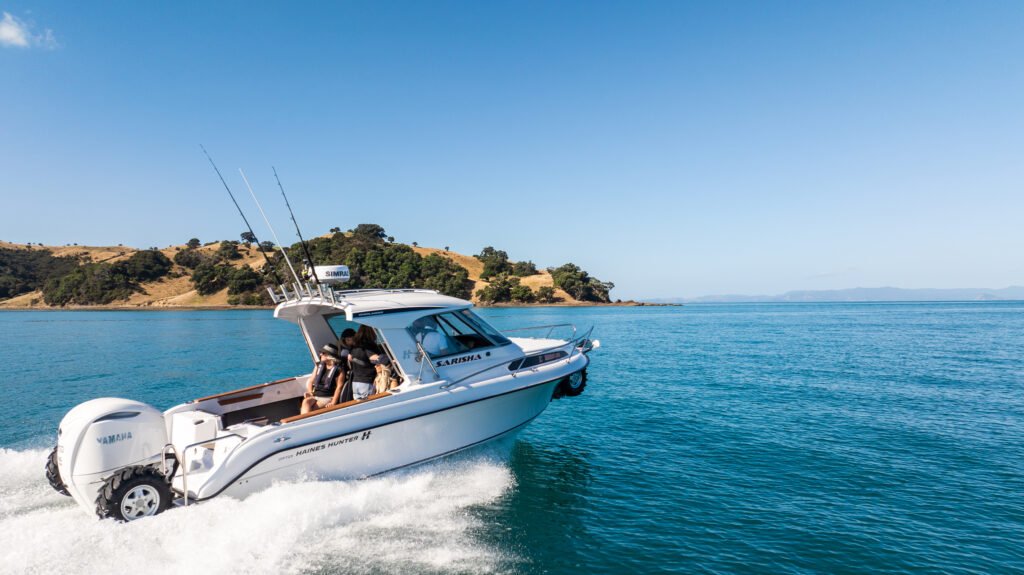
Density: Saltwater Gives You a Lift
One of the most significant differences between freshwater and saltwater is density. Freshwater has a density of about 1.000 g/cm³ at 20°C, while seawater, thanks to its roughly 3.5% salt and mineral content, is denser, averaging around 1.025 to 1.030 g/cm³ at the same temperature. At first glance, this small 2.5–3% difference may seem negligible, but it has a noticeable impact on how boats float and perform.
Boats naturally sit higher in saltwater than in freshwater. Less hull is submerged, which reduces hydrodynamic drag and often results in better fuel efficiency and slightly higher speeds. This effect can also alter the trim and balance of a boat, particularly if the vessel was originally optimised for freshwater. For example, a freshwater-optimised pontoon boat may ride slightly bow-down in a lake, but in the ocean, it can level out and feel more responsive.
The reduction in wetted surface area (the portion of the hull in direct contact with water) does more than improve speed. It can also enhance stability, especially for lighter boats. That’s why experienced boat owners or skippers often adjust trim tabs or ballast when transitioning between lakes and coastal waters, ensuring the boat remains level and handles predictably.
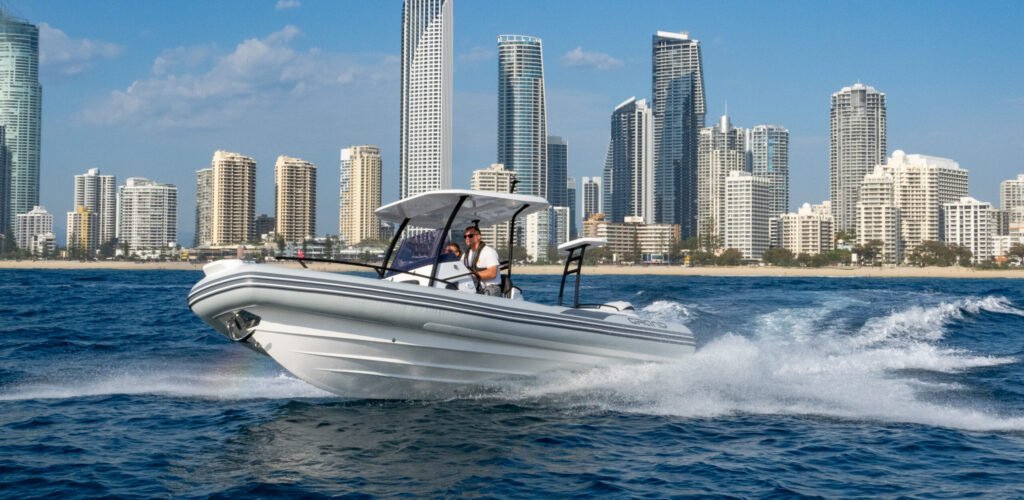
Viscosity: Subtle but Significant
Viscosity is a measure of a fluid’s resistance to flow. It affects how easily water moves along the hull and how efficiently a propeller can push against it. At 20°C, freshwater has a dynamic viscosity of about 1.002 centipoise (cP), while seawater is slightly more viscous, ranging from 1.08 to 1.20 cP, depending on temperature and salinity.
Although the difference might seem minor, it becomes more noticeable at higher speeds or with precision-engineered propulsion systems. Higher viscosity slightly increases friction along the hull, but it also provides the propeller with greater grip, which can enhance acceleration, especially when moving heavier loads or starting from a standstill. In practice, boaters often notice that their vessel responds more quickly to throttle inputs in saltwater than in freshwater, provided the propeller pitch and size are suitable for the denser fluid.
This effect is particularly relevant for high-performance boats. A speedboat that barely reaches planing speed on a freshwater lake may glide onto plane more efficiently in the ocean, thanks to the combined effects of density and viscosity.
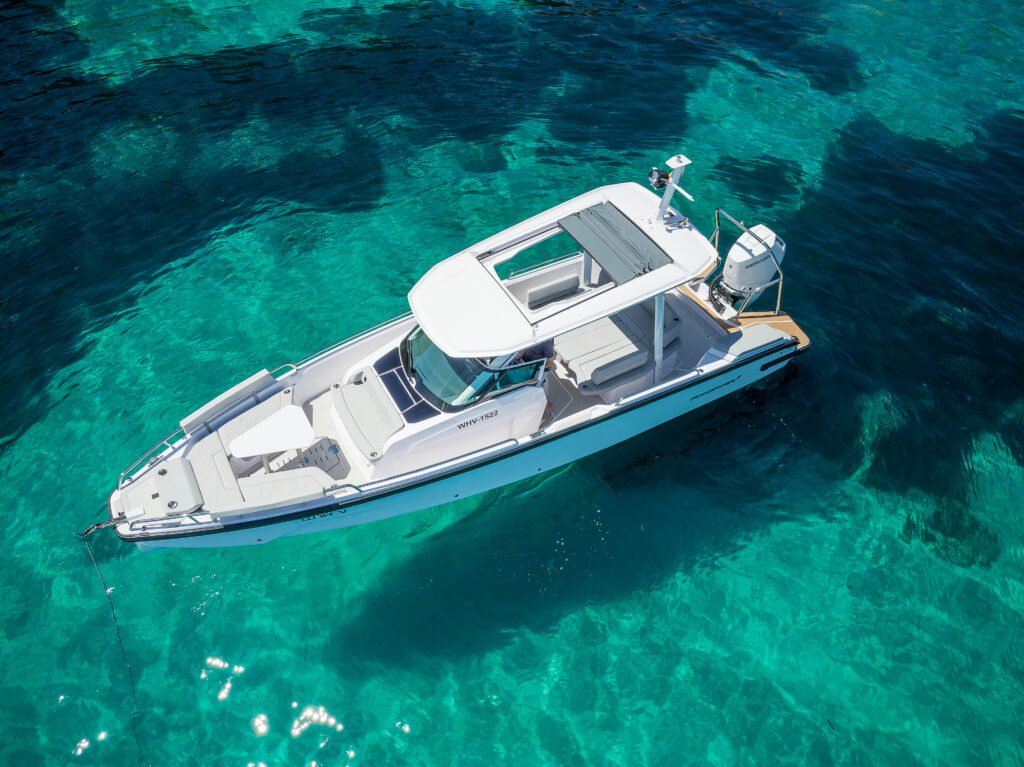
Propeller Efficiency: The Saltwater Advantage
Propellers do more than just spin – they push mass. Denser water allows propellers to generate more thrust at the same RPM. This translates into:
Faster acceleration from a stop or when changing speed
Lower RPM requirements to maintain cruising speed
Potentially better fuel economy under certain loads
However, it’s worth noting that denser water also increases resistance, which can slightly limit top-end speed. Depending on hull design and propeller type, some boats might see no noticeable increase, or even a slight decrease, at maximum velocity. For most recreational boats, though, the trade-off is generally favourable, with improved responsiveness at low to mid-range speeds.
Boaters who frequently switch between fresh and saltwater sometimes carry different propellers or adjustable-pitch systems to optimise performance for each environment.
Buoyancy and Load Handling
The increased density of saltwater means a greater buoyant force. Essentially, the water “pushes back” more strongly, allowing a vessel to carry slightly more weight while maintaining freeboard (the distance between the waterline and the deck).
This has practical implications. A freshwater boat that feels sluggish under a full load may feel more agile in the ocean. Commercial vessels leverage this property extensively, carefully calculating draft and cargo load to maximise efficiency without compromising safety. Recreational boaters may notice the difference when carrying fishing gear, water toys, or passengers; the same boat can ride higher and more comfortably in seawater.

Temperature: Adding Another Layer
Water temperature affects both density and viscosity. As water warms, it becomes less dense and less viscous. This means that a boat in warm saltwater might not float quite as high or respond as crisply as it would in cooler seawater. Similarly, freshwater performance varies between cold mountain lakes and warm southern reservoirs.
This is why professional skippers consider both salinity and temperature when evaluating performance or selecting propellers. Even small changes in density or viscosity can affect planing speed, fuel consumption, and handling, particularly for performance-oriented or heavily loaded vessels.
Corrosion and Maintenance: Saltwater’s Downside
While saltwater often provides better flotation, propeller thrust, and efficiency, it carries a significant trade-off: corrosion and marine growth. Salt accelerates corrosion in aluminium, steel, and even some stainless steel grades, affecting everything from hulls to engines and rigging.
Saltwater also supports faster growth of algae, barnacles, and other marine life, which can attach to the hull, shafts, intakes, and propellers. Over time, this fouling increases drag, reducing efficiency and speed. Regular maintenance, such as flushing engines, applying anti-fouling coatings, and rinsing the boat after use, is critical to preserving performance.
Freshwater, by contrast, is far less corrosive and generally supports slower biological growth, making maintenance simpler and less costly over time. For lake and river boats, this can translate into longer intervals between hull cleanings, less engine wear, and a longer lifespan for metal components.
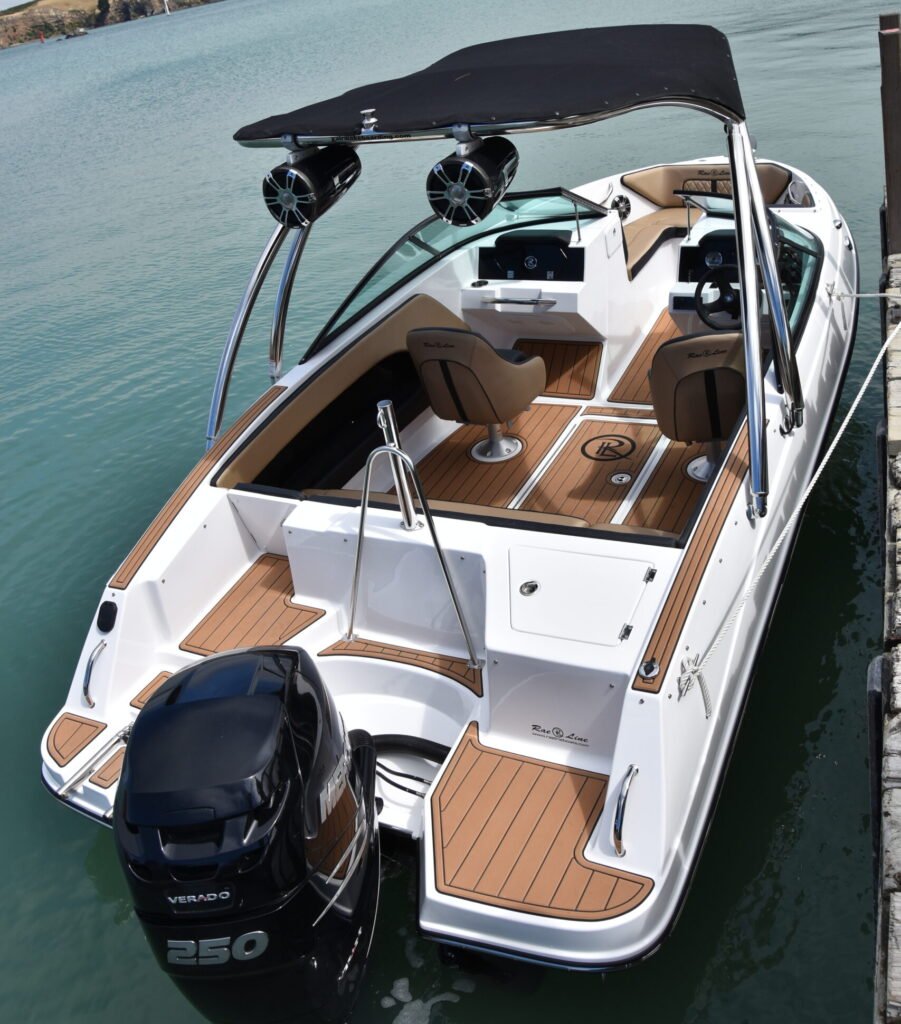
Real-World Implications for Boaties
For casual recreational boaters, the differences between saltwater and freshwater performance may seem minor. A day out on the lake versus a day at sea might feel like subtle shifts in handling or speed. However, for serious operators, commercial captains, performance boaters, or those focused on fuel economy, the distinctions matter.
Understanding how water composition affects a vessel can guide decisions such as:
Propeller selection: Choosing pitch, diameter, and material for the type of water you frequent
Fuel management: Anticipating efficiency changes in denser water
Load planning: Accounting for buoyancy differences when carrying passengers or cargo
Maintenance scheduling: Planning for more frequent cleaning and anti-corrosion measures in saltwater
Even small adjustments, such as changing trim tab settings or redistributing weight, can significantly improve comfort, performance, and safety.
A Holistic View: Water Does Half the Work
When you consider boat performance, it’s easy to focus solely on engines, hull design, or propellers. Yet the water itself plays an equally important role. Saltwater provides higher flotation and more efficient propulsion, while freshwater demands more from the hull and engine to achieve the same results. Temperature, viscosity, and density variations further complicate the picture, while corrosion and fouling influence long-term upkeep.
Boating experts often describe it this way: the water is doing half the work. Understanding the environment beneath the hull is just as important as what’s above deck. Boaters who master this knowledge can maximise efficiency, performance, and vessel longevity, whether cruising a tranquil lake or navigating the high seas.
Conclusion
Though both freshwater and saltwater look the same from the deck, they behave very differently beneath the surface. Saltwater generally enhances flotation, improves propeller thrust, and can slightly increase fuel efficiency, but it also requires vigilant maintenance to mitigate corrosion and fouling. Freshwater offers a cleaner, gentler environment but requires slightly more power and hull engagement to achieve similar performance.
Whether you spend your time on lakes, rivers, or oceans, remembering that your boat’s behaviour is influenced as much by the water itself as by your throttle or steering can make every trip smoother, more efficient, and more enjoyable. The next time your vessel glides through a lake or cuts across a coastal swell, take a moment to appreciate just how much the water beneath is contributing to the ride.