
There was a time when upgrading your boat’s electronics meant installing a better VHF, maybe adding a chartplotter, and calling it job done. Those days are long gone.
Today, electronics refits are often the single biggest transformation owners make when bringing an older boat back to life. In many ways, marine technology has changed boating more in the past decade than hull design or propulsion. Helm layouts are cleaner and more intuitive. Navigation is smarter and more predictive. Entertainment systems rival those at home. And perhaps most significantly, connectivity means your boat is no longer isolated the moment you clear the marina.
In this From instalment, the focus is on the complete electronics ecosystem, from modern multifunction displays and networked entertainment, through to offshore connectivity, lithium power systems, digital switching, and the growing role of onboard cameras and lighting. Because the reality is, none of these upgrades exists in isolation. The real transformation happens when everything talks to everything else.
THE MODERN HELM: GLASS, SPEED AND INTEGRATION
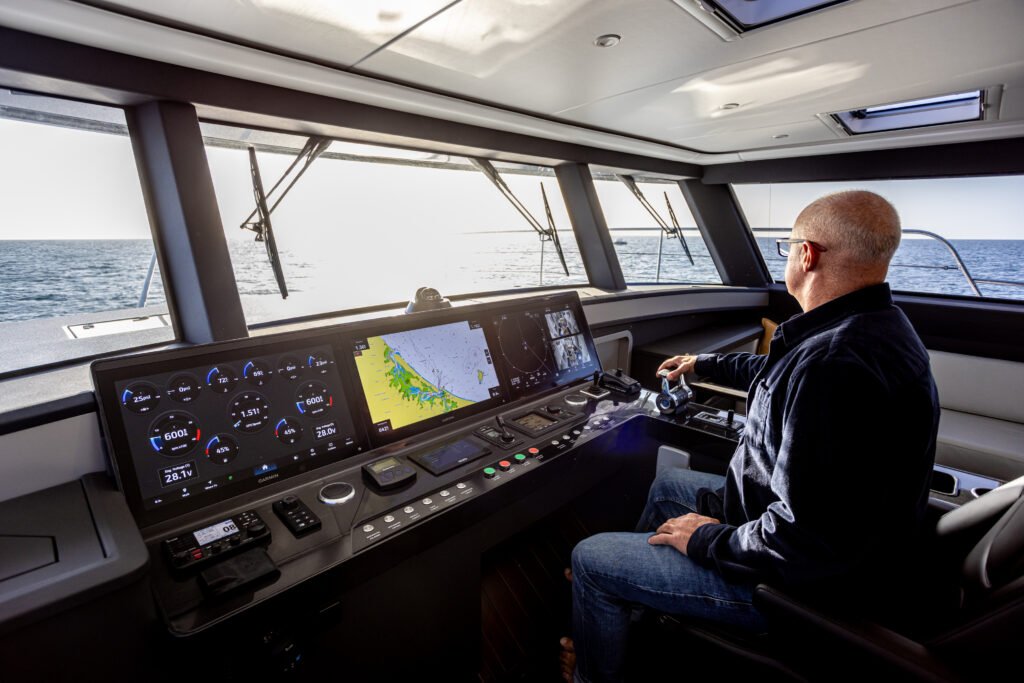
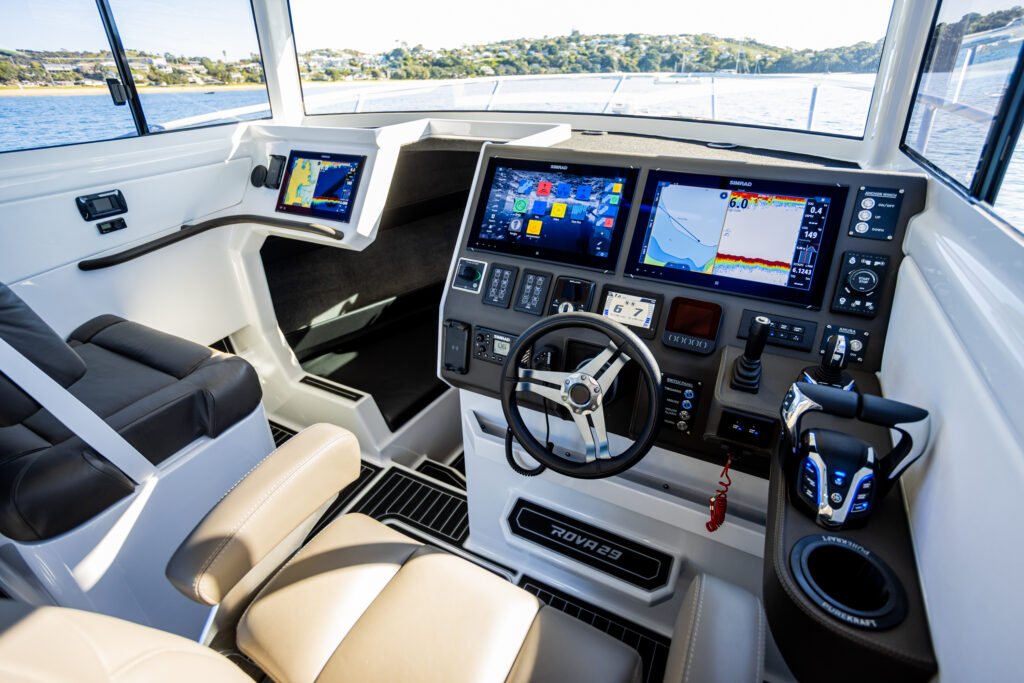
Step aboard a new launch, game boat, or premium trailer boat today, and the first thing that hits you is the helm. Gone are the scattered gauges, blinking standalone screens, and bulky radar domes. In their place, you’ll find sleek, seamless glass dashboards: big, bright, fast, and designed to integrate every element of your vessel in one clean interface.
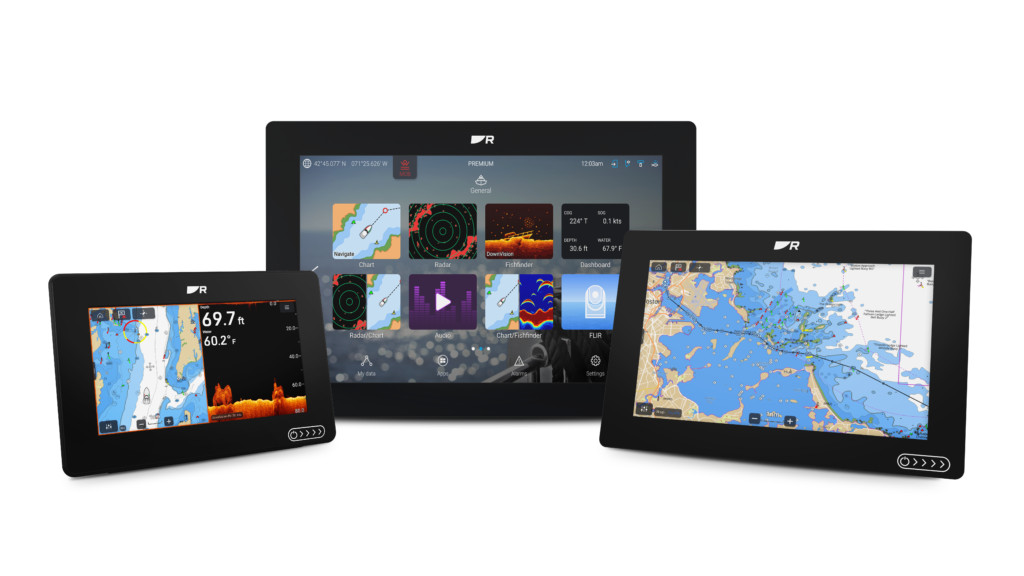
The dominant players shaping this space include Garmin, Raymarine, Furuno, Lowrance and Simrad. Each has its loyal following and slightly different strengths, but across the board, today’s multifunction displays (MFDs) offer capabilities that would have seemed like science fiction even 15 years ago.
Two or three decades ago, marine electronics were heavy, expensive, and mostly the domain of commercial operators. Today, the technology is compact, far more capable, and accessible to recreational boaters of all types. Navigation is no longer static. High-resolution charting now blends seamlessly with satellite imagery, AIS vessel tracking, radar overlays, real-time weather, and increasingly sophisticated auto-routing tools. Around New Zealand and Australia, in complex areas like the Hauraki Gulf, Marlborough Sounds, Sydney Harbour, or the Gold Coast Broadwater, these situational awareness tools alone can justify a refit.
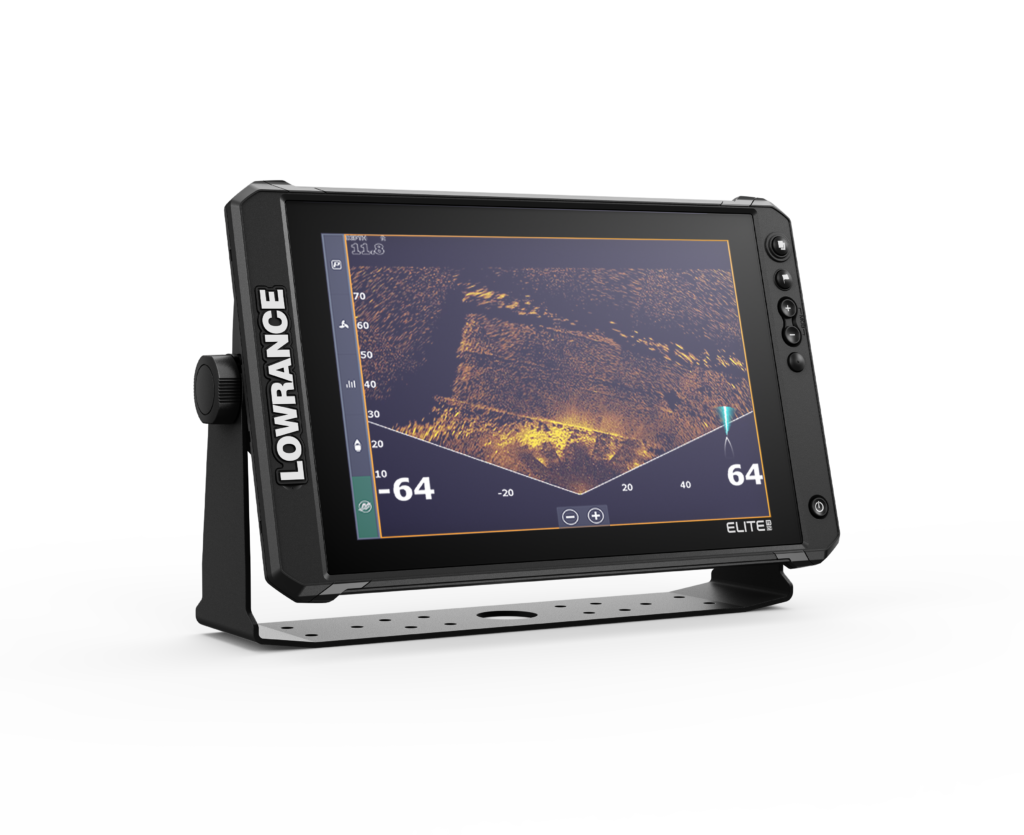
Sonar technology has also evolved dramatically. Once purely a fishing tool, forward-looking sonar and real-time seabed mapping are now crucial safety aids. They allow skippers to see obstacles and hazards ahead, not just beneath the surface, providing an extra layer of protection in unfamiliar or shallow waters.
Modern MFDs also serve as the vessel’s central dashboards. Engine performance, fuel burn, tank levels, bilge alarms, and battery status are integrated into a single interface, replacing a maze of analogue gauges and switches. For owners moving from older systems, the jump in situational awareness and operational control is remarkable; suddenly, everything important is visible, understandable, and controllable from one location.
The modern helm isn’t just about looking good. It represents safety, convenience, and efficiency. It’s the command centre where navigation, monitoring, and entertainment converge, and it’s a core part of any refit. Whether you’re cruising the coast or venturing offshore, a fully integrated helm transforms the way you experience boating, giving you confidence, control, and a genuine wow factor every time you take the wheel.
“Modern marine electronic systems are increasingly complex, so it’s important owners work with qualified specialists. Our company, Beacon Marine, delivers a true end-to-end solution for electronics refits, from system design and supply through to installation, commissioning, and ongoing support. With extensive expertise across navigation, connectivity, entertainment, power management, and digital switching, we also offer in-house dash panel remodelling, transforming outdated helms into clean, modern glass dashboards that fully support today’s integrated systems. The result is a cohesive, reliable onboard ecosystem that enhances safety, usability, and the overall boating experience.”
ENTERTAINMENT: FROM BACKGROUND NOISE TO LIFESTYLE FEATURE
For many boat owners, entertainment has moved from a minor afterthought to one of the most-requested upgrades, especially for family boating, social cruising, and extended stays on the water. Modern electronics have raised expectations; owners want a full-onboard experience that rivals their home setup but is designed to withstand the marine environment.
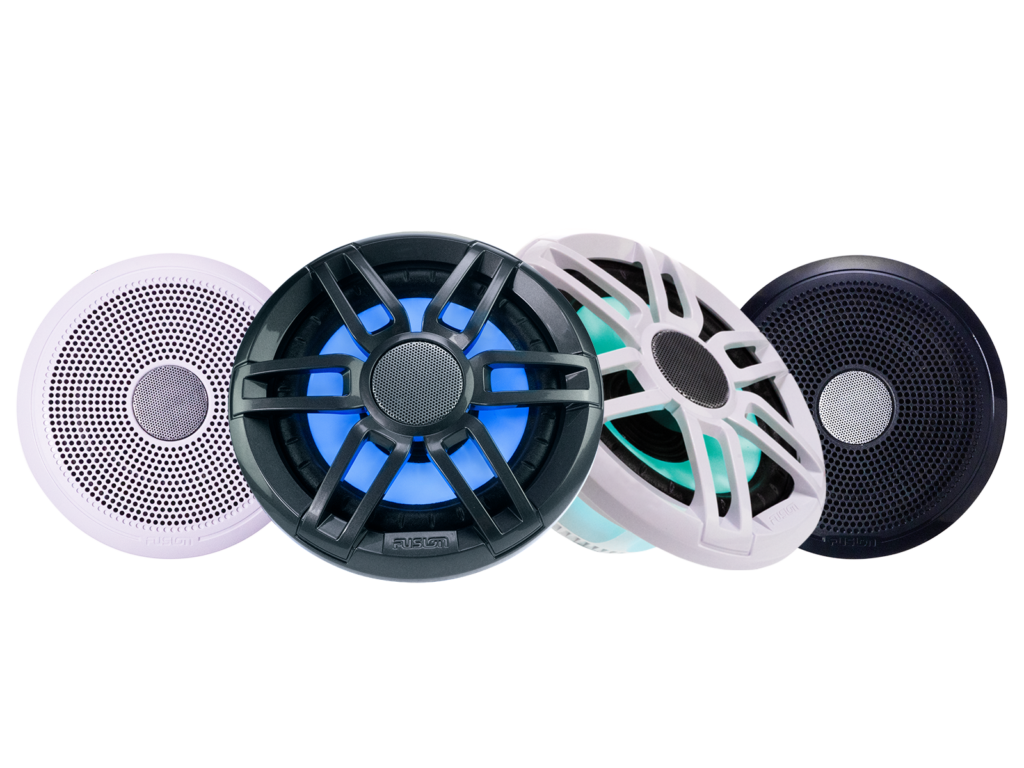
Today’s marine audio systems are no longer just a head unit powering a handful of speakers. Instead, they are networked, multi-zone ecosystems that allow different areas of the boat: cockpit, cabin, flybridge, or bow, to operate independently or together. Control can be handled through the helm, touchscreen MFDs, dedicated panels, or mobile devices, offering seamless convenience for everyone on board. High-quality digital signal processing (DSP) ensures that music is tuned to each zone, compensating for background noise from engines, wind, and waves.
The key difference between marine and home systems isn’t just audio fidelity; it’s durability. Marine electronics are exposed to salt spray, UV, vibration, and moisture, all of which quickly destroy standard consumer-grade equipment. Proper marine-rated speakers, amplifiers, and head units are essential for long-term reliability and consistent performance, and investing in them pays dividends over the life of the boat.
Onboard video and TVs have also grown in popularity, largely thanks to reliable streaming services and improved internet connectivity. Modern installations focus on features that suit the marine environment, including:
• Shock protection to handle vibration and movement underway
• Low power consumption to preserve battery life
• Network-based media distribution so video can be streamed to multiple zones without bulky coaxial wiring
Some setups now integrate directly with MFDs, allowing entertainment to blend with navigation and system monitoring. With the right configuration, the helm can double as a media hub, and the crew can enjoy movies, streaming content, or music in any area of the boat, all controlled centrally or remotely via smartphone or tablet.
In short, modern marine entertainment is no longer background noise. It’s a central part of the boating lifestyle, designed to be durable, flexible, and integrated, turning even a short day on the water into a fully immersive experience. For family cruisers, social boats, and long-range cruisers alike, entertainment upgrades are now a core component of any “worn to wow” refit.
STAYING CONNECTED: THE NEW STANDARD FOR ONBOARD INTERNET
Connectivity has transformed boating in ways few would have predicted a decade ago. Where once a trip offshore meant total isolation, today many boaters expect to stay online, stream media, download weather data, and even work remotely, all from the deck of a vessel. For family cruisers, game boats, and serious offshore vessels alike, internet connectivity has become a core part of the onboard experience.
Close to shore, high-speed 4G and 5G networks paired with marine-grade routers and antennas provide surprisingly reliable coverage. Boats can now maintain consistent streaming, navigation updates, and communication across coastal waters, making short cruises, weekend trips, and island hopping more enjoyable and safer. Modern routers allow multiple devices to connect simultaneously, with seamless switching between antennas or cellular networks as the boat moves.
The most capable installations combine multiple connection types, 4G/5G cellular, Starlink, and traditional satellite, under a single SD-WAN (Software-Defined Wide Area Network) router. Platforms like Peplink use bonding and failover technology to intelligently route traffic across whichever connection is strongest at any given moment, automatically switching from cellular to satellite as a vessel moves offshore, without dropping a single packet. For charter and commercial operators, this level of connectivity resilience is quickly becoming an operational requirement rather than a luxury.
Offshore, satellite internet has changed the game. The most talkedabout system in boating circles is Starlink, developed by SpaceX. Low-earth-orbit satellites deliver high-speed internet with relatively low latency, enabling streaming, video calls, and cloud-based navigation even far from shore. Flat, marine-rated antennas simplify installation, and network integration allows multiple onboard devices to stay connected simultaneously. For cruisers and offshore operators, the ability to access real-time weather updates, monitor systems remotely, or simply stay in touch with family and work has become a genuine lifestyle and safety upgrade.
The next frontier for satellite connectivity is Starlink Direct to Cell, which allows SpaceX’s satellites to connect directly to standard LTE mobile phones, no additional terminal or hardware required. For boaters, this represents a fundamental shift: crew and guests could maintain voice, text, and data connectivity offshore using their existing smartphones, regardless of whether a dedicated vessel internet system is active. While still rolling out globally, Direct to Cell is already active in New Zealand through OneNZ’s partnership with SpaceX, and is set to reshape expectations for entry-level offshore connectivity.
Connectivity doesn’t just serve entertainment and communications; it’s the backbone for modern integrated electronics. MFDs, digital switching systems, and networked audio/video setups all rely on a reliable network. When paired with a modern helm, lithium power systems, and automation, connectivity transforms a boat from a collection of individual systems into a fully integrated, intelligent vessel.
In short, the internet and networking aren’t just optional add-ons anymore. They’re essential tools for modern boating, enabling safer navigation, smarter system management, and enhanced onboard enjoyment. Whether streaming music through a zoned audio system, checking bilge levels from a smartphone, or monitoring offshore weather on an MFD, staying connected is now as important as fuel, batteries, or navigation charts.
POWER: THE FOUNDATION BEHIND EVERY ELECTRONICS UPGRADE
When it comes to modernising a boat’s electronics, the biggest mistake many owners make is overlooking the power system. A shiny new helm with multiple MFDs, radar, sonar, satellite internet, and entertainment systems won’t perform properly if the boat’s batteries and electrical backbone can’t handle the load.
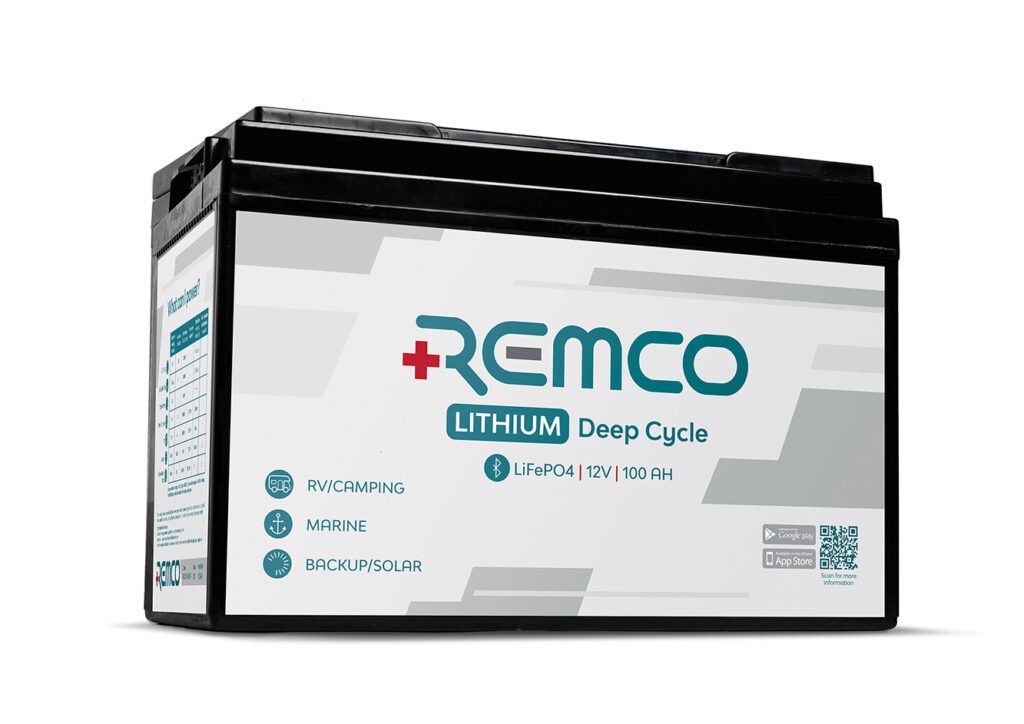
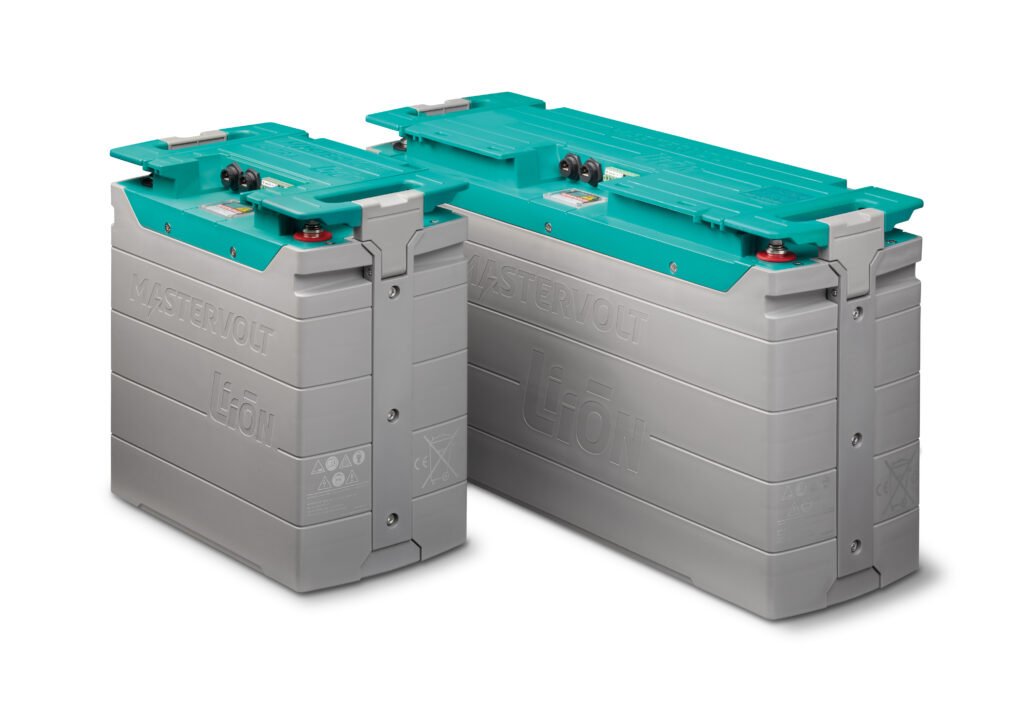
Older boats were designed for minimal house loads: a few lights, maybe a small fridge, and the engine-start battery. Modern boats are very different. Today, even small coastal cruisers may have multiple large displays, networked entertainment systems, high-power stereos, refrigeration, watermakers, and inverters capable of powering 230V appliances. That’s a lot of energy to manage, and it’s where lithium battery systems have rapidly become the new standard.
Lithium batteries are transforming onboard power for several reasons:
• Stable voltage – Essential for sensitive electronics like MFDs, radar, and stereo systems.
• Deep usable capacity – Lithium can be discharged much further than traditional lead-acid batteries without damage.
• Weight reduction – Lithium is significantly lighter than traditional house banks, improving performance and freeboard.
• Fast charging – Lithium systems can accept higher charging rates, making shore power and alternator charging more efficient.
But it’s crucial to understand that lithium is a full system upgrade, not just a drop-in battery replacement. Installing lithium safely and effectively means reviewing and potentially upgrading:
• Charging systems – Shore chargers, alternators, or solar must be compatible.
• Alternator protection – Prevent overvoltage or overheating during engine charging.
• Battery monitoring – Accurate state-of-charge data ensures reliability and longevity.
• Installation engineering – Proper wiring, ventilation, and mounting are critical for safety and performance.
When done correctly, lithium powers modern electronics reliably and efficiently, letting owners enjoy all the features of a contemporary refit, MFDs, digital switching, entertainment systems, and connectivity, without compromise. In short, power is the foundation. Upgrade it properly, and your electronics can shine; skip it, and even the best gear will underperform.
Jeremy Peacock, Co-founder and Co-owner of Enertec Marine, manufacturers of Juice Lithium Batteries, advises that it is important for Kiwi boaties to understand that both the lithium battery itself and the installation of any lithium upgrade must comply with the marine electrical standard AS/NZS 3004.2:2014. It is also worth noting that whenever a vessel undergoes its EWOF inspection, the inspector should be checking the battery installation to confirm it meets these standards.
Furthermore, we are increasingly seeing insurance companies require that any lithium installation complies with the marine electrical standards as a condition of providing cover for the vessel.
DIGITAL SWITCHING: THE QUIET REVOLUTION
Upgrading your boat’s electronics isn’t just about flashy new screens or stereos; it’s about control. And in recent years, one of the most powerful upgrades you can make is digital switching.
Traditional boats rely on heavy wiring running from switches to each device: lights, pumps, stereos, you name it. It works, but it’s messy, limits automation, and makes expansion difficult. Digital switching changes that. Instead of carrying the full current, switches send a lowvoltage command to a nearby control module, which then powers the device. The result? Less wiring, cleaner panels, and far more flexibility.
Digital Switching systems take it further by integrating control directly into your MFDs and mobile apps. From the helm, cabin, or even your phone, you can turn on lights, pumps, or entertainment systems. You can also set automation scenes, such as “Docking,” “Cruising,” or “Entertainment,” that activate multiple systems with a single command.
The benefits go beyond convenience. With digital switching, you can monitor your systems remotely, check battery states, bilge activity, and alarms from anywhere. You can expand your electrical system without tearing out walls of wiring. And because the modules are close to the loads, power delivery is more efficient, safer, and reliable.
For refits, digital switching often marks the difference between a simple electronics upgrade and a fully modernised vessel. Pair it with modern MFDs, lithium power banks, and networked entertainment, and your boat becomes easier to manage, safer, and more enjoyable.
CAMERAS: FROM SECURITY TO SITUATIONAL AWARENESS
One of the fastest-growing areas in marine electronics, and something we covered in depth in a recent issue (Nov/Dec 2025), is the rapid adoption of onboard camera systems.
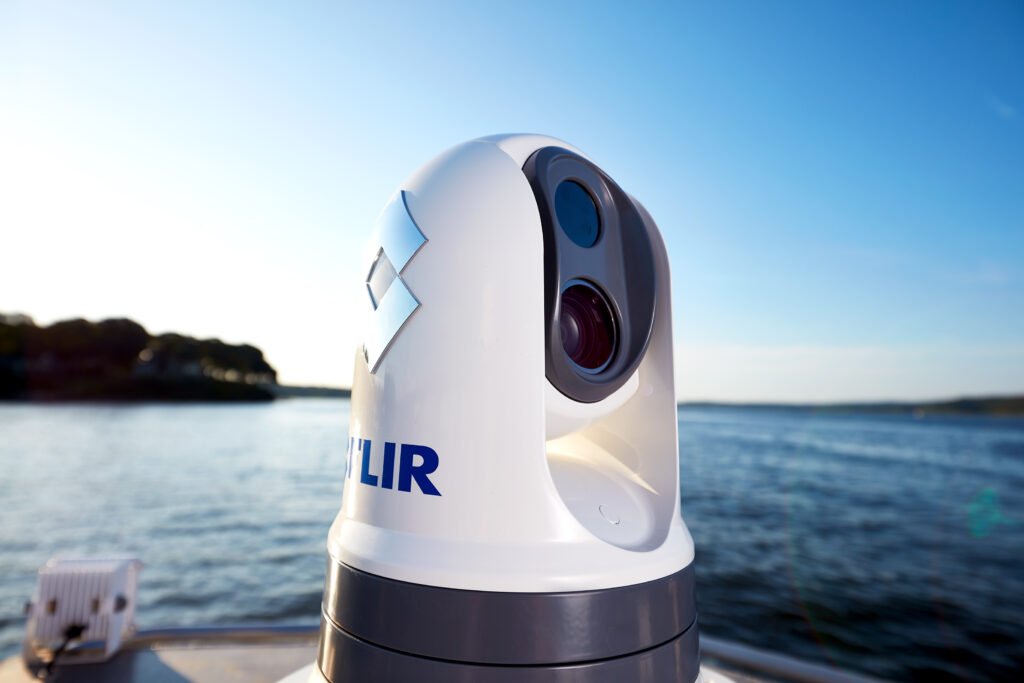
Daylight HD cameras are now commonly used for docking assistance, cockpit monitoring, engine room viewing and general situational awareness. Being able to bring multiple camera feeds directly onto helm displays adds another layer of confidence, particularly in short-handed operations or on larger vessels.
Night vision and thermal imaging cameras are also becoming more accessible outside of commercial and military applications. For offshore running, night navigation and search situations, thermal cameras in particular can provide a level of hazard detection that radar or traditional navigation lighting cannot match. As costs continue to fall and integration improves, cameras are quickly moving from “nice to have” to core safety equipment.
INTEGRATION: WHERE THE “WOW” REALLY HAPPENS
The real transformation in modern electronics isn’t in individual components; it’s in integration.
A properly integrated boat might allow you to monitor engines remotely, view cameras through helm displays, check battery state from home, power up systems before arriving at the marina, or download offshore weather updates in real time. For owners coming from older analogue or partially digital systems, this is often the moment the boat genuinely feels new again.
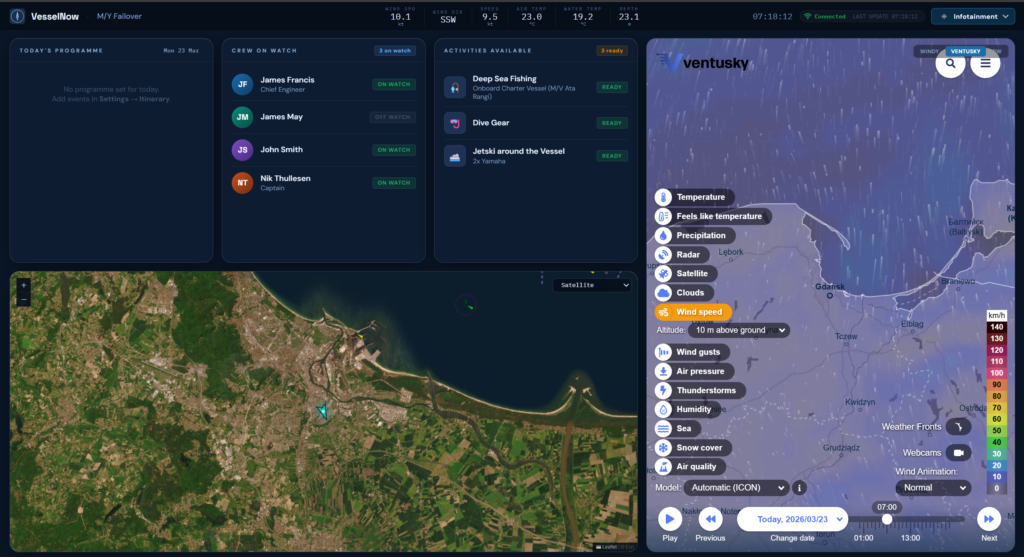
A new generation of purpose-built marine dashboard platforms is also emerging to tie these systems together at the software layer. One example is VesselNow, a unified vessel intelligence platform developed by New Zealand’s GMTS Group that aggregates connectivity, navigation, engineering, and entertainment data into a single, multi-surface interface accessible from a helmmounted display, tablet, or smartphone. Rather than requiring the crew to switch between separate apps for Starlink status, generator alarms, camera feeds, and NMEA navigation data, platforms like VesselNow present everything in a single, clean view in real time. It’s the kind of software layer that finally makes “fully integrated” feel like more than a marketing term. This product was originally designed and marketed towards Super Yachts and commercial operators. However, the new base version will be targeted towards owners of 50-70ft powerboats, through their soon-to-be-released Apple and Android app this winter.
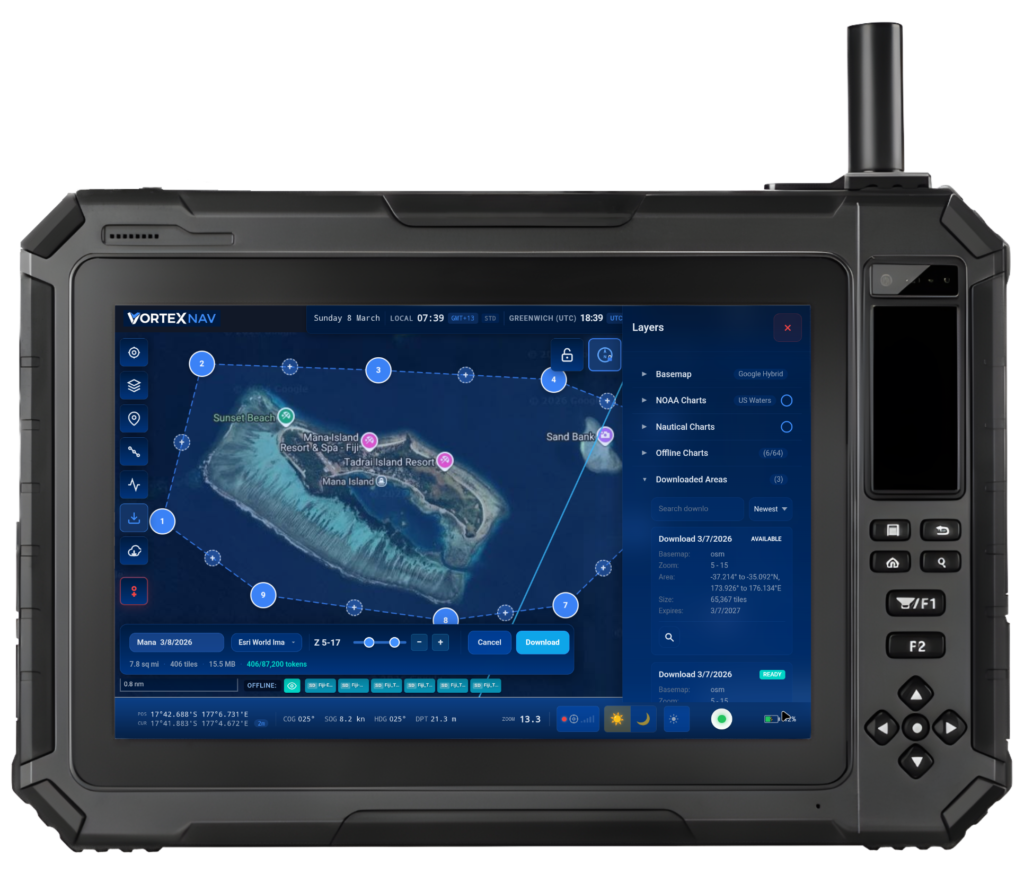
Another recent player in this market is Vortex Marine, which is taking a different but complementary approach with its Scout, a purpose-built marine navigation platform combining rugged hardware with intelligent software. Scout integrates directly with onboard NMEA networks, pulling in real-time engine data, depth, wind, speed, and instrument readings to deliver comprehensive dashboard views, along with high-resolution satellite charting with downloadable offline coverage, real-time weather from multiple forecast models, AIS vessel tracking, and tide predictions. Scout’s TrueHelm transforms your device into a fully animated, dedicated windand-compass instrument. Track real-time heading, apparent and true wind angles, and layline guidance with a fluid compass rose with a 60-point wind history plot to reveal shifts before they become obvious on deck. Designed to work offshore with or without connectivity, Scout gives skippers a forward-looking, professional-grade mobile navigation and vessel-monitoring companion that functions reliably in any conditions.
LED LIGHTING: THE QUIET UPGRADE WITH BIG IMPACT
LED lighting has also exploded in popularity, both internally and externally.
Internally, LED lighting delivers dramatically lower power consumption, longer lifespan and far greater design flexibility. Owners are increasingly using dimmable LED systems and colour-selectable lighting to create ambience onboard, particularly in cabins and cockpit entertaining spaces.
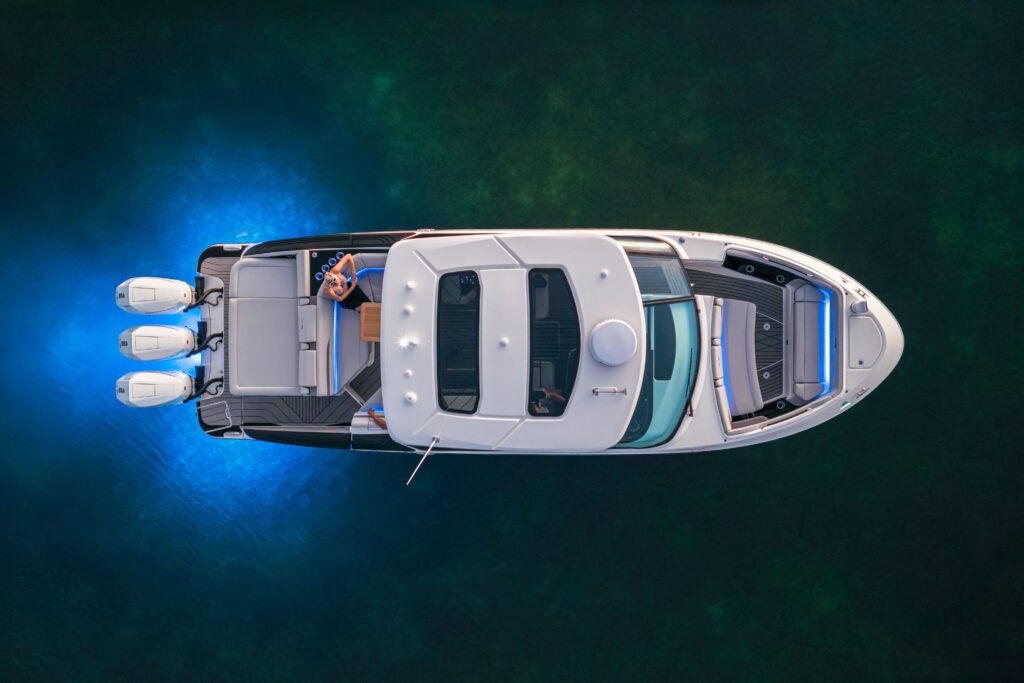
Externally, underwater lights, cockpit flood lighting, spreader lights and deck lighting have become common upgrades. Aside from aesthetics, modern LEDs deliver genuine functional advantages, better night visibility, improved safety when working on deck, and reduced electrical load compared to older halogen or incandescent systems.
For boats transitioning to lithium house systems, LED lighting is often one of the simplest and most immediately noticeable improvements.
ELECTRONICS AND ENGINE SYNCHRONISATION:
Engine manufacturers are rapidly developing systems, working hand in hand with leading marine electronics brands to deliver fully connected platforms in which engines, autopilot, GPS, sonar, and touchscreen displays operate as one.
Two recent examples include Yamaha Marine’s addition to its impressive Helm Master EX system, the new Helm Master® EX Wireless Control System. This major leap forward gives Kiwi boaties unmatched freedom, allowing skippers to manoeuvre from virtually anywhere on board via a compact wireless fob, with full low-speed control in hand. We experienced this unit at the recent Auckland Boat Show and were impressed by how it enables a single skipper to dock effortlessly and tie up single-handedly.
Not to be outdone, Mercury’s Premier Joystick and updated display interface bring features like Skyhook®, Dockhook, and advanced autopilot functions into play, even integrating with bow thrusters to make close-quarters handling smoother and more precise than ever.
The result of this technology is a helm that’s smarter, more intuitive, and delivers a genuine “wow” factor every time you leave or return to the dock.
Final Word: Electronics Are Now Core Boating Infrastructure
For years, electronics were seen as accessories. Today, they’re core infrastructure.
When done properly, a full electronics upgrade improves safety, ease of operation, comfort, capability, and resale value. Perhaps most importantly, it changes how often and how far owners use their boats.
In the From Worn to Wow journey, few upgrades deliver such an immediate and dramatic transformation. The hull might still be the same, but the onboard experience is completely different.