ASK THE BOAT, NOT THE INTERNET
WHY AI ON BOARD NEEDS TO KNOW YOUR VESSEL, NOT JUST THE INTERNET.
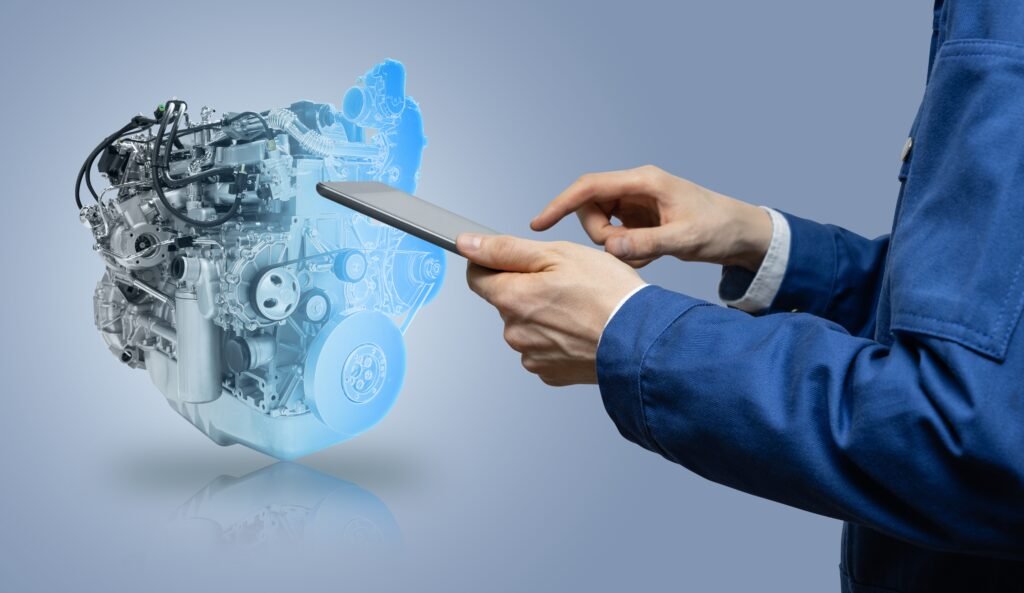
It’s 2am, mid-passage, and the generator has just thrown a fault code nobody on board recognises. The manual is somewhere in a folder — paper or PDF, doesn’t matter, both are 400 pages and neither has an index worth trusting. Shore support is asleep, and even if they weren’t, the sat call would cost more than the part. So someone reaches for their phone and asks an AI chatbot what the fault code means.
It’s a scene Nik Thullesen, Director of Auckland-based marine technology company GMTS Group, says is already playing out on more vessels than most owners realise. “AI has quietly become part of the toolkit,” Nik says. “Not because anyone rolled it out deliberately — it’s sitting in everyone’s pocket, and it answers instantly.” The question the marine industry hasn’t really grappled with yet, he says, is: answers instantly with what, exactly?
THE TRUST PROBLEM
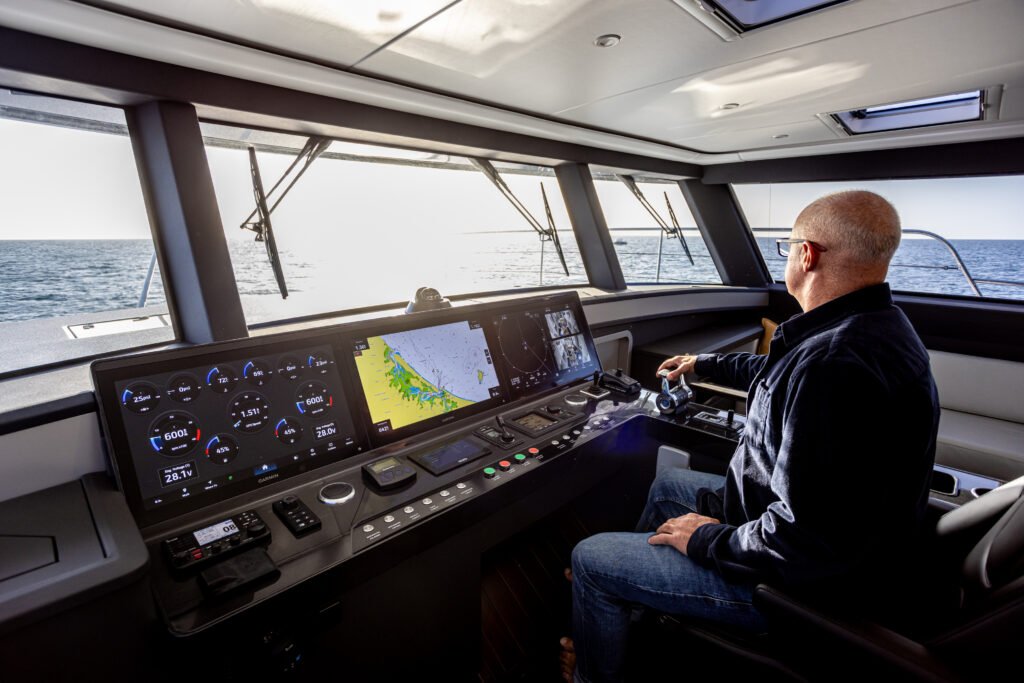
General-purpose AI tools — the ChatGPT’s and Google AI overviews of the world — are extraordinary at sounding right. That, Nik argues, is precisely what makes them risky in a technical, safety-critical environment like a vessel’s engine room or bridge.
“Ask a general AI model for a torque spec on a specific engine mount, or the correct part number for a raw water pump impeller, and it will give you an answer — confidently, quickly, and with no visible hesitation,” he says. “The problem is that the model has never seen your engine’s actual documentation. It’s patternmatching against whatever it absorbed during training, which might be the right manufacturer, the wrong model year, or an entirely different but similarly named part. It doesn’t know the difference between a fact and a plausible-sounding guess, and it won’t tell you which one it just gave you.”
On land, a wrong answer from a chatbot is usually an inconvenience. On a vessel, Nik points out, a wrong torque spec, a wrong wiring diagram, or a missed step in a shutdown procedure can mean real damage — or worse, a real safety incident. “The gap between ‘sounds right’ and ‘is right’ matters a great deal more when you’re 200 miles offshore than it does when you’re asking for a recipe.”
WHY MARINE IS A DIFFERENT PROBLEM ENTIRELY
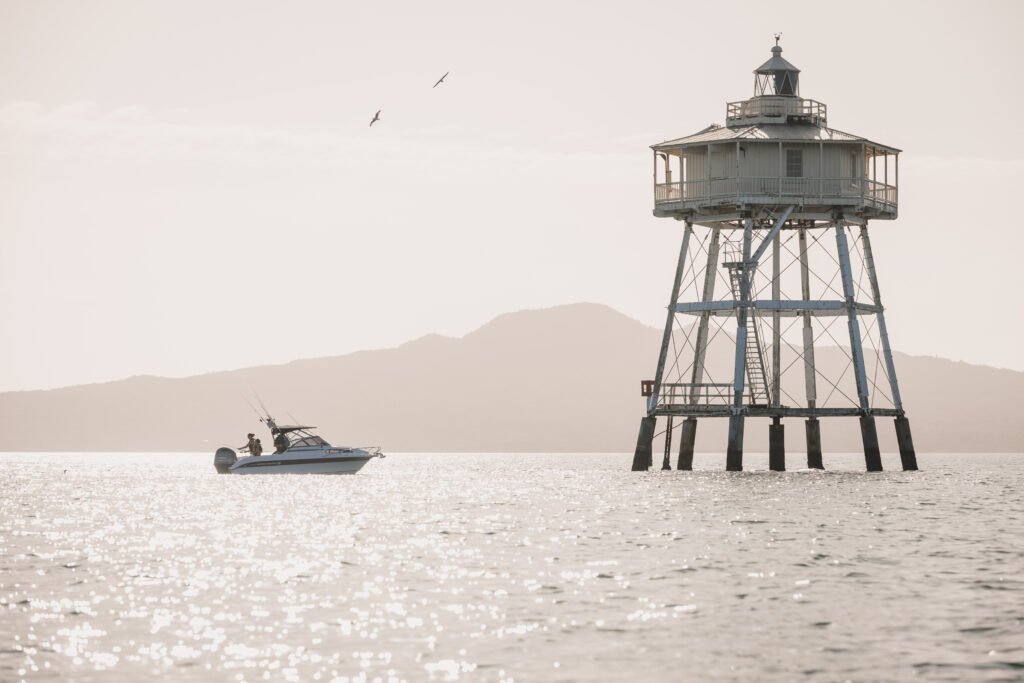
Part of what makes this tricky, Nik explains, is that marine vessels are, almost without exception, one-offs. Two boats off the same production line ten years apart will have different electronics packages, different refits, different owner-added equipment, different software versions on the samemodel chartplotter. There is no single canonical “manual for this boat” sitting on the internet for an AI model to have learned from — because that manual, in the form that actually matters, often only exists in a folder on that specific vessel.
“Generic AI tools are trained on the public internet,” he says. “They’ve absorbed a huge amount about marine systems in general, but nothing specific about your engine room, your control system wiring, or the modification your last refit yard made to the fuel manifold. Ask it a general question about how a particular type of watermaker works, and it’ll probably do fine. Ask it a specific question about your watermaker, installed in your boat, with your plumbing — and it’s guessing.”
NOT ALL AI IS THE SAME
Nik is also keen to stress that “AI” isn’t one thing, and the differences matter more than most people realise.
“There’s free versus paid,” he explains. “The free tier of a popular chatbot and the paid, professional-grade version of the same tool are often running different underlying models entirely — the free one tuned for speed and cost, the paid one for depth and accuracy. Neither is really built for marine work, but the gap between them on a technical question can be significant.” Then there’s fast versus thorough. “Some models are built to answer instantly, giving you a plausible-sounding response in under a second. Others are built to reason through a problem — checking their own logic, working through steps, taking longer to answer but getting there more reliably. For a quick chat, speed is fine. For a decision that affects a running engine, thoroughness matters a lot more than speed.”
And underneath both of those, he says, sits the same issue: every generalpurpose model, however capable, will still hallucinate — state something false with complete confidence — on anything it wasn’t trained deeply enough on. “That’s not a bug that gets patched out with the next update,” Nik says. “It’s a structural feature of how these models work: they predict a plausible next word, not a verified fact, unless they’ve been given the specific, grounded information to draw from. A model can be the fastest or the most expensive on the market and still confidently invent a part number it has never actually seen.”
Which, he says, is really the whole point. “The fix isn’t finding the ‘best’ general AI model. It’s giving whichever model you use the actual, correct information about your vessel to work from in the first place.”
WHAT GOOD MARINE AI ACTUALLY LOOKS LIKE
This is the gap GMTS has been working to close with SeaSense SEASENSE.APP, a product the company has been developing to bring AI onto vessels the right way round: trained on the vessel’s own documentation, not the open internet.
“Instead of asking a general model and hoping, the idea is straightforward,” Nik says. “You load a vessel’s actual manuals, wiring diagrams, maintenance procedures and parts lists into the system, and let engineers and crew query that specific body of knowledge in plain English. Ask about the generator fault code, and the answer comes from the generator’s actual manual, not a guess about generators in general. Ask about a part number, and it’s pulled from your documentation, not inferred from a similar sounding one.”
Crucially, it’s designed to run locally, offline, on hardware on board — which Nik says matters as much as the training data does. “Connectivity at sea is never guaranteed, and a tool that only works with a strong signal isn’t much use exactly when it’s needed most. With a local model living on the vessel, every manual is already there, matched specifically to that boat’s actual equipment — not the generic version of a similar product, but the exact model, the exact revision, the exact drawings for that installation.”
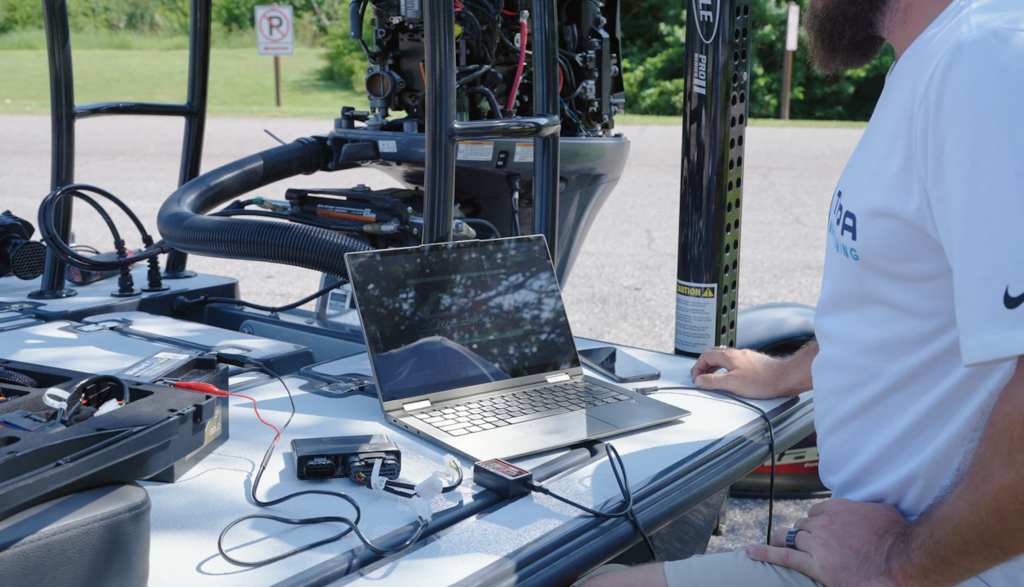
It goes beyond text, too. “Drawings and sketches can be fed in alongside the manuals, so a query isn’t limited to ‘what does the manual say,'” he says. “An engineer can point a camera at a wiring loom or a schematic and ask the system to help make sense of what it’s looking at or sketch out a fault and talk it through. It becomes less like a search engine and more like a second set of eyes to spar ideas with — one that happens to have read every manual on board and forgotten none of it.”
Answers are also traceable back to the source document, Nik notes, so an engineer isn’t just told an answer — they can see where it came from and judge it accordingly, the same way they would with a colleague who says, “check page 44.”
“None of this makes AI infallible,” he says. “It makes it accountable — which, for anything touching engineering decisions on a vessel, is the difference that actually matters.”
WHERE THIS FITS ALONGSIDE EXISTING SYSTEMS
Nik is also careful to frame this as complementary to, rather than competing with, the vessel management platforms already doing good work in the industry — naming New Zealandfounded Sea-Flux and SeaLogs, and superyacht specialist IDEA, as examples.
“Sea-Flux and SeaLogs are both built around the operational side — digital logbooks, compliance, maintenance scheduling, crew management,” he says. “IDEA does something similar at the superyacht end, effectively building a digital twin of the vessel’s assets and maintenance history. That’s structured, tracked data, and it’s genuinely valuable — but it answers a different question to ‘why is this fault code showing up’ or ‘how do I service this specific unit.'”
The opportunity he sees is in the two working together. “An AI layer trained on a vessel’s actual manuals and drawings doesn’t need to replace a platform like Sea-Flux, SeaLogs or IDEA — it can sit alongside it. Picture asking a plainEnglish question and having the answer draw not just on the manual, but on that vessel’s own maintenance history and logbook data sitting in whichever platform the crew already uses daily. That’s where this is heading — not one system replacing another, but the documentation layer and the operational layer talking to each other properly for the first time.”
It’s early days for that kind of integration across the industry, he adds, but the direction is clear. “The vessels getting the most value out of AI in the next few years won’t be the ones that bolted on a chatbot. They’ll be the ones that connected their existing systems properly and gave AI something real to work from.”
THE TAKEAWAY FOR OWNERS AND CREW
AI is coming to the engine room whether the industry plans for it or not — it’s already happening informally, one late night chatbot query at a time. For Nik, the real decision in front of owners, captains and engineers isn’t whether to use AI on board. It’s whether the AI being used actually knows the vessel it’s advising on, or is just very good at sounding like it does.
“The tools that will actually earn a place in the engine room are the ones built specifically for that job — trained on real documentation, working offline, and honest about where their answers come from,” he says. “That’s the bar the marine industry should be holding AI to, and it’s the bar we’re building to.”
GMTS Group is a marine technology and connectivity company based in Auckland, New Zealand, working across superyacht and commercial vessel systems, rural and offshore connectivity, and marine software.
BORN FROM EXPERIENCE AT SEA
The idea for SeaSense came from Brock Hart’s experience working as a sole engineer onboard yachts, where there isn’t always another engineer to turn to when something goes wrong. Troubleshooting can mean working through manuals, drawings and past records alone, often offshore and under pressure. Brock saw an opportunity to create that missing second set of eyes — a system that understands the vessel and helps crew find and interpret the right information when they need it.
With a demanding workload managing vessels and engineering projects, Brock approached Nik Thullesen at GMTS Group to help take the concept forward and turn the idea into a practical marine AI platform. Together, the focus has been on developing SeaSense around the realities of working at sea: vessel-specific knowledge, simple access to complex technical information, offline capability and security.
SeaSense is designed to become more capable as the information available to it grows. Manuals, drawings, maintenance records, photographs and equipment data can all contribute to its understanding of a vessel. AI also allows SeaSense to work across multiple languages — particularly valuable in an industry where a yacht may be built in one country, refitted in another and fitted with equipment from manufacturers around the world. It can also help identify unknown equipment from photographs, such as a pump with a missing nameplate, and connect that equipment with the technical information available onboard.
Where relevant class, flag or regulatory documentation has been provided, SeaSense can help crew locate and better understand that information and highlight requirements that may be relevant, while leaving compliance decisions and verification with the appropriate crew, surveyor or authority.
While particularly valuable to sole engineers, SeaSense can also support sole captains, less-experienced engineers and crew joining an unfamiliar vessel, giving them easier access to the accumulated knowledge of the boat. Importantly, the vessel’s information can remain onboard and offline, protecting sensitive technical data while keeping the system available at sea without relying on connectivity.
The goal is not to replace experience or engineering judgement, but to make the knowledge already onboard easier to access and understand — providing another set of eyes when there isn’t one available.
SBC (SUBSCRIPTION BOAT CLUB) (FORMERLY SKIPPERI NZ)
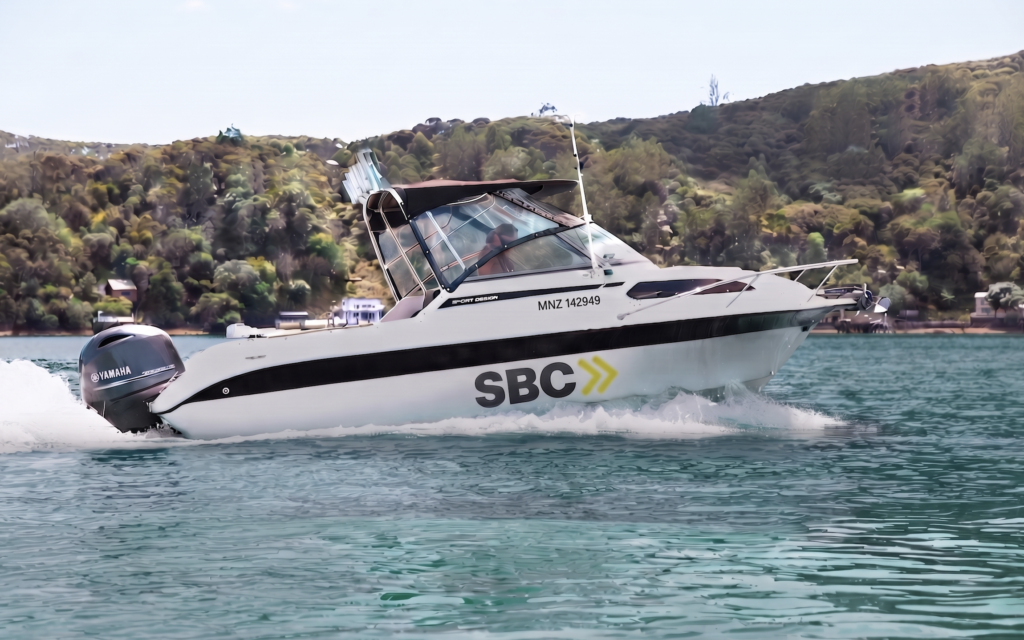
The team at SBC is using AI to improve member experience and safety while decreasing operational costs and downtime. Maintaining a fleet of 24 near identical vessels gives baselines for “good performance”. Maintenance and service issues are flagged by AI using pattern anomalies and prediction, allowing the operation to foresee service issues before they happen. By measuring millions of data points across 24 boats allows for education on efficient operations for members, who doesn’t want tips on how to save fuel. SBC has had to build its own standalone AI management platform with operational excellence and compliance at the centre as nothing on the market covered all the bases SBC needed. The build without AI would have been too costly and not deliver on the full capability of the data available from the boats.
BUILT BY A SAILOR, FINE-TUNED AT SEA
Vortex Marine is a new marine navigation company built around a fairly simple idea: modern boats are increasingly connected, software can improve quickly, and useful navigation tools should be able to do the same.
Tony Sparks did not originally intend to start a navigation company. He was trying to solve a problem on his own yacht while cruising the Pacific.
Again and again he found himself approaching reef passes and anchorages where the chart showed very little useful detail. In some places, the underlying surveys were decades old.
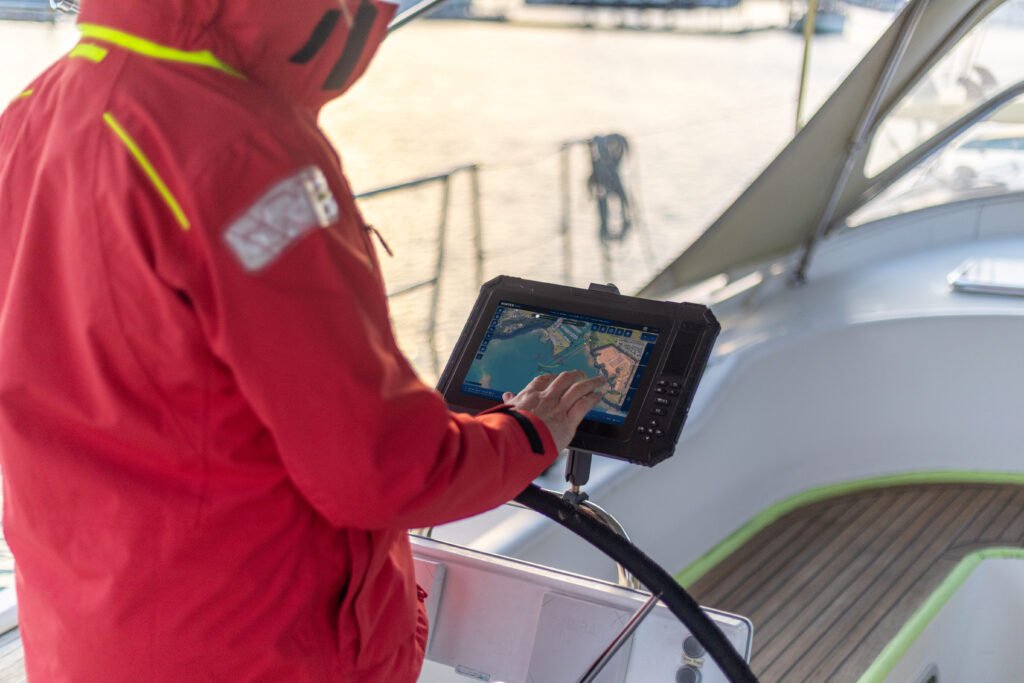
His solution was to put high-resolution satellite imagery alongside the chart so he could see the reef, the pass and the surrounding shallow water for himself.
What started as a tool for one boat gradually became something other cruisers wanted as well. That work eventually became Scout, the portable navigation system Vortex Marine launched in New Zealand in 2026.
“I’m in about twenty WhatsApp groups for different islands,” says Sparks. “The same question comes up all the time: ‘Has anyone done this reef pass? Has anyone got a route?’ That’s really the problem we’re trying to solve.”
BUILT DIFFERENTLY
Marine electronics have traditionally worked on fairly long product cycles. A plotter is designed, manufactured and installed, then might remain largely unchanged for years.
Vortex works more like a software company. It is a small team, and its engineers use AI tools as part of normal development: writing and testing code, investigating problems, documenting features and getting new ideas into working software faster.
That matters less as a technology story than it does to the person who already owns the product. Scout does not have to be replaced every time something new is developed. New capability can simply arrive as a software update.
A lot of those ideas also come directly from using the system at sea.
Sparks’ own yacht returned from New Caledonia to New Zealand in October, and the passage will also be used as another opportunity to test new features. A professional weather router will follow the boat remotely and will be able to send suggested routes directly to the Scout on board.
“I realised most of what we needed was already sitting underneath Scout,” Sparks says. “So we built on it.”
Over a matter of months, Vortex added passage tracking that can be followed by friends, family or a weather router. Routes can also now be transferred directly to compatible B&G, Simrad and Lowrance plotters, rather than moving files around manually with an SD card.
“AI helps us build the software,” says Sparks. “It doesn’t navigate the boat. What we release still gets tested on real boats, including mine, and the skipper still makes the decision.”
MORE THAN THE DEVICE
Scout is the visible part of Vortex Marine, but underneath it is a platform that can move routes, tracks and vessel information between the boat and people ashore. That platform is now starting to become useful beyond Scout itself. The reef-pass question Sparks keeps seeing in cruising groups has two parts. Satellite imagery helps a skipper see what is actually there. PassageWiki helps answer the other question: has somebody already been through it?
PASSAGEWIKI.COM is a free website developed by Vortex Marine where sailors can plan, share and rate routes whether they own a Scout or not. Routes can include information such as the draft and beam of the boat that sailed them, making it easier to find passages made by vessels with similar characteristics. For Scout owners, those routes can then be sent to the boat with a couple of clicks.
“The chart often couldn’t answer the reef-pass question,” Sparks says. “Satellite imagery helps, but so does knowing that another boat has actually been through there.”
There is a longer-term reason for building that shared record as well.
AI is only useful when the information behind it is useful. In cruising, some of the most valuable information is simply what real boats have actually done: where they went, what route they took, and under what conditions.
Vortex is deliberately cautious about making claims about where AI might eventually fit into navigation. For now, the focus is on building a useful body of realworld passage information.
“We’re building the library first,” says Sparks. “What we can eventually do with that library is a conversation for later.”