ESPRITE EVOLVED
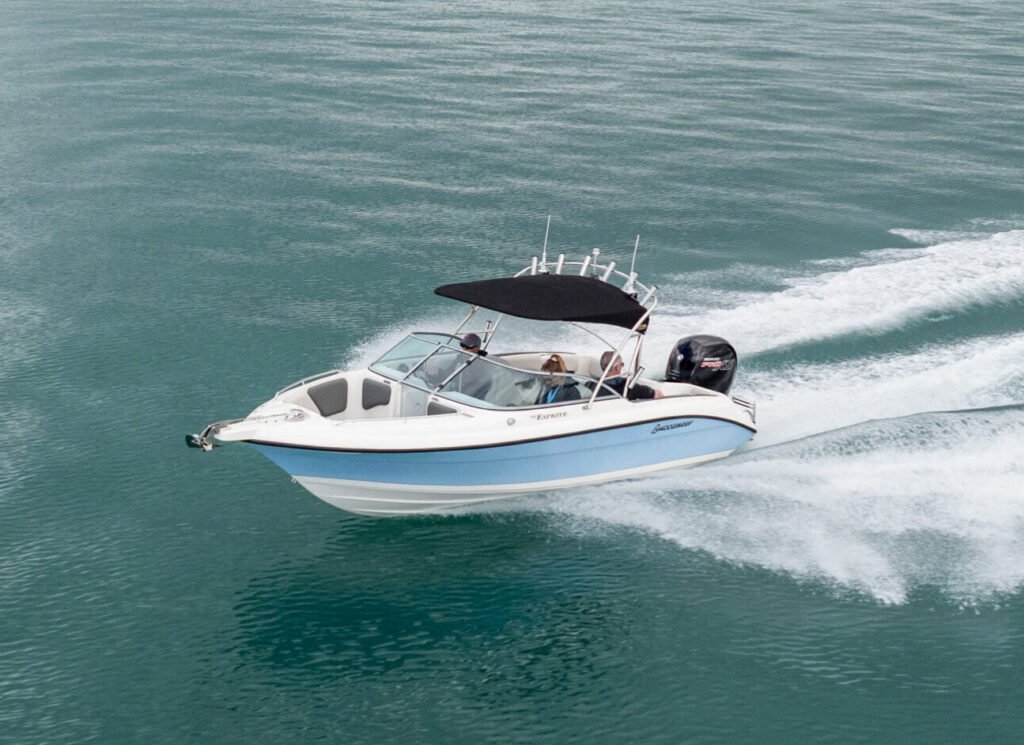
Two model revamps in the past 12 months, and now Buccaneer has unveiled a third from its Hamilton factory: the new 565 Esprite II. Freddy Foote takes a closer look at this sporty model, a popular choice for Kiwi families for almost three decades.
Buccaneer’s Esprite bowrider range is designed for Kiwi families seeking a versatile, stylish boat for a variety of on-water activities. Combining the brand’s proven hull design with an open bow seating arrangement, the Esprite makes excellent use of available space, providing additional seating forward while retaining a practical cockpit for fishing, cruising and water sports.
Available in the 565 Esprite XL and the larger 650 Esprite XL, the range caters to a variety of boating needs, from relaxed family outings to more performance-focused days on the water. Both models combine comfortable seating and useful storage with layouts suited to water skiing, wakeboarding, fishing and coastal cruising.
The Esprite’s history stretches back almost three decades, beginning in 1997 with the launch of the 550 Esprite. This established the bowrider concept that would become a mainstay of the Buccaneer range. The 550 remained in production until 2008, when it evolved into the 565 Esprite.
While retaining the proven hull heritage and fundamental layout of its predecessor, the 565 represented a significant step forward in construction and refinement. Buccaneer introduced a full fibreglass inner liner and its Advanced Composite Stringer System, replacing much of the timber construction with a modern composite structure. The result was a stiffer, stronger and quieter boat, with foam-filled cavities contributing to flotation and durability.
The 565 subsequently became one of Buccaneer’s enduring models, remaining in production until earlier this year.
Now, 2026 marks the next chapter with the introduction of the 565 Esprite II. Rather than simply refining the existing model, Buccaneer has developed an all-new deck mould, introducing a series of changes to the layout, styling and functionality while retaining the established Esprite identity.
SUBTLE IMPROVEMENTS
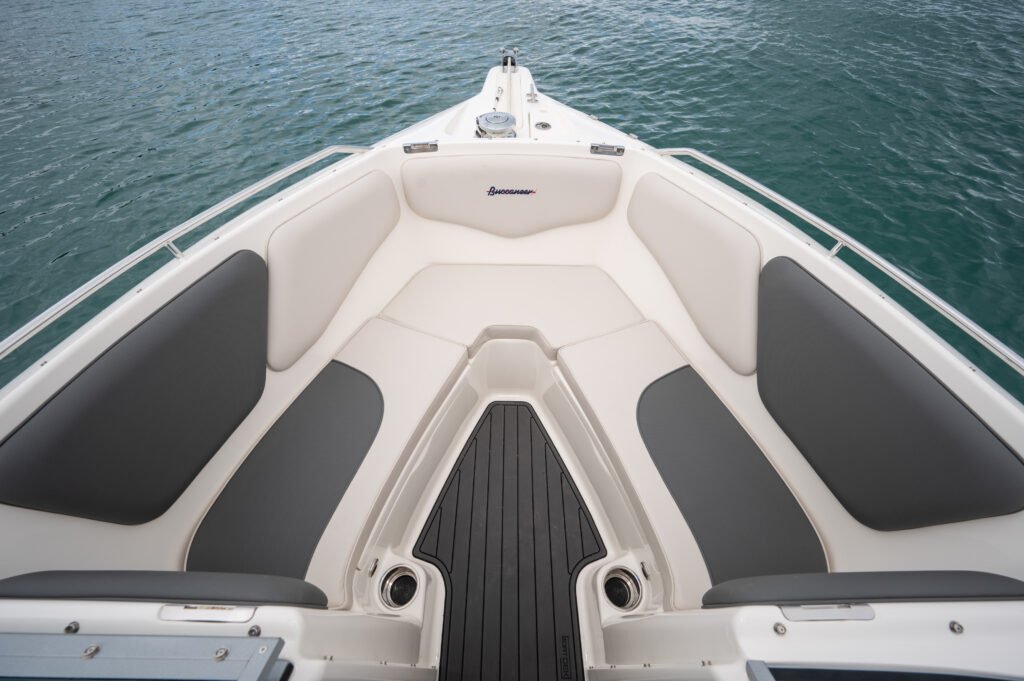
The changes are subtle but well considered, with revisions to the deck and bow area, along with a new seating configuration.
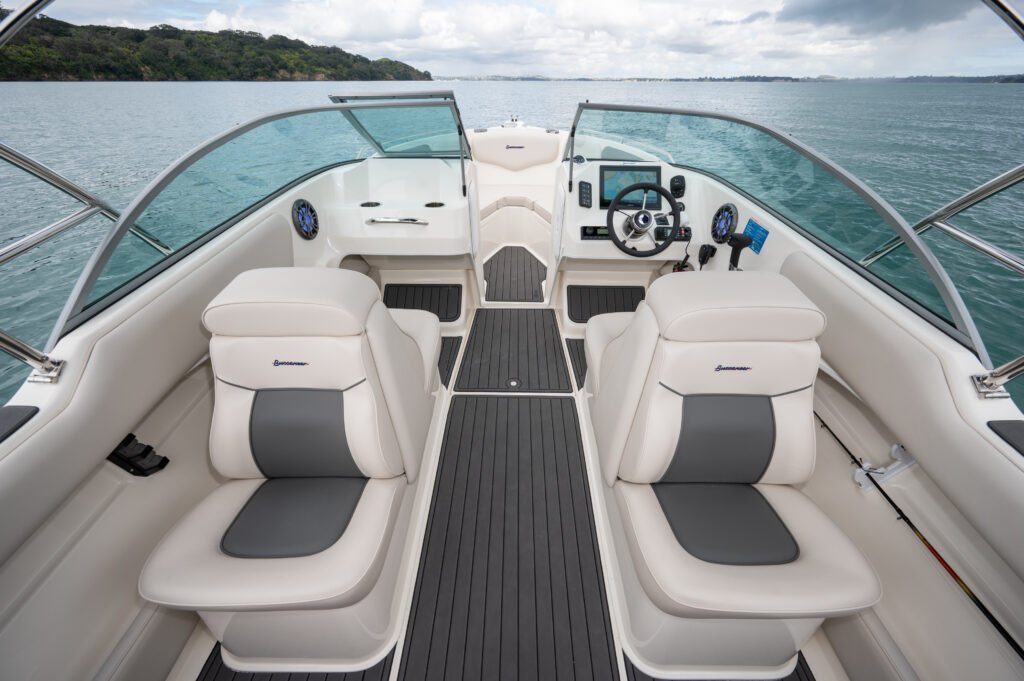
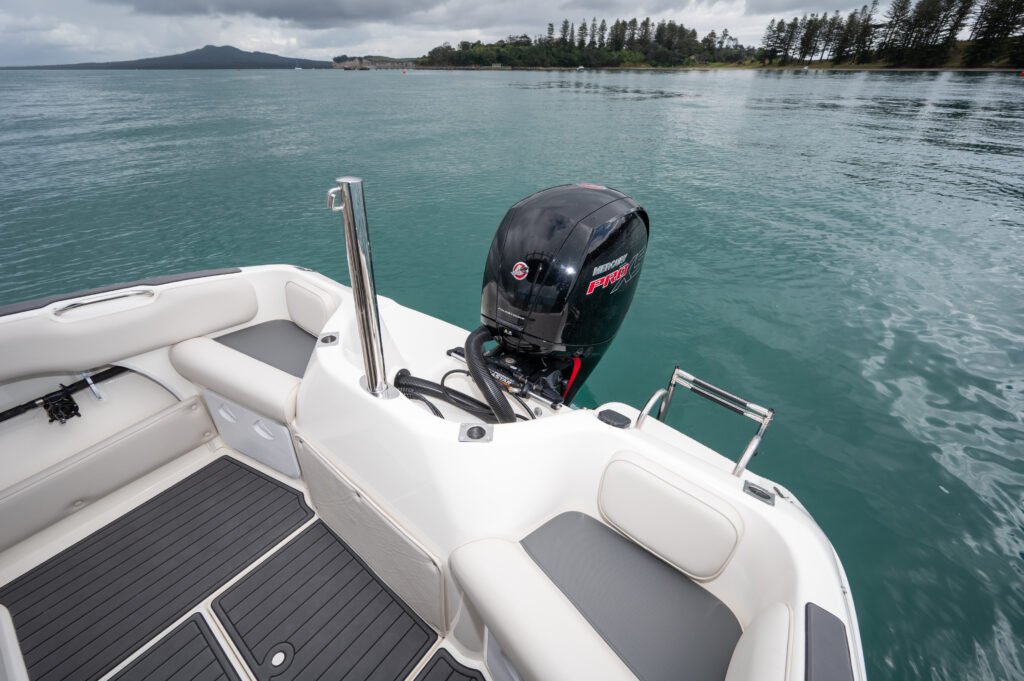
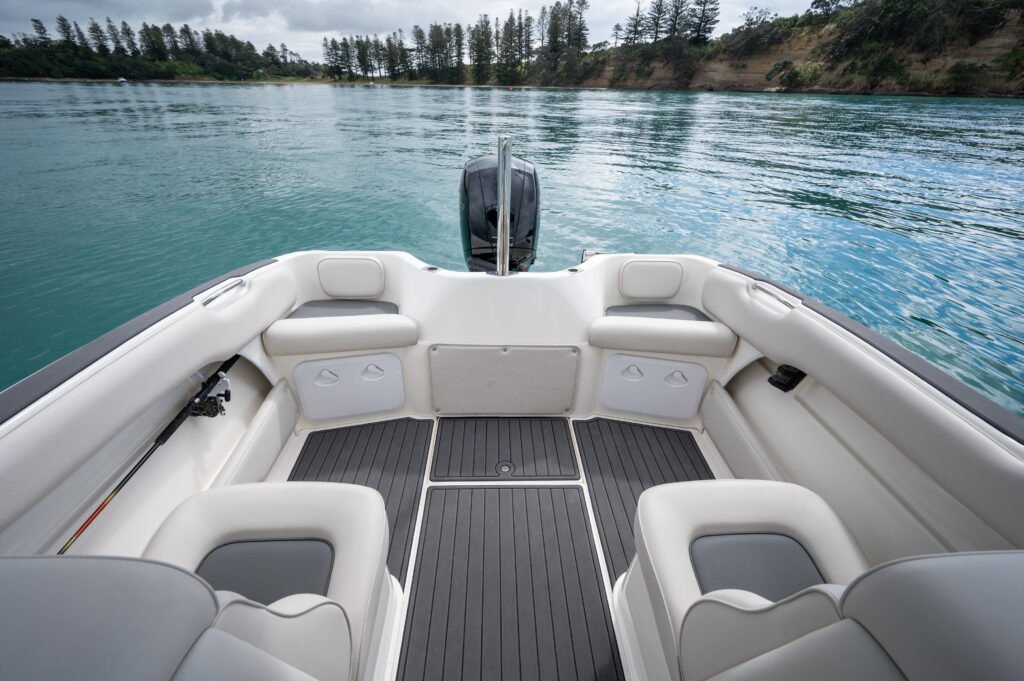
At the stern, traditional corner seating comes standard, with storage lockers underneath. A ski pole is fitted aft and can also accommodate a bait board, adding further versatility.
The transom features a dedicated central locker for the battery switches, while side pockets incorporating rod racks line both sides of the cockpit. A large wet locker beneath the cockpit floor provides additional storage for wet gear and equipment.
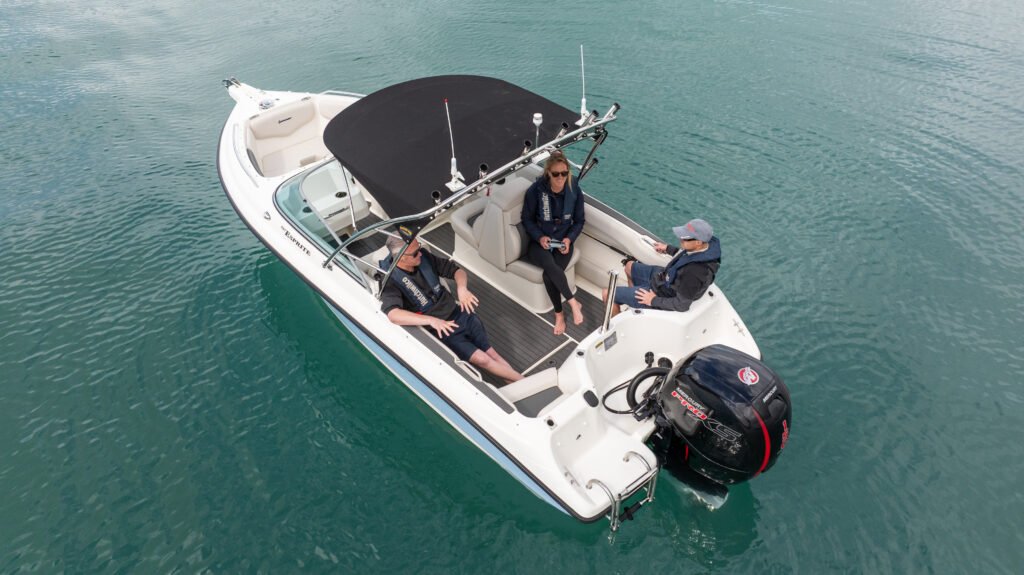
The optional Targa top/wakeboard tower provides welcome protection from the sun and can be lowered for garage storage or towing. It also incorporates rod storage and is designed to accommodate a wakeboarding tow rope.
The back-to back seating configuration has been revised, with the seat bases now removable allowing access to storage space underneath.
Underfoot, buyers can specify a premium flooring package such as Boat Dek as seen on this example, with a number of other options also available.
There are also sizeable wet lockers under the floor for additional storage.
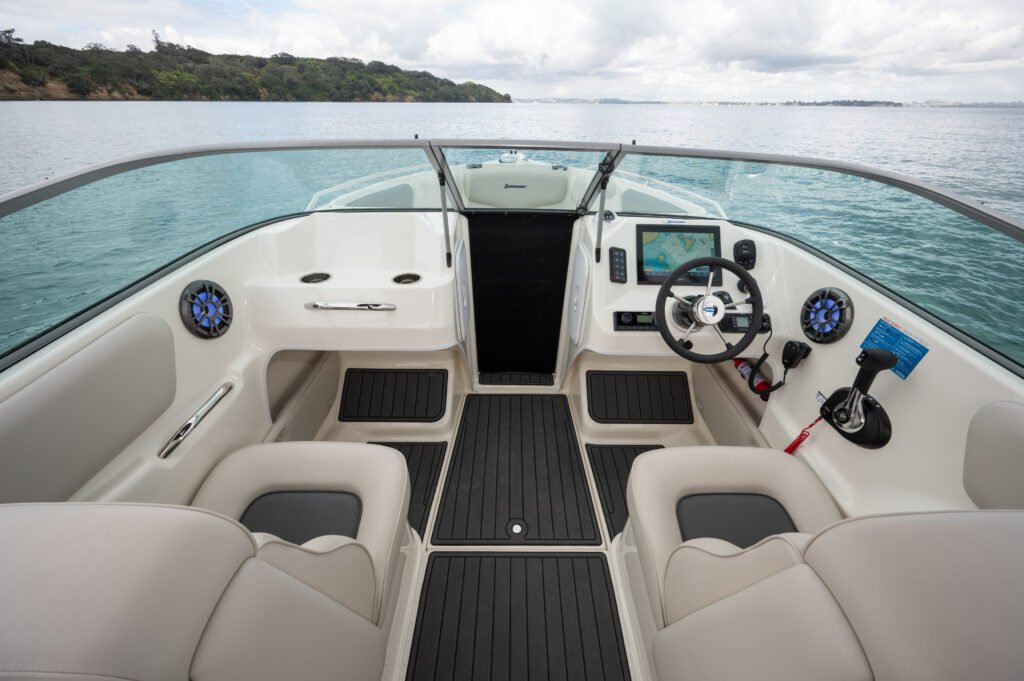
The bow remains the same size as that of the previous 565. Updates include a pair of moulded drink holders and courtesy lights, while hatches inside the companionway provide access to storage beneath the helm and passenger dashboards.
MERCURY PRO XS POWER
While the 565 hull can accommodate a 200hp four-stroke outboard, our test boat was powered by Mercury’s 150hp Pro XS four-stroke, combining performance, refinement and economy.
The Pro XS is designed to deliver strong acceleration, impressive mid-range torque and efficient cruising.
On the water, acceleration was crisp, the engine remained smooth and quiet, and there was plenty of mid-range punch when required.
With three people aboard and a full tank of fuel, our test boat reached 38 knots at wide-open throttle, turning 5,700rpm while consuming 57L/h.
At a more economical cruising speed of 20 knots and 3,500rpm, fuel consumption dropped to 18L/h.
Combined with the 165-litre fuel tank, this equates to a practical cruising range of around 180 nautical miles.
The hull proved equally impressive, delivering a quiet, dry and comfortable ride, particularly in the rougher chop encountered during our test. Predictable and easy to control, the boat provided a reassuring sense of stability and confidence when pushing along in a seaway.
The 565 Esprite’s 23-degree deep-V hull provides the foundation for handling everything from moderate chop to more demanding offshore conditions. The running surface incorporates twin strakes on each side, a double-chine configuration and a broad keel ski plank. Together, these features provide a combination of lift, stability and control, while the fuller bow sections help the boat meet oncoming swell cleanly without sacrificing momentum or ride comfort.
The hull also remains composed in a following sea, tracking cleanly without excessive bow steering. The result is a predictable, confidence-inspiring ride that offers genuine offshore capability while remaining well suited to everyday boating.
A WELL-EQUIPPED HELM
The helm is equally well considered, with a driver’s seat that provides a comfortable driving position, with the windscreen offering good protection from the wind when underway.
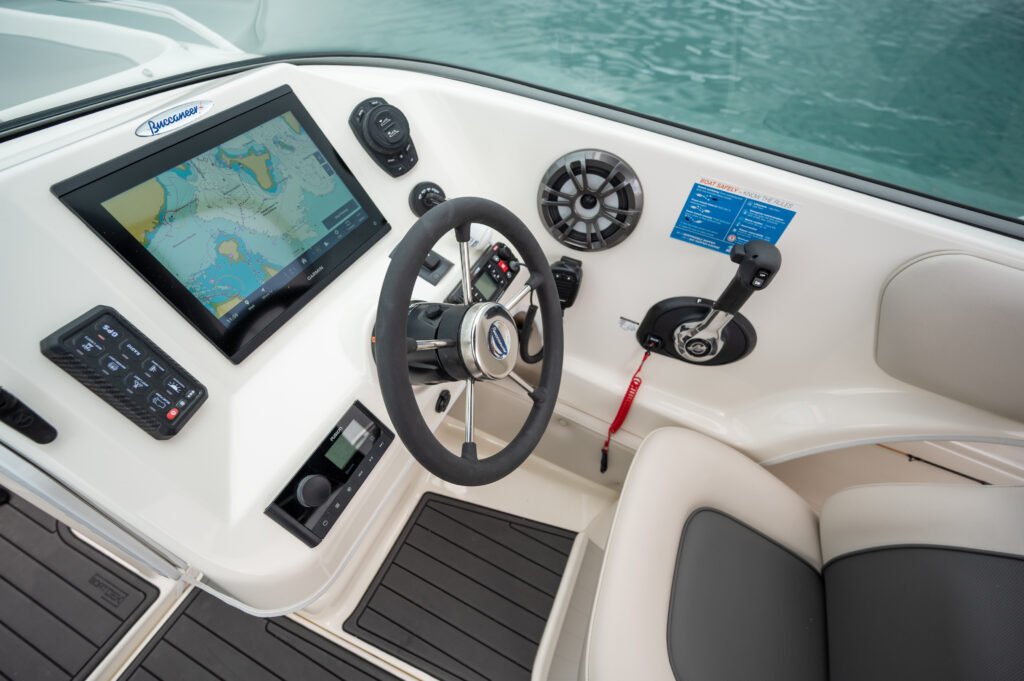
The updated dashboard is dominated by a large 12-inch Garmin multifunction display. To the left is a Loom-A-Tech switch panel with Bluetooth connectivity and customisable colour options. The helm also features a Fusion stereo system and GME VHF radio, with the Lenco Pro trim controls conveniently positioned to the right. There is also a controller for the Maxwell RC6 anchor winch up in the bow.
The Lenco Pro Control system proved particularly useful in the conditions encountered during our test, helping keep the boat level and on course as we worked across the chop from different angles, while also helping minimise spray.
For a boat likely to see plenty of watersports action, the system offers additional control over the hull’s running attitude. Fine-tuning the trim can improve planing performance, forward visibility and ride comfort. When towing a wakeboarder, the planing assist function can help the boat get onto the plane more quickly, reducing stern squat during acceleration.
Depending on the system fitted, the driver can make manual trim adjustments or use automatic trimtab control to help manage pitch and roll. These adjustments can also help compensate for changing passenger loads and water conditions, reducing the need for constant manual corrections.
CONCLUSION
The Buccaneer 565 Esprite II is a considered evolution of a proven Kiwi favourite, retaining the hull performance, ride comfort and versatility that have underpinned its success for nearly three decades. With refreshed styling, practical layout improvements and the flexibility to move between family cruising, fishing and watersports, it remains a compelling all-round package. Rather than reinventing the Esprite, Buccaneer has refined a formula that continues to serve Kiwi families well.
SPECIFICATIONS
LOA 5.91m
Beam 2.29m
Deadrise 23 degree
Trailerable weight 1470kg
HP Range 150-200hp
Fuel Capacity 165L
Test Power Mercury 150 Pro XS
PERFORMANCE DATA
RPM KNOTS LPH LNM
1000 3.8 3.6 0.95
2000 6 8.5 1.42
3000 13 15 1.15
4000 23 23 1.00
5000 33 36 1.09
6000 38.6 60 1.55