DELIVERING EXCELLENCE
Doing the jobs others don’t want to
From an apprenticeship building small Noelex trailer-sailers to running a company creating some of the most technologically advanced, meticulously finished vessels, designer, builder, innovator and unapologetic perfectionist Nic de Mey has had a fascinating journey.
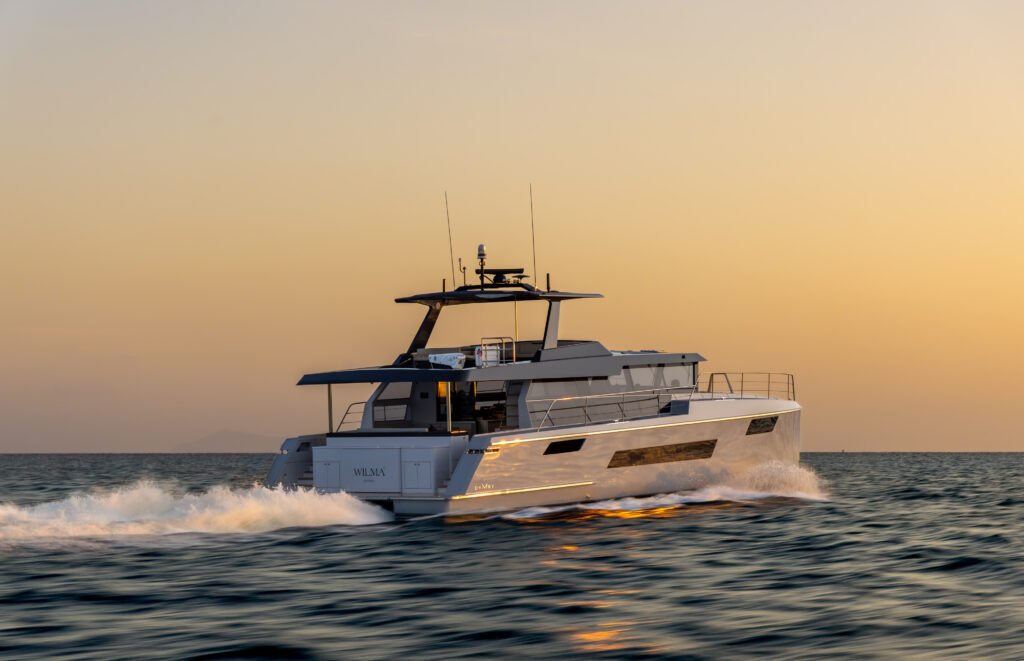
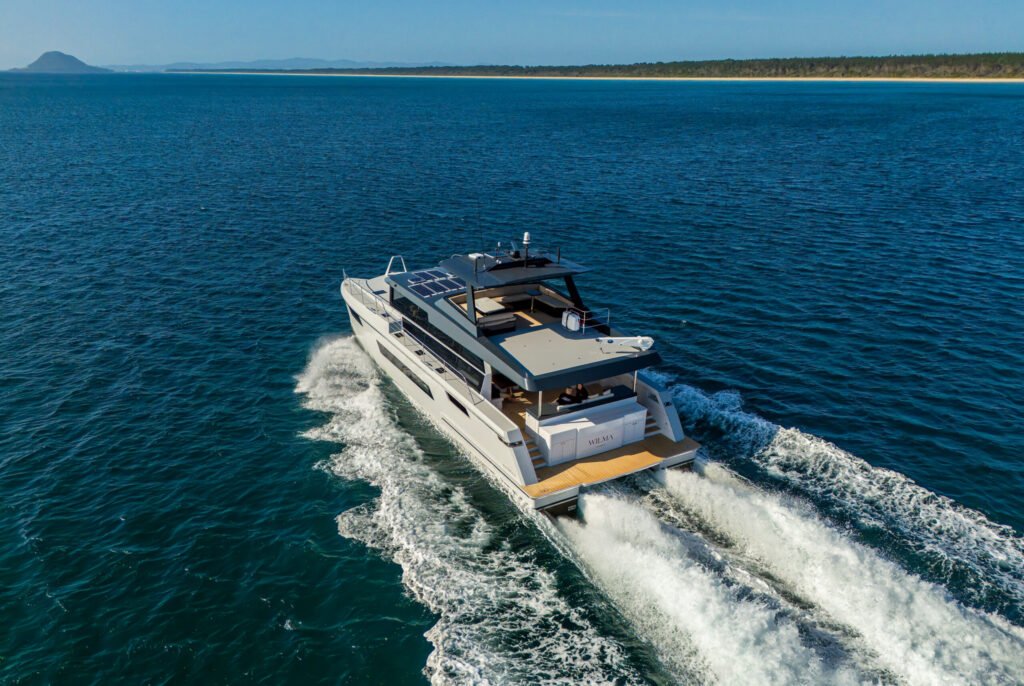
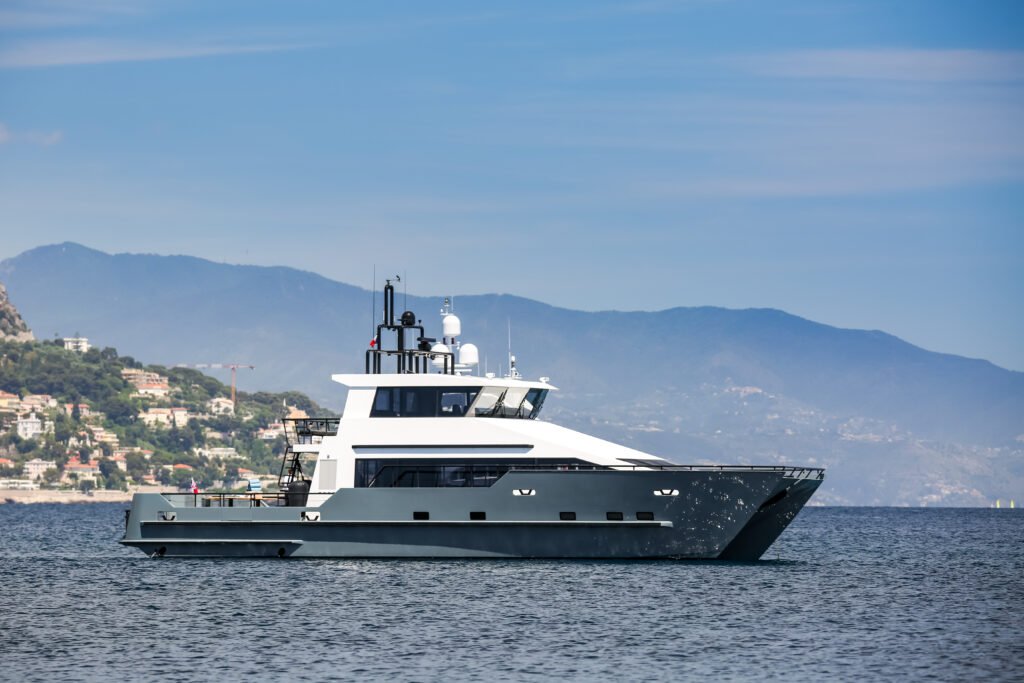
Many probably first heard the De Mey name when the first DEMEY 60 Spaceship appeared in Tauranga marina last year.
Called Wilma², it was a very impressive 18.3m Roger Hill semi-displacement power catamaran capable of over 28 knots but, more importantly, offering true “range at speed”. Able to cruise comfortably at 18-21 knots in almost all conditions, it completed its trans-Tasman delivery voyage in just 3 days, 3 hours, testing neither fuel reserves nor crew.
Despite the publicity that followed (Wilma² attracted plenty of attention from her Sulphur Point base and featured in the November/December 2024 issue of Pacific Powerboat), little was known about the company behind her – DEMEY Yachts – or its owner.
Yet both have been around, quietly doing extraordinary things, for quite some time.
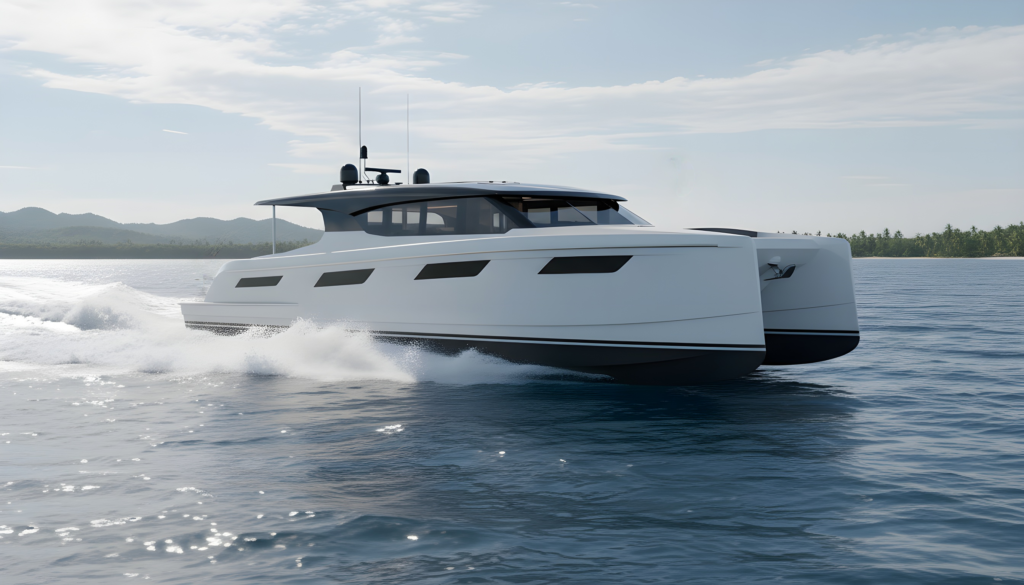
In addition to creating the DEMEY 60 and a number of other Roger Hill-designed power cats, Nic de Mey is an accomplished designer in his own right and currently has one of his 17m power cat designs under construction at a neighbouring yard.
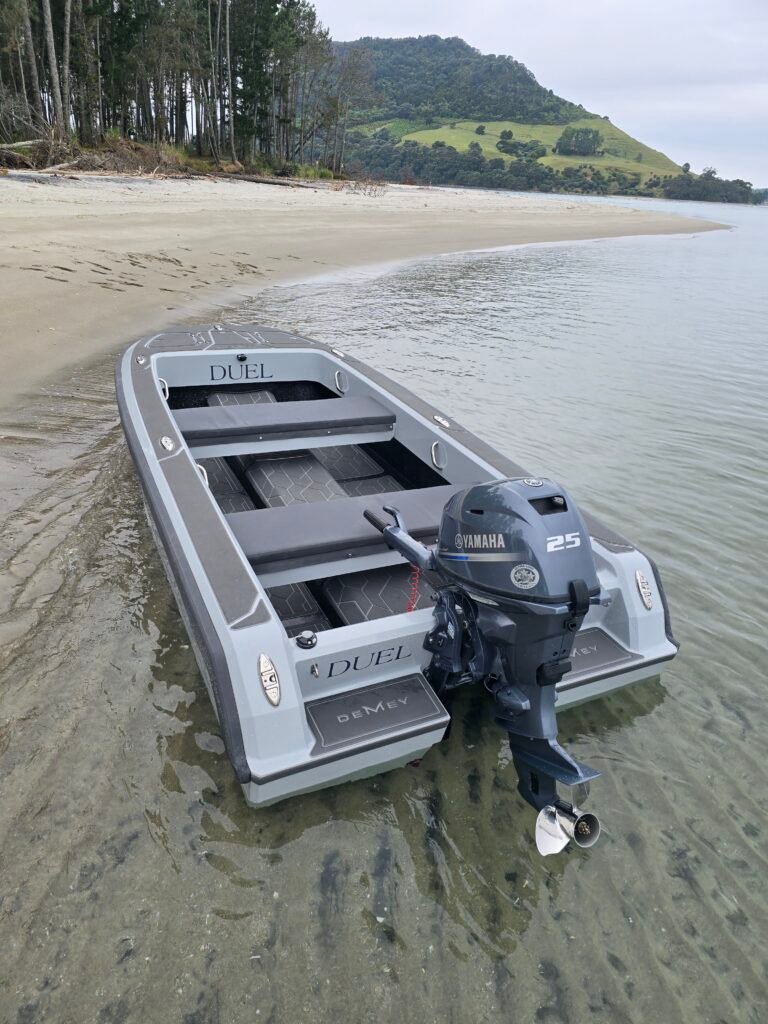
He and his company are also designing and building their own range of carbon fibre tenders and fishing boats and have designed and revamped some of Haines Hunter’s most popular models.
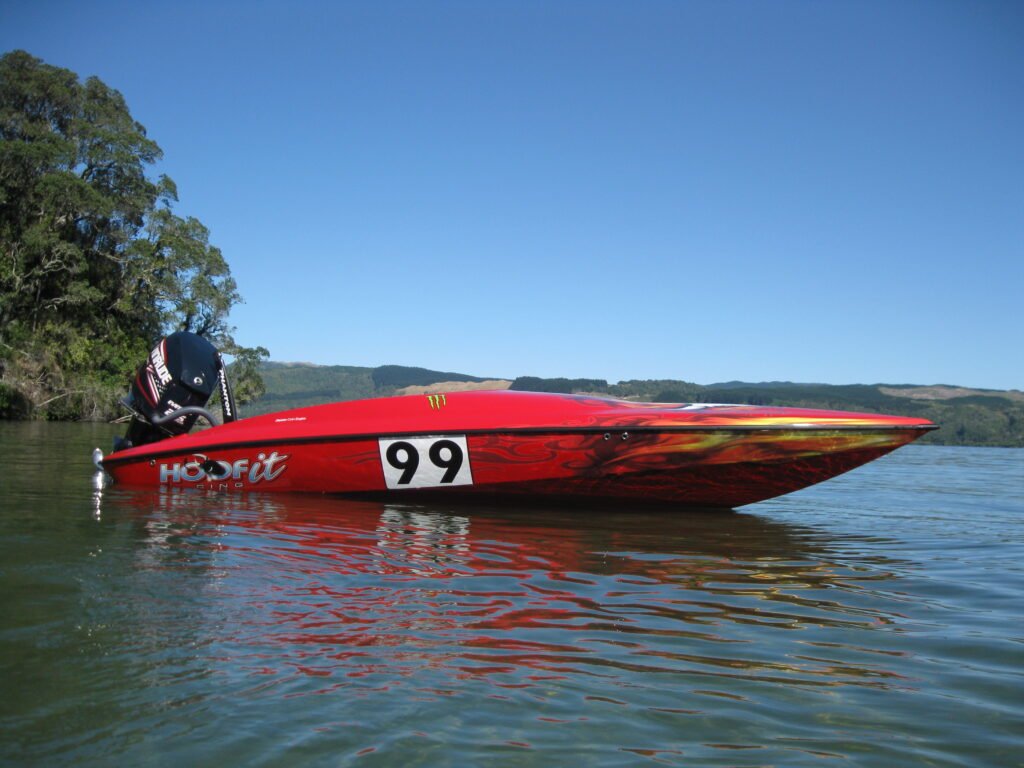
He developed and owns the Phantom brand of ski boats and, in 2022, created the Phantom F2, widely regarded as the best performance ski race boat in the country. He also recently purchased the old Bullet ski boat moulds.
A long journey…
For a man happy to admit that he doesn’t know how to build timber boats (a near-universal starting point for many Kiwi boatbuilders) it has been a long and fascinating journey.
Nic started his apprenticeship under the great Steve Marten of Marten Yachts in 1987, primarily helping build their range of Noelex trailer-sailers and sailing dinghies.
Just 9 months in and Michael (now Sir Michael) Fay approached Marten Yachts with a bold request. Having issued an America’s Cup “Deed of Gift” challenge against Dennis Conner and Stars and Stripes, he needed a boat, fast. The result was KZ-1: a massive 24.7m monohull now sitting in pride of place in front of Auckland’s Maritime Museum.
Constructed from carbon fibre and a Kevlar/Nomex sandwich, it was Nic’s first exposure to “exotic” building materials and the beginning of his nearly 40-year love affair with carbon fibre.
“It was strong and light and the best product you could buy,” he remembers. It was also his first exposure to the doctrine of “do it right or do it again”, a principle he still embraces today.
“With KZ-1 and the subsequent America’s Cup and Whitbread Round the World yachts, it was always about details and finish. Marten Yachts was consistently at the forefront of innovation, embracing new technologies and materials. If you wanted to create the best, you had to push the boundaries, often without knowing where those boundaries lay. And, if something didn’t work, you refined the process and tried again.
“And there was lots of trying again!”

Early independence
In the mid-1990s, after 8 years with Marten, Nic decided to go out on his own and remains deeply grateful to Steve Marten for his support.
“He was immensely supportive, ensuring I had every opportunity to get started. He gave me work, both personally and through his business.
“There are certain people who leave a lasting mark on your life, and Steve was one of those people for me.”
After 5 years in the Auckland suburb of Howick and after building the radical 9.75m sailing cat, Silver Raider and “spending a lot of time annoying Roger Hill”, he was commissioned to build a 13.7m Roger Hill sailing cat, followed by an equally advanced 14.2m version.
Like most of Nic’s projects, they were technically advanced builds for their time, involving epoxy vacuum-bagged carbon fibre and Kevlar.
Catching the speed bug
Once a keen sailor, Nic discovered the joys of ski racing and the thrill of being pulled along at eye-watering speeds. As competitive in sport as he is in his career, he quickly excelled, competing at the highest levels nationally and internationally.
That passion sparked a fascination with performance powerboats, and Nic went on to build two of New Zealand’s best-performing offshore race boats.
“At the time, Sleepyhead 1 and 2 were the only powerboats in the country built using mostly carbon. Both went on to win the New Zealand Offshore Powerboat Championships.
“I commissioned Brett Bakewell-White to do the design work and gave him a rough sketch on how I wanted them to look aesthetically. He truly delivered with those designs.”
During this time, the infusion process was being introduced to New Zealand boatbuilders, and Nic immediately recognised its advantages.
“It offered substantial benefits: better quality control, cleaner work spaces ⎯ and I was all in.”
Mastering the process, however, wasn’t easy.
“I basically had to teach myself, through trial and error. It was an expensive learning curve.”
The second Sleepyhead was one of the first boats he built using infusion and he has never looked back.
“DEMEY Yachts is now an exclusively infusion shop.”
Destiny comes calling
Nic and his company received a major boost when approached by New Zealand’s richest man, Graeme Hart. Hart planned to build a 70-foot foil-assisted catamaran in aluminium but wanted the cabin top in carbon fibre to save weight. After meeting Nic, that plan changed; the entire vessel would be composite.
The result was the Teknicraft-designed U-21, launched in 2011. A 21m foiling catamaran weighing just 40 tonnes and capable of an astonishing 49.7 knots, its performance was primarily made possible due to Nic’s refined infusion processes and systems developed initially under Steve Marten decades earlier.
“Most builders of the time were using alloy, which would have been much easier. In fact, I was told it was only possible to build U-21 out of aluminium,” Nic recalls.
“When you’re building a foiling catamaran, you have to fully commit to a centre of gravity position — there’s literally no margin for error.”
This is because alloy construction offers a consistent degree of accuracy; a 5mm aluminium sheet always weighs the same, while composite construction can vary significantly if not perfectly controlled.
“However, the infusion process and systems we’d developed allowed us to track weight throughout the build accurately, so it wasn’t a problem.
“Only very recently have other foil-assisted cats managed to crack the 50-knot barrier,15 years later.”
Design, diversification and a return to Tauranga
After U-21’s successful launch, Nic took time off to focus on design and family.
During this time, Haines Hunter approached him to revamp their 635 and 725 models.
“I have always loved design and get on well with Lionel and Denis, so it worked out well,” he says. After delivering a successful from-scratch design of the all-new 635, the relationship continued, and DEMEY Yachts still manages much of Haines Hunter’s design and CNC work.
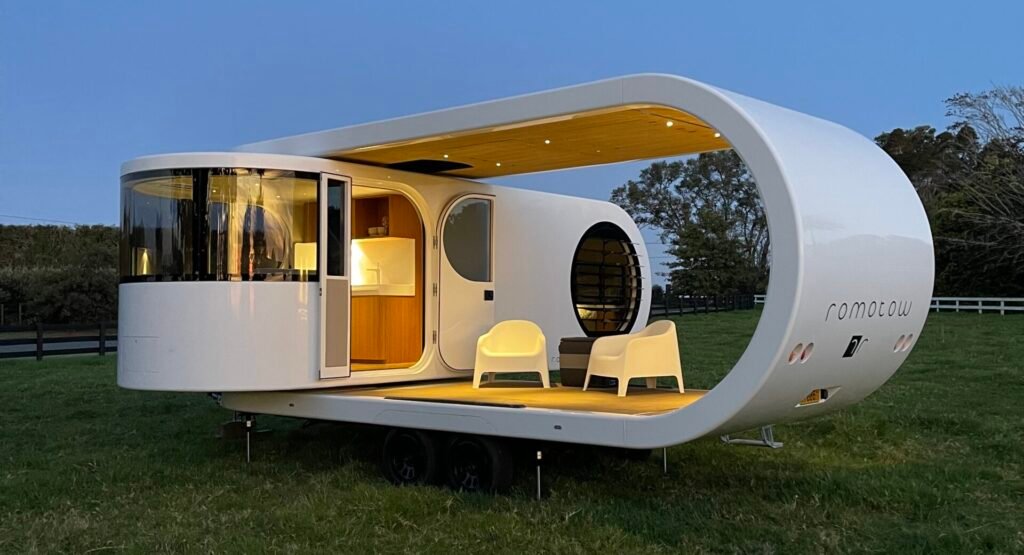
Nic also partnered with the team behind the Romotow caravan, taking it from concept to construction. It was a project he describes as “technically, the hardest thing I’ve ever built by a long way, but incredibly rewarding and stimulating.”
Returning home to Tauranga, one of his first major projects was the complete construction of a 20m carbon fibre foiling catamaran for Wayne Valder of Valder Yachts. The finished structure was later assembled and completed in Auckland by Scott Lane.
Things speed up
Before his return to Tauranga, Nic had developed the Phantom, a 19’ carbon-fibre ski boat that proved exceptionally fast, smashing the Bridge-to-Bridge F2 ski race record. However, as larger, heavier, high-horsepower four-stroke outboards emerged, the original Phantom was no longer big enough.
In 2022, Nic launched the Phantom F2, a full-carbon fibre-infused ski race boat powered by a 300hp outboard. The F2 proved a huge success, winning multiple National titles in both ski and powerboat racing, competing in multiple World Championships and now being exported worldwide.
“The Phantom F2 is something I’m incredibly proud of”, says Nic, “not only in terms of its performance but also as a reflection of everything DEMEY Yachts is as a company and a brand.”
After navigating the challenges of the Covid years, Nic received the commission to build Wilma², the first 18-metre DEMEY 60. A second DEMEY 60 is now underway, destined for Auckland, with launch set for February.
He was also commissioned to design a 17m displacement power cat, currently under construction at a nearby yard, for which DEMEY Yachts is also supplying custom joinery and components.
Nic recently purchased the Bullet ski boat moulds, popular in the 1980s and ’90s, seeing them as a perfect mid-tier alternative to the Phantom. While the 1880 model is being retired, a redesigned deck for the 1850 Classic is underway.
His DEMEY 60 owners also commissioned a catamaran tender for Wilma². The result is a sleek 3.8m carbon fibre cat that is fast, stable and beautifully finished. A larger 6m version is in development.
Looking ahead
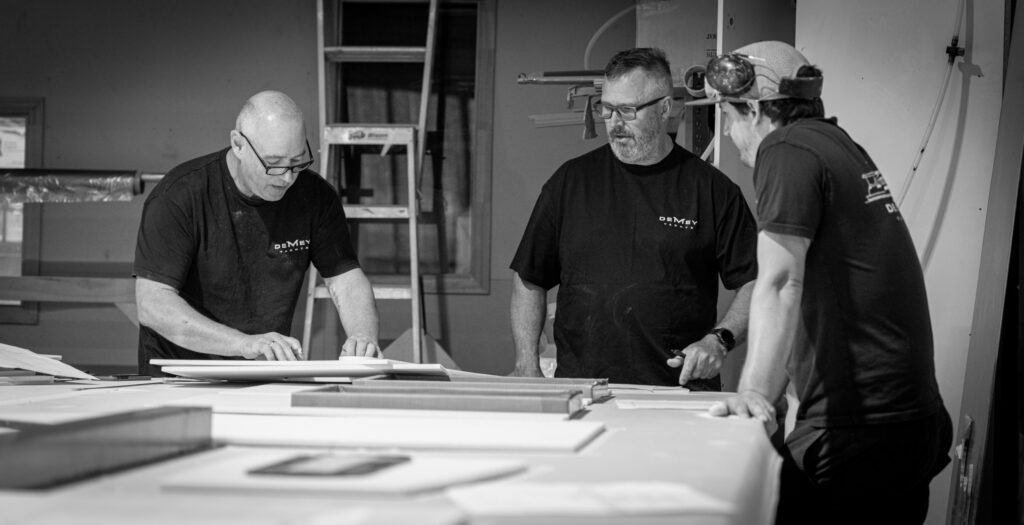
Today, DEMEY Yachts bears little resemblance to the small business Nic started over 30 years ago. The company now handles its own design, engineering, upholstery, stainless steel and joinery, all in-house. Nic believes it is the only way to ensure the level of quality and detail that defines every project he undertakes.
“We use technology in absolutely everything we do,” he says. “We do an enormous amount of CAD design, CNC routing and 3D printing to get the result we want, and compromise is never an option.”
A quick walk around his Tauranga yard proves the point. Concerned about the excess weight of traditional stainless door surrounds, he now builds them in carbon fibre, a single-piece assembly, light enough to lift with one hand. The same applies to his carbon-fibre ski poles: incredibly light, exceptionally strong, and visually striking.
Nic sees the company’s future in design, custom boat-building and the supply of advanced components to other builders.
“You come to us when you want to be part of a project, a build that excites you, pushes boundaries, and results in a boat so nice you can’t help but pick up the pace as you’re walking down the marina just to see her again. A boat you’re proud to own.”
www.demeyyachts.com