



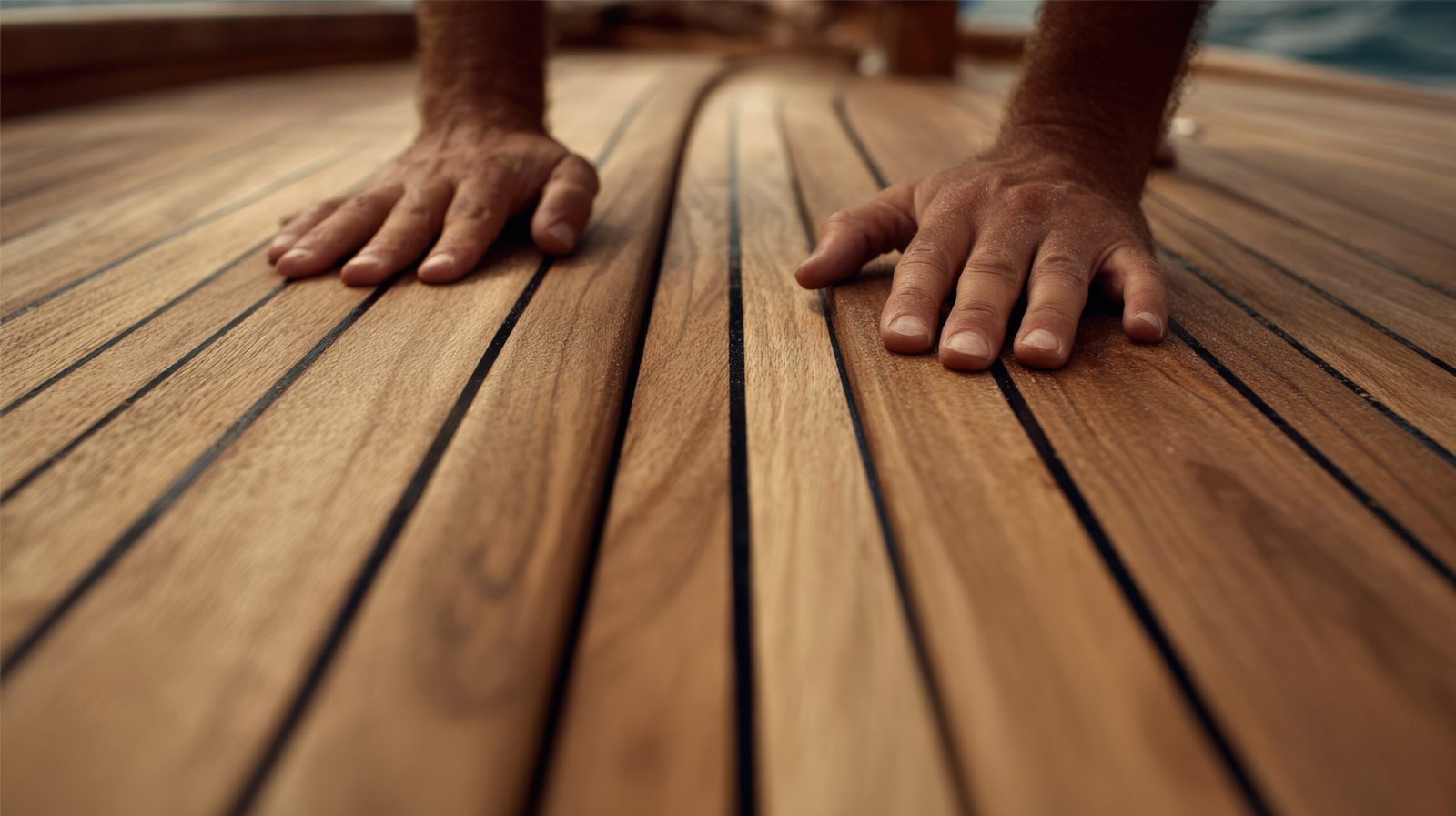

STEP INTO COMFORT: ENHANCE THE STYLE AND VALUE OF YOUR BOAT, TRANSFORMING TIRED OR AGED DECKS.
If you love the timeless look of teak on your decks and floors but don’t want to face the high cost of real teak, it’s worth exploring one of the many synthetic alternatives available today.
Teak and other exotic timbers have been used in boatbuilding for centuries. While few timber boats are built these days, real teak decks remain popular, particularly on larger cruisers over 10 metres. They’re less common on smaller trailer boats (5-7 metres), where both cost and weight become important considerations. Real teak decking weighs around 7 kg per square metre, compared with approximately 4.5 kg for synthetic teak. Across a typical 20sqm area, including the cockpit floor, boarding platform, and side decks, that difference amounts to roughly 50 kilograms in extra weight.
Installing real teak is a major investment in both time and craftsmanship, often requiring hundreds of hours of skilled labour. By comparison, faux teak can be precision-cut by computer and installed in just a few hours, at a significantly lower overall cost. The result? More time and budget left for enjoying your boat out on the water.
While few production trailer boats feature genuine teak, the advent of synthetic options has made the “teak look” increasingly popular. Once, teak decking was structural, laid over deck beams with oakum or cotton caulking hammered between planks for watertightness. Today, with composite construction, teak is purely cosmetic, a mark of quality rather than necessity.
The environmental impact of real teak is another concern. Many countries now restrict or ban teak imports, with the high-quality timber becoming increasingly scarce. Cutting down more trees isn’t sustainable, which is why imitation or faux teak has become such an appealing alternative.
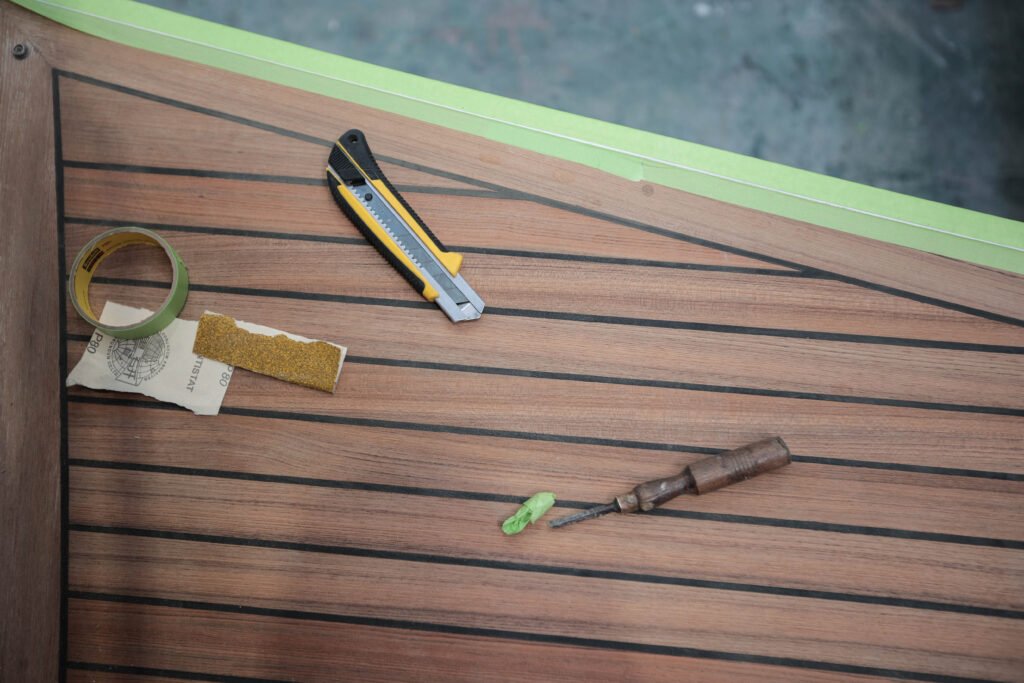
What are the alternatives? – Why look beyond teak?
Teak has long been regarded as “premium” for boat decks because it is naturally rot-resistant, dimensionally stable in marine environments, and has an attractive finish. But there are drawbacks:
- It is expensive, and the supply of high-grade old-growth teak is under pressure.
- It requires maintenance: sanding, re-caulking, cleaning, etc.
- There are sustainability and provenance issues (especially older sources).
- Teak still stains from fuel/oil and needs good care.
So many boat owners are turning to alternatives that offer similar looks or functional performance (non-slip, durability, easier cleaning) with lower upkeep.
Main alternative categories
Here are the main types of alternative decking materials, with what to know about each.
- SYNTHETIC “TEAK LOOK” PVC / COMPOSITE SHEETS
These are panels or sheets made of PVC or other synthetic materials, formatted to mimic the look of timber/teak, often with fake caulking grooves, wood-grain texture, etc.
Benefits:
- Easier/faster installation than actual wooden planks.
- Lower maintenance: no sanding or varnishing, less worry about rot.
- Lighter weight (which matters in smaller craft).
- Good for a “teak-deck look” without the teak cost.
- CLOSED-CELL FOAM MATS / EVA FOAM DECKING
Closed-cell EVA foam (and PE/EVA blends) has evolved well beyond teak-look alternatives into a premium, purpose-engineered marine flooring system. Modern EVA decking is CNC-cut for an exact fit and can be fully customised with patterns, routing, colour combinations, and even logos, allowing owners to match upholstery, hull accents, or branding without being limited to basic, generic finishes.
Designed specifically for marine use, the material delivers excellent traction in both wet and dry conditions, resists fading and moisture ingress, and is far easier to maintain than timber or older synthetic planks.
For aluminium and alloy boats, thermal comfort is a major advantage. The closed-cell foam acts as an insulating barrier, reducing heat transfer from hot decks in summer and preventing cold metal from becoming uncomfortable underfoot in winter. EVA also helps dampen noise and vibration commonly transmitted through metal hulls, creating a quieter and more comfortable onboard experience year-round.
Benefits:
- Excellent non-slip surface engineered for marine environments.
- Low-maintenance alternative to timber or legacy synthetic systems
- Lightweight construction helps reduce overall boat weight, especially valuable for trailer boats.
- Highly durable and resistant to UV, salt, moisture, and regular foot traffic for both freshwater and coastal conditions.
- Soft, comfortable underfoot, helping reduce fatigue during long days on the water.
- A premium upgrade which is no longer viewed as a budget compromise.
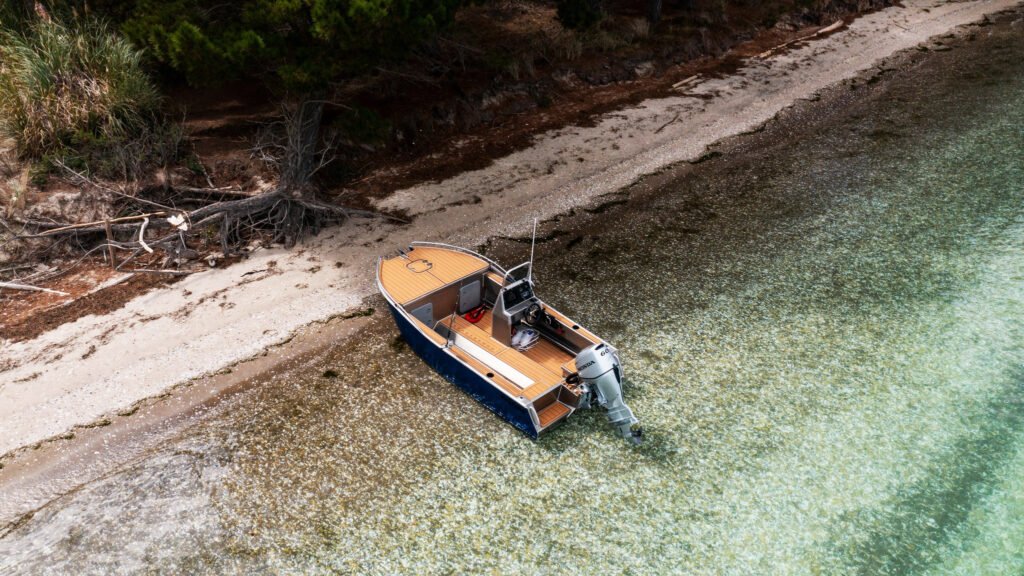
- NATURAL WOOD/COMPOSITE ENGINEERED WOODS/CORK ETC
Less common, but still worth knowing. Some manufacturers offer engineered wood (treated softwood, composite cork decks) as alternatives.
Benefits:
- More “natural wood” aesthetic than foam or PVC.
- Some engineered woods claim equal or better performance than teak (in terms of rot resistance, etc) when properly treated.
- Cork composites: lighter, better insulation, good non-slip, and more environmentally sustainable in some cases.
What to think about for your NZ boat & conditions
When selecting an alternative to teak for your boat in NZ and Australian waters, some considerations:
- Climate & UV exposure: Sun can be strong; the marine environment is harsh (salt, spray, sun, variable weather) – choose materials with good UV resistance and marine ratings.
- Foot traffic/usage: If your boat is high-use (charter, fishing, commercial), durability and ease of cleaning take precedence; if it’s a leisure weekend cruiser, aesthetics might matter more.
- Weight & boat type: On smaller boats, weight matters (every kilo counts). Foam or lightweight synthetics may help.
- Maintenance capacity: How much time/effort do you want to spend on upkeep? Synthetic/foam options mean less time refinishing, etc.
- Installation substrate: What your deck is made of (fibreglass, aluminium, timber) matters. Many synthetics claim they can be bonded to fibreglass, steel, or wood.
- Resale/market expectation: If your boat has a premium “teak deck” aesthetic, it might impact resale value; conversely, a trusted alternative with low upkeep can also be a selling point.
- Ecological/sustainability concerns: If this is important, alternatives to old-growth teak are better; synthetic or sustainably managed engineered woods/cork or foam may appeal.
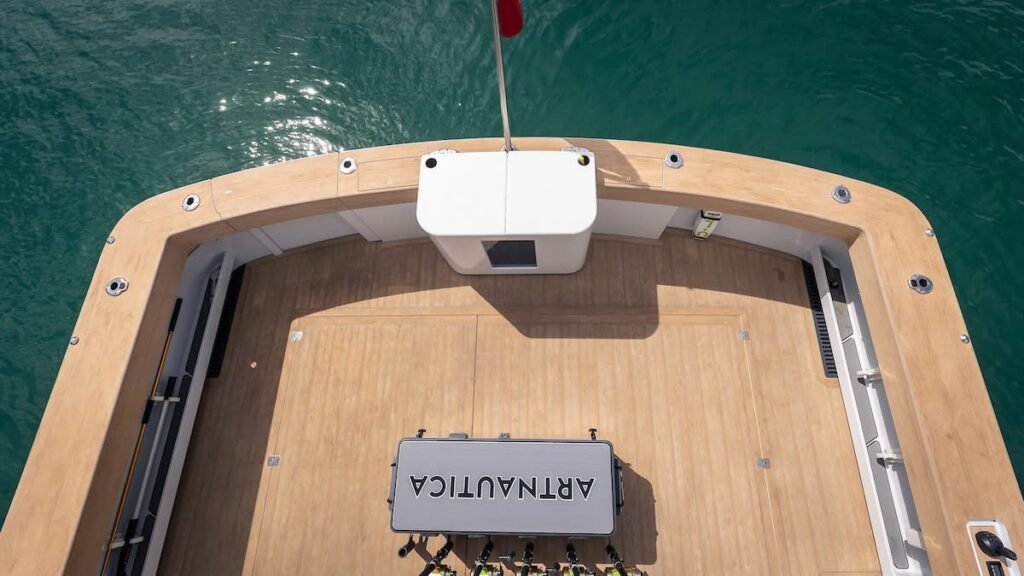
Conclusion
For a mid-sized leisure boat where you want the look of teak but less maintenance, you would lean towards a high-quality synthetic “teak look” sheet (PVC composite) installed by a good marine installer. If you’re more budget-conscious or want easy DIY installation and functional non-slip rather than luxury aesthetics, you would probably go for a foam/EVA sheet.
If you own a higher-end boat and value a natural wood feel (and can commit to maintenance), then engineered wood/cork might be worthwhile, but expect higher cost and specialist installation.
Always check local installers, adhesives, and warranties (some installers note 5-year warranties for certain synthetic products). Also, get an installation quote (substrate prep, removal of the old deck, adhesives), as labour is a big part of the cost.
Given the significant cost savings and environmental considerations, these “teak deck look” alternatives are well worth considering.
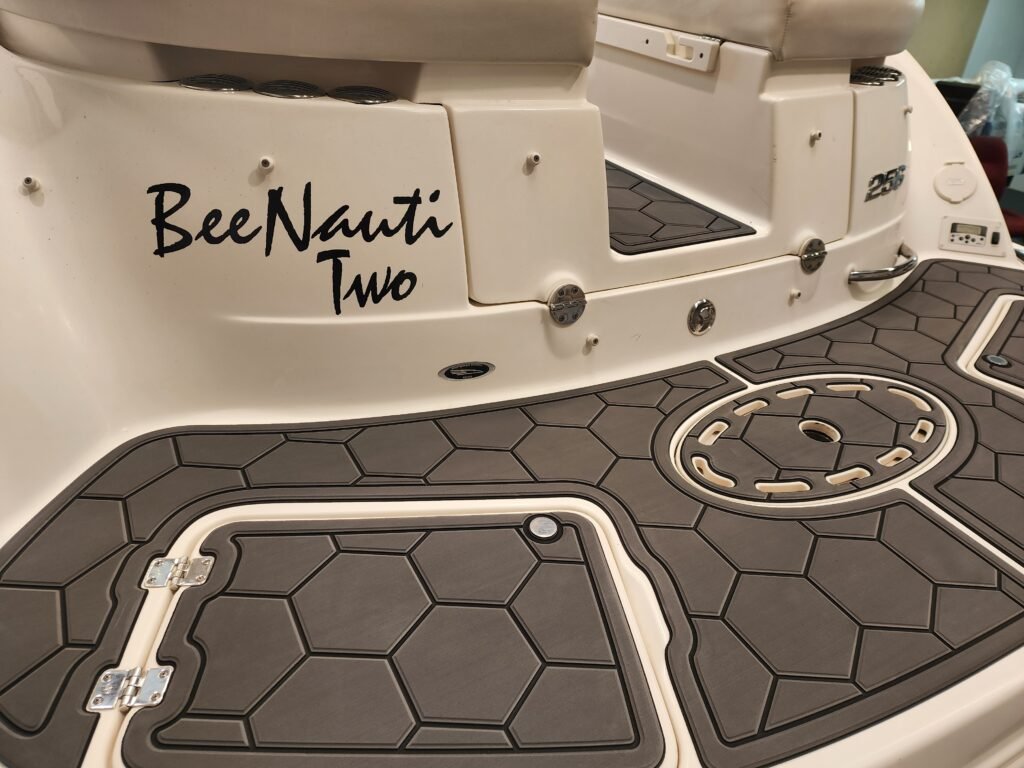
We take a closer look at a few of the leading suppliers and installers of marine flooring:-
U-DEK
Ultralon Foam Group is a long-established manufacturer of closed-cell foam, with more than 65 years of experience in the field. Founded in New Zealand and now part of the publicly listed Skellerup Group, Ultralon operates across Asia, Europe, North America, and Oceania. Their foams are carefully engineered, thoroughly tested, and used in a variety of industries, including marine.
U-DEK marine decking, developed and produced by Ultralon, is a lightweight closed-cell copolymer foam designed for comfort, durability, and practical use. Manufactured in-house using Ultralon’s own processes, U-DEK provides a customisable, low-maintenance option for marine decks, with consistent quality, low water absorption, high buoyancy, and solid chemical resistance.
U-DEK is ideal for replacing carpet, moulded non-skid surfaces, or teak flooring. It provides excellent traction in all conditions, reduces noise from engines, and softens hard floors for long days on the water. The closed-cell, chemically cross-linked foam can be cut to size or custom CNC-routed into patterns, designs, or logos. Properly maintained, U-DEK can last 8+ years.
FLEXITEEK
Brin Wilson Boats, established in 1952 and based at Gulf Harbour, Auckland, are New Zealand’s exclusive distributor and installer of Flexiteek, a composite synthetic teak decking system. In addition to installing Flexiteek, the company also undertakes full refits, including complete deck replacements.
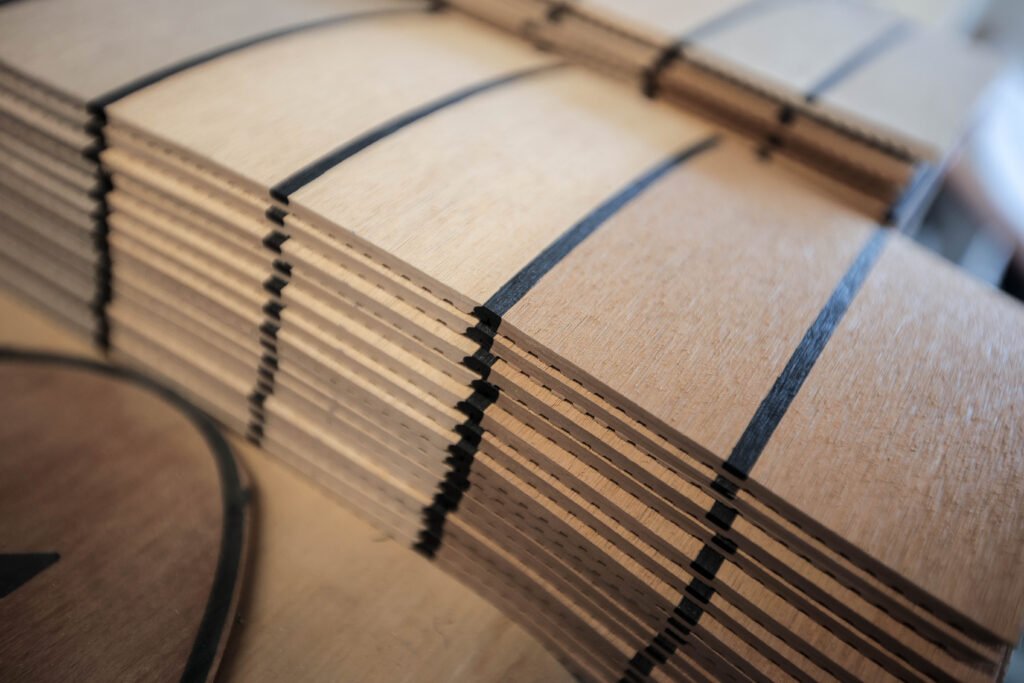
Flexiteek is the original synthetic marine decking, with more than 20 years of development. Its first generation launched in 2000, followed by upgrades in 2014 and the latest third-generation release in 2024. Decks are fabricated from single or double planks for curved layouts, or from four-plank panels for faster production of larger straight sections.
Each deck is made to template for an exact fit. Panels are heat-welded, creating a strong, waterproof finish without glue or caulking that can deteriorate. Once supplied, they are ready to be bonded to the prepared surface by trained installers. The material can be laid over any smooth, structurally sound substrate.
Flexiteek is sandable, highly stain-resistant, easy to clean and incorporates UV stabilisers to maintain colour. At 5 mm thick and weighing just 4.5 kg/m², it comes in Natural Teak, Weathered, Scrubbed and other tones. As the only third-generation synthetic decking available, it offers a lighter, cooler, more environmentally conscious alternative, with reliable non-skid performance and faster cooling under direct sunlight.
LONG SHOT STUDIOS – EVA MARINE DECKING
Long Shot Studios, based in Christchurch, operates as a specialist workshop providing custom graphics, marine decking, and apparel. The team supplies and installs EVA marine decking for a wide range of vessels. Their EVA decking, offered as both DIY kits and fully installed solutions, allows boat owners to update older craft or enhance new builds quickly and cost-effectively, without sacrificing style or durability. Locally made and fitted products like those from Long Shot Studios are increasingly popular among New Zealand jet-boat and trailer-boat owners seeking a modern, tailored finish.
Each EVA foam deck is CNC-cut for an exact fit, with options for custom patterns, logos, and colour combinations. This gives owners the freedom to coordinate flooring with upholstery, hull styling, or branding, rather than settling for basic, off-the-shelf looks. From tinnies and runabouts to jet boats and launches, Long Shot Studios delivers high-quality EVA decking built for premium fit, finish, and long-term performance. From initial measurements through to final installation, the focus is on creating a durable, great-looking deck that stands up to real-world conditions and maintains its appearance over time.
Long Shot Studios is also proud to serve as an official provider for Huntsman Boats, offering customisation options that meet the craftsmanship and standards associated with the Huntsman name.
CARING FOR AND RESTORING OLD TEAK DECKS
If your existing teak decks don’t need replacing, but just a freshening up, here are a few tips.
Teak decks naturally weather over time, losing their warm golden glow and turning a silvery grey. While this patina is harmless, many boat owners prefer to restore teak to its original colour and protect it from the harsh marine environment. The key to good teak care is gentle cleaning, proper restoration, and the right protective finish.
Restoring Teak to Its Natural Colour
If your teak or hardwood has dulled, begin by thoroughly wetting the surface with fresh or salt water. For heavily soiled decks, use a teak cleaner; for lighter wear, a teak restorer is enough to revive the natural colour. Apply the restorer generously and let it work for 10–15 minutes. Scrub lightly across the grain (never along it) to avoid damaging the soft fibres. Repeat as needed, then rinse well with fresh water to remove all residue. This simple process is often enough to bring back teak’s warm, golden tone.
Protecting and Maintaining Teak Decking
To preserve the wood and enhance its grain, many owners apply teak oil after cleaning. The oil enriches colour and provides protection, but it should be used carefully. Apply one or two thin coats with a brush or cloth, wiping away excess until the wood is saturated and matte. Avoid handling the deck until the oil is fully dry. Always clean spills immediately. Teak oil can stain painted or fibreglass surfaces and may soften sealants if left too long. For regular upkeep, gentle cleaning is best. Use a soft-bristled brush and a mild cleaner, or a simple mix of dish soap and water, to wash the deck. Harsh chemicals, stiff brushes, and high-pressure washers may remove too much wood and shorten the deck’s lifespan.
Do’s and Don’ts
DO:
Clean regularly with mild soap and water
Brush across the grain
Use soft brushes or sponges
DON’T:
Use high-pressure washers
Use stiff brushes, steel wool, or harsh two-part cleaners frequently
Let cleaning solutions dry on the deck or nearby surfaces
With proper care, your teak decks can remain strong, beautiful, and long-lasting, retaining the warm character that makes teak one of the most cherished materials in boating.

