Owning a boat is about more than just getting out on the water; it’s also about keeping your vessel in top condition. One of the most effective ways to rejuvenate a boat is to update its finish to enhance aesthetic appeal and protect the hull. Whether you’re looking to restore faded gelcoat, refresh worn paint, or completely transform your vessel’s appearance, there are several options to consider: repainting, polishing, or wrapping. Each has its own benefits, trade-offs, technical requirements, and cost implications. This guide provides a practical overview.

WHY UPDATE YOUR BOAT’S FINISH?
While aesthetics are often the first motivator, giving your boat a new finish is about much more than looks.
• Protection: Topcoats, undercoats & primers, and barrier layers protect the hull from UV damage, moisture, and chemical attack, which is critical in the harsh marine environments of New Zealand and Australia.
• Corrosion & Osmosis Prevention: On aluminium, proper preparation, primers and coatings slow corrosion; on fibreglass, barrier coats and surface preparation prevent blistering and osmosis.
• Performance & Fuel Efficiency: A smooth, well-finished underwater hull reduces drag, enhancing speed and fuel economy.
• Value & Pride-of-Ownership: A fresh finish improves resale appeal and gives owners a sense of pride in their boat.
Options for Refreshing Your Boat
FULL REPAINT:
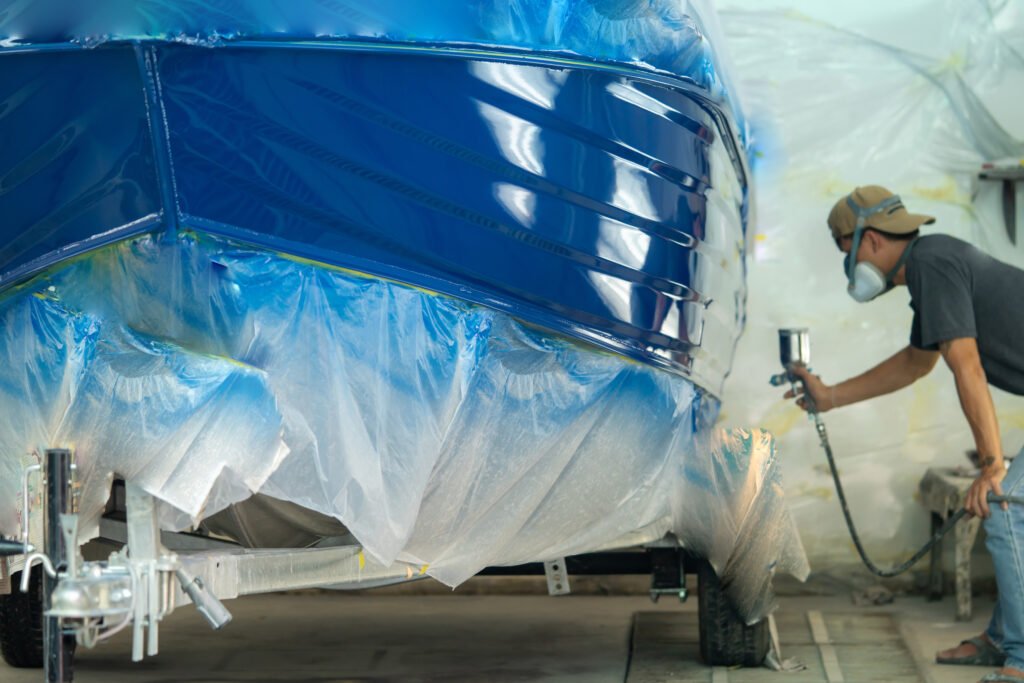
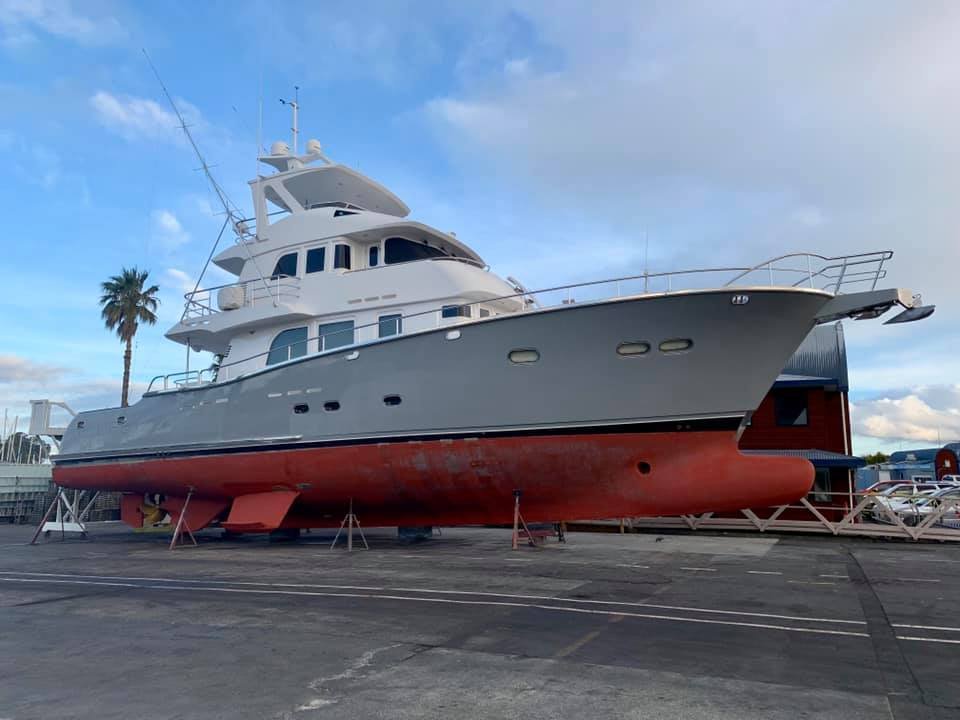
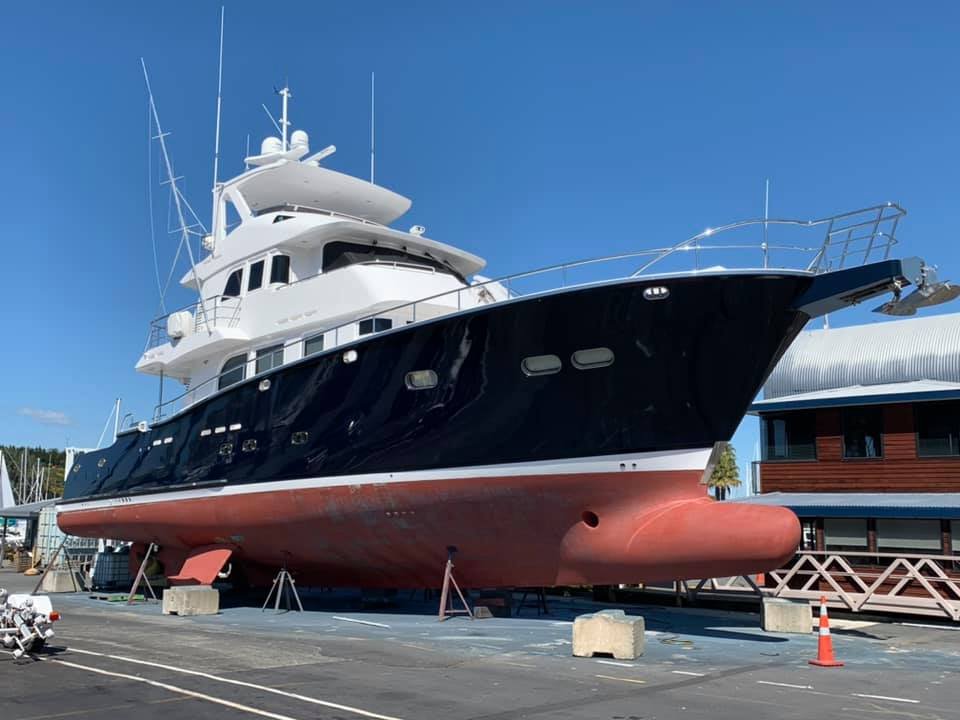
A full professional repaint is the most comprehensive way to refresh a tired or weathered boat, especially if the hull is showing signs of heavy wear, oxidation, chalking, or noticeable colour fading. The process typically begins by stripping or abrading the existing finish to create a clean, stable surface. From there, any dings, gouges, or surface imperfections are repaired before primers and undercoats and/or barrier coats are applied to protect the substrate, whether fibreglass or aluminium. The job is completed with a high-quality topcoat that provides excellent gloss, UV stability, and long-term protection in the harsh marine environment.
Opting for a full repaint offers the best durability and delivers a sleek, showroom-level finish that can completely transform an older boat. It’s also an opportunity to correct cosmetic flaws and deal with underlying structural issues before they become bigger problems. However, this level of work does require a haul-out and time in a professional facility, making it more costly and time-consuming than options like polishing or vinyl wrapping. For owners committed to restoring their vessel to near-new condition, though, a full repaint remains the gold standard. The technical advantage of a quality two pack polyurethane finish is that it is much tougher, harder and more glossy than a vinyl wrap.
Technical: Primer, Paints and Coatings
Epoxy Primers / Barrier Coats: Seal and protect fibreglass and aluminium, provide adhesion, and prevent moisture ingress.
Two-Pack Polyurethane Topcoats: Glossy, UV- and chemical-resistant finish ideal for topsides. These normally go over the top of a Two-Pack Undercoat (which is also used if just a standard repaint of existing paint work in good condition).
Single-Pack Products & Varnishes: Best for minor touch-ups or wood surfaces. User friendly products for DIY.
Gelcoat: Factory-applied on fibreglass boats; repairable with gelcoat fillers and polishing.
Step-by-Step: Repainting a Fibreglass Boat
- Inspection & Planning: Assess surface and structural condition.
- Haul-Out & Masking: Prepare a spray booth or sheltered yard.
- Surface Prep: Wash, degrease, sand oxidised gelcoat, and make gelcoat repairs if necessary.
- Primer / Barrier Coat: Apply epoxy primers or barrier coats to seal laminate if the existing surface is in poor condition.
- Undercoats – these can be used without the need for primers on fibreglass boats that are in good condition. Two Pack Undercoats are required if using Two Pack Topcoats.
- Topcoats: Spray two-pack Polyurethane coats.
- Reassembly & QA: Replace fittings and check seals.
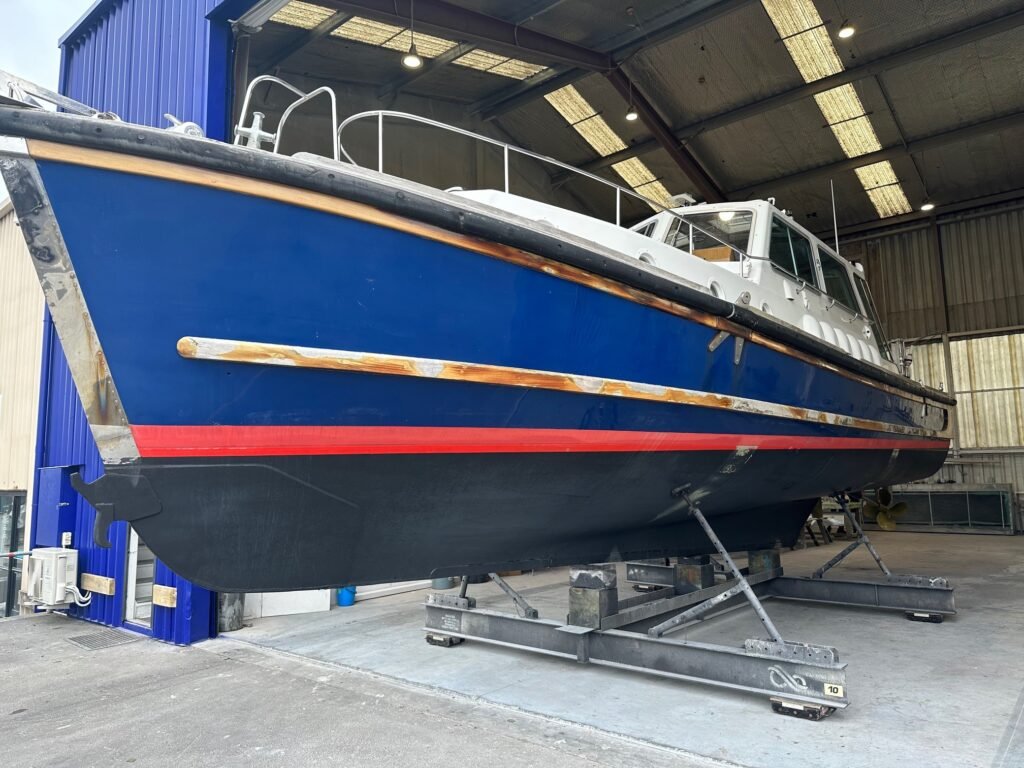
Step-by-Step: Repainting an Aluminium Boat
- Inspection & Cleaning: Check for corrosion and weld defects; degrease thoroughly.
- Abrasion / Etching: Create the required surface profile for adhesion.
- Epoxy Aluminium Primer: Apply promptly after sanding to avoid oxidation.
- Epoxy Undercoat / Barrier protection: Build film thickness and seal repairs.
- Undercoats – Two Pack Undercoats are typically required if using Two Pack Topcoats.
- Topcoat: Use PU topcoat formulated for aluminium.
- Detailing: Protect through-hulls and sacrificial anodes to avoid galvanic corrosion.
Painting Your Own Boat: DIY Options
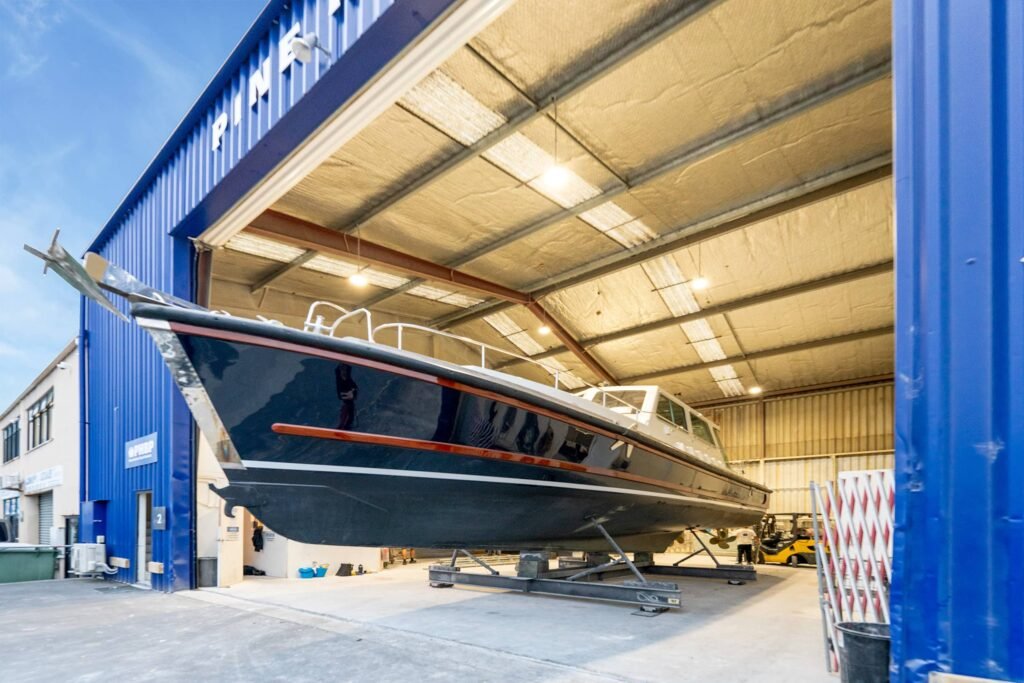
For boat owners in New Zealand, brave and talented enough to take on a repaint themselves, it can be an appealing option, particularly for smaller vessels or those with simpler hull shapes. DIY painting usually involves sanding or abrading the existing finish, repairing minor surface imperfections, applying primer or barrier coats if needed, and finishing with a suitable undercoat and topcoat such as a single-pack or two-pack polyurethane or marine enamel. It’s possible to paint both fibreglass and aluminium boats at home or in a local shed, provided you have the right equipment, ventilation, and access to haul-out facilities if needed.
The main advantages of painting your own boat are cost savings and control over timing. Professional repainting can be expensive, and doing the work yourself allows you to spread the project over time and make decisions on colour, finish, and technique. DIY projects can also be rewarding for owners who enjoy hands-on work and want to fully customise their vessel. Some of the DIY products can give you a sprayed looking finish when applied with a roller.
However, there are significant considerations and potential drawbacks. Achieving a professional-looking finish can be challenging without experience, particularly when it comes to smooth, even coats, avoiding runs, and achieving the correct colour and gloss. Surface preparation is critical: any missed scratches, oxidation, or contamination can compromise the final result. Safety is another factor; many marine paints contain strong chemicals and solvents, requiring proper protective gear, suitable ventilation and careful handling. Environmental compliance is also essential, as there are strict rules in New Zealand and Australia around the disposal of old paint, solvents, and wash water. Lastly, DIY finishes may not last as long as professionally applied coatings, and correcting mistakes can be costly and time-consuming.
Overall, painting your own boat is a viable option for well-prepared owners who have the space, time, and skills to do the job carefully. For larger boats, complex hull shapes, or long-term durability, professional repainting remains the safest way to achieve a high-quality, lasting finish that will be tough.
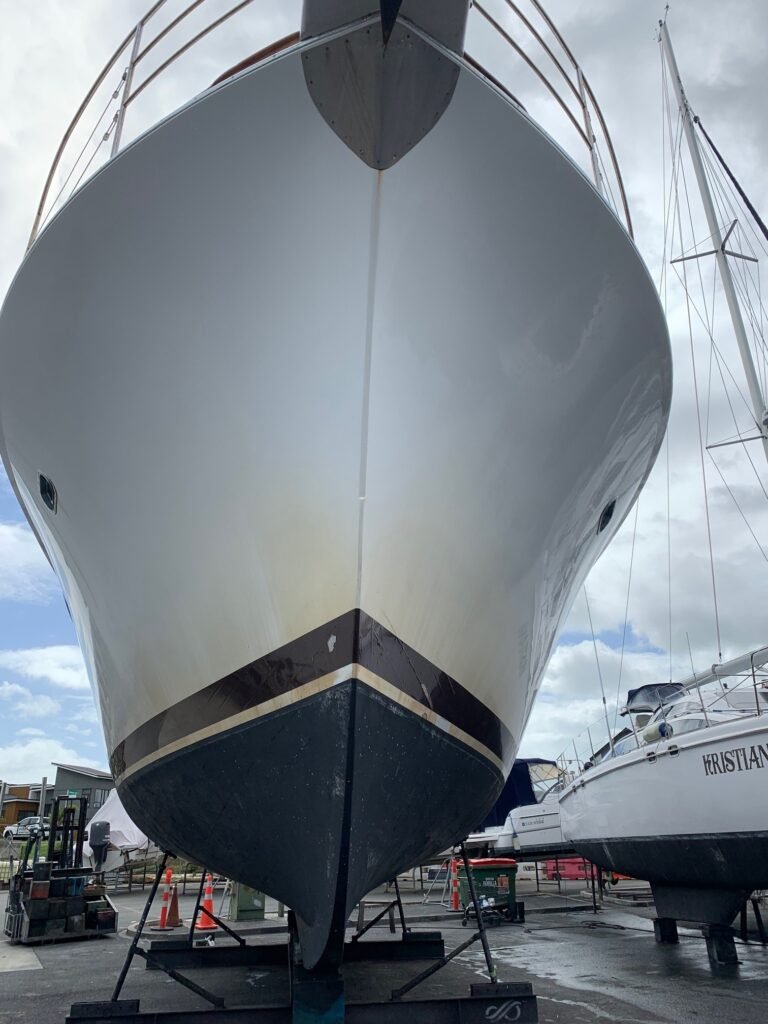
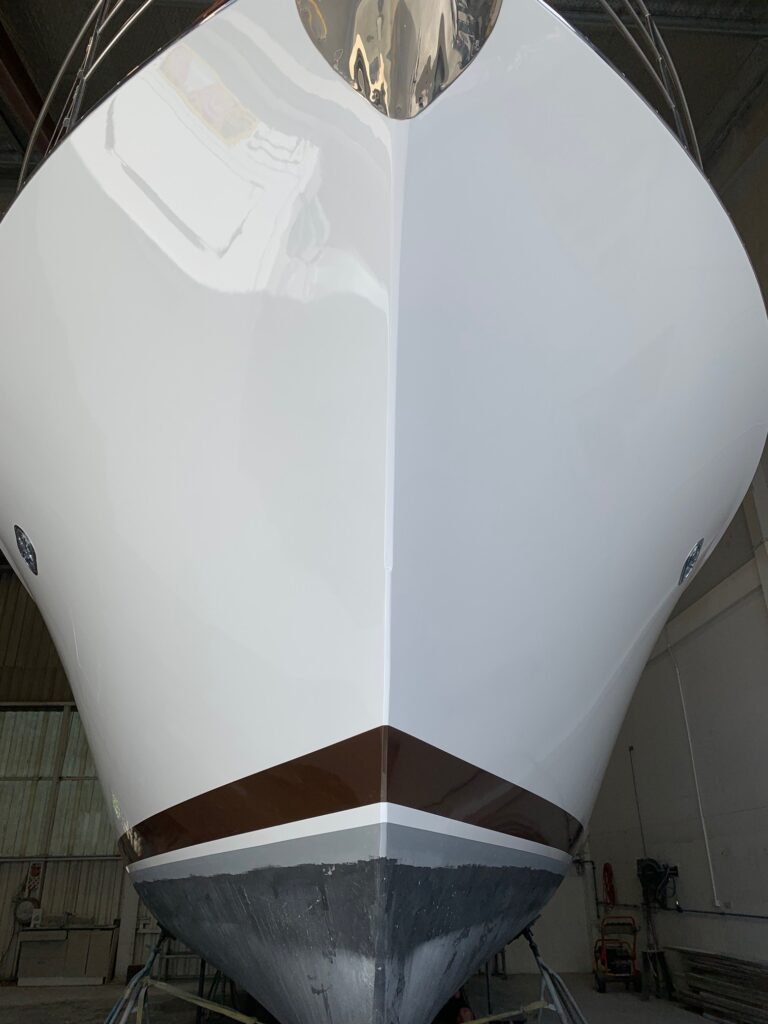
PARTIAL TOUCH-UP: A partial touch-up is a practical solution for boat owners dealing with small chips, scratches, scuffs, or other minor cosmetic imperfections rather than widespread wear. It typically involves lightly sanding or feathering the damaged area, filling or fairing any minor defects, and then applying colour-matched paint to blend the repair into the surrounding surface. Because only a small portion of the hull or topsides is being repainted, this approach is far more affordable and quicker than a complete repaint, and it can often be carried out while the boat remains on the trailer or in the marina.
However, achieving a seamless finish can be challenging, especially on older boats where the original paint has faded or oxidised over time. Even when using the correct colour code, matching the gloss level and tone of aged paint can be difficult, sometimes requiring additional blending or polishing to disguise the transition. Despite these challenges, partial touch-ups are a great way to tidy up your boat’s appearance, extend the life of the existing paintwork, and address minor issues before they worsen, making it a popular option for maintaining overall presentation between major repaints.
GELCOAT REPAIR (FIBREGLASS): For fibreglass boats, gelcoat repair and polishing is often the most cost-effective way to restore a clean, glossy appearance without committing to a full repaint. Gelcoat is a thick, durable finish designed to withstand years of sun, salt, and abrasion, but over time it can lose its shine, develop oxidation, or show minor scratches and stress marks. In many cases, these issues are only surface deep. The restoration process usually begins with a careful assessment of the gelcoat’s condition, followed by wet sanding or compounding to remove the outer layer of oxidation and smooth out imperfections. Deeper chips, cracks, or gouges can be filled using colour-matched gelcoat repair compounds, which are then shaped and blended into the existing surface.
After repairs, the hull is polished and buffed to regain its original gloss, often finishing with a protective wax or sealant to slow future oxidation and enhance UV resistance. This approach is significantly cheaper and less invasive than repainting and preserves the boat’s factory finish, which many owners prefer for authenticity and long-term value. The results can be dramatic (dull or chalky hulls can look almost new again). Still, the restoration’s success depends heavily on the technician’s skill and the remaining thickness of the original gelcoat. For fibreglass boats with only moderate wear, a professional gelcoat repair and polish can be one of the most effective upgrades to refresh and modernise the vessel’s appearance.

VINYL WRAPPING: Marine-grade vinyl wrapping has become an increasingly popular option for boat owners looking to refresh or completely change the appearance of their vessel without the cost and downtime associated with a full repaint. Using high-quality, UV-resistant vinyl, installers can cover the hull or topsides in almost any colour or finish (from solid hues and metallics to carbon fibre textures and custom graphics). With proper surface preparation, vinyl wrap adheres well to both aluminium and fibreglass, making it a versatile choice across many boat types.
One of the most significant advantages of wrapping is the speed of transformation. A boat can go from faded or outdated to modern and eye-catching in just a few days. The wrap also serves as a protective layer, shielding the underlying paint or gelcoat from UV exposure, minor abrasions, and general wear. Because the material is removable, owners can revert to the original finish or update the look later, making it especially appealing for branding, sponsorships, or frequent style changes.
However, vinyl wrapping does have limitations. It cannot fix existing dents, scratches, or structural flaws; any imperfections beneath the surface will typically show through the wrap. Extra care is required when water blasting and/or lifting larger vessels in travel lift slings, as vinyl wraps can be damaged during these processes. It is advisable to inform boatyard travel lift operators that your vessel is vinyl wrapped, as a wrap is not as hard-wearing as paint. If damaged (such as by scratching or tearing) the wrap will need to be repaired or replaced. Expert installation is essential, as seams, curves, and edges require skill to avoid lifting or bubbling, especially in marine environments.
High-quality wraps can last approximately 3-5 years with proper care. For many boat owners seeking an affordable, customisable, and reversible facelift, especially on aluminium trailer boats, vinyl wrapping offers an impressive and increasingly common alternative to traditional painting.
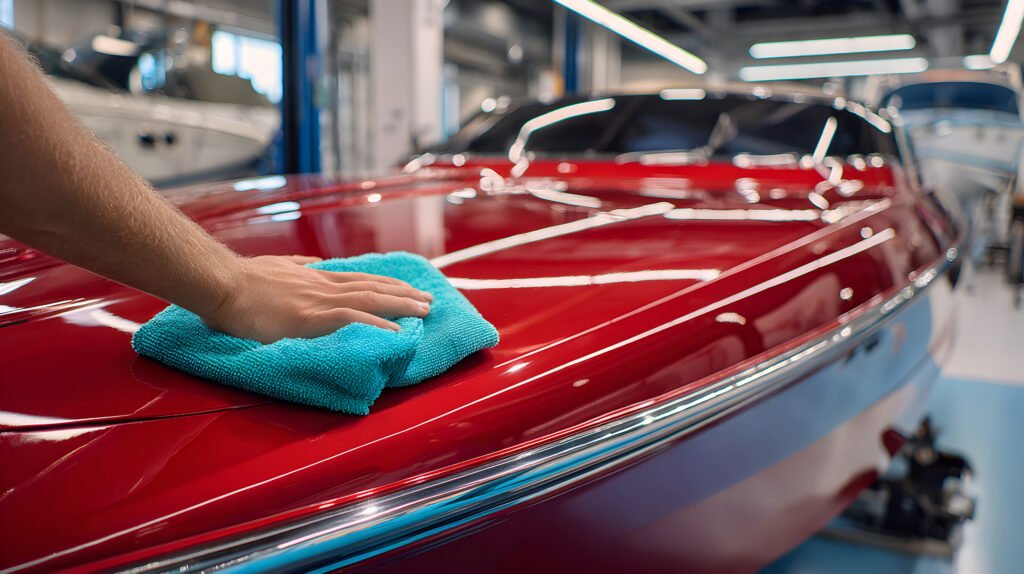
POLISHING: Polishing is an excellent way to restore a fibreglass boat’s appearance when the hull is structurally sound but shows signs of surface wear, such as oxidation, minor scratches, or dull gelcoat. It is particularly suitable for vessels where the gelcoat remains intact, with no deep cracks, blistering, or structural issues, where the colour has faded, but the underlying hull is still in good condition. Polishing can also be a practical choice when budget or time constraints make a full repaint or vinyl wrap impractical, offering a significant visual improvement at a fraction of the cost and downtime.
The professional polishing process begins with a thorough wash and decontamination to remove salt, dirt, and any old wax or sealant. This prepares the surface for cutting and compounding, during which machine-polished abrasives are used to remove oxidation, light scratches, and other superficial blemishes. Once the surface is smooth, finer compounds are applied to restore a high-gloss finish, followed by the application of a protective wax, sealant, or modern ceramic coating to lock in the shine and provide additional UV and saltwater protection.
Well-maintained polishing can last between six and twelve months, depending on sun exposure, saltwater contact, and frequency of use. Routine maintenance is essential to keep the hull looking its best. This includes rinsing after each outing, using marine-safe cleaners, and reapplying wax or sealant as needed. While polishing can improve a boat’s appearance, it has limitations: it cannot repair structural damage, deep gelcoat cracks, or deteriorating paint, which would still require repainting or wrapping. For boats in good condition, however, professional polishing offers a fast, effective, and visually striking way to rejuvenate the vessel without the expense and time of a full repaint.
Ongoing Maintenance Tips: To keep your boat looking its best after a repaint, wrap, or polish, regular maintenance is essential. Always rinse off saltwater after each outing to prevent corrosion and staining, and use marine-approved cleaners to remove dirt, grime, and other contaminants without damaging the finish. Regular waxing or polishing helps preserve the gloss and provides a protective layer against UV exposure and salt. Additionally, it’s important to routinely inspect edges, seams, and through-hull fittings for signs of wear, corrosion, or other damage, addressing any issues promptly to maintain both appearance and safety.
Who Provides These Services in NZ?
Marine Spray Painters: Experts in full resprays and polyurethane systems.
Boatyards & Rigging Services: Often offer painting, polishing, and haul-out services.
Composite & Gelcoat Specialists: For fibreglass repair, fairing, and gelcoat finishing.
Aluminium Specialists: Experts in surface prep, primers, and corrosion protection.
Signwriters & Wrap Installers: Professional marine vinyl wrapping and custom graphics.
- Chandlery or Marine Supply shops: offer DIY and Trade products for refurbishment and maintenance.
Choosing a Contractor
When hiring tradespeople for boat maintenance or repainting, it’s essential to do your homework to ensure quality results. Start by looking for contractors with specific experience working on your type of vessel, whether fibreglass or aluminium, and ask to see a portfolio of completed projects along with references from previous clients. Confirm that all materials and processes meet technical and environmental standards; for example, EPA-approved antifouling products, Safety Data Sheets for paints, and environmentally responsible disposal of hazardous waste. Request detailed, itemised quotes that clearly outline the scope of work, costs, and any additional charges, and discuss the project timeline, including access to haul-out facilities if required. Finally, clarify warranty coverage and aftercare advice to protect your investment and ensure the finished work remains in top condition. By taking these steps, you can confidently select a contractor who delivers professional results while meeting both technical and environmental standards.
Final Thoughts
Repainting, polishing, or wrapping your boat is an investment in protection, performance, and pride-of-ownership. Choosing the right approach depends on the condition of your hull, your budget, aesthetic goals, and long-term plans. The best results come from honest evaluation, clear specifications, and tradespeople with marine-specific experience and proven methods. Whether you choose a high-gloss polyurethane finish, a professional polish, or a bold vinyl wrap, a refreshed boat is not just visually appealing; it’s safer, more efficient, and ready for years of adventure on New Zealand and Australian waters.
A couple of Refit/Repaint True Life Experiences:
How International® Paints helped a couple transform a ‘Battered’ 62ft Vessel into a Striking ‘Supernova Pink’ Catamaran in Just Four Weeks
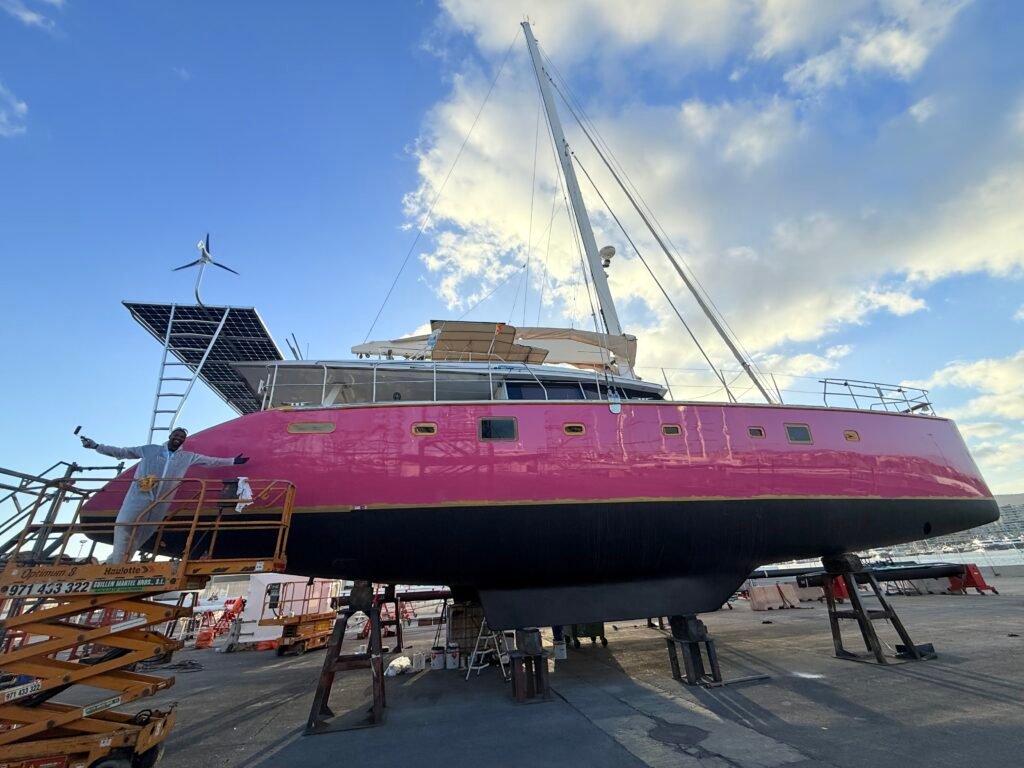
When Darcy Hinds and Yvette Bretz met on an Australian beach in 2019, they made an unexpected promise on their third date: one day, they would sail around the world together. Fast forward to today, and the couple are well on their way to fulfilling that dream. Earlier this year, Darcy and Yvette took on their biggest challenge yet. After purchasing a 62ft catamaran in Portugal, they soon discovered extensive hidden damage beneath its ageing vinyl wrap. “We couldn’t believe the state of the boat when we peeled back the vinyl,” Darcy said. “We knew we had a massive job on our hands, and that the wrong products could make it even worse.”
With the yacht hauled out in Mallorca, time was critical. Yard fees ran into the thousands each week, and as a self-funded project, the couple needed a coatings system that would save time, reduce costs and deliver professional results – fast.
Having previously used Micron® 99 by International® with outstanding results, they turned to AkzoNobel for support. They were connected with Jason Hill, Technical Service Representative, whose guidance proved vital in completing a full topside and underwater restoration within a tight four-week window. Jason helped the couple prioritise tasks, identify which areas could be salvaged, and plan an efficient workflow to avoid costly delays. As old repairs were stripped back, early blistering was revealed in several areas. To stabilise these sections, Darcy applied Gelshield® 200, a fast-drying epoxy primer he described as “crucial” to meeting the deadline.
Below the waterline, the lack of records for the existing antifouling system led them to choose Primocon®, a quick-drying, one-part primer that eliminated the need for full removal, saving days of sanding. For long-term protection, they applied Micron 99, delivering multi-season antifouling performance and reducing the need for frequent haul-outs.
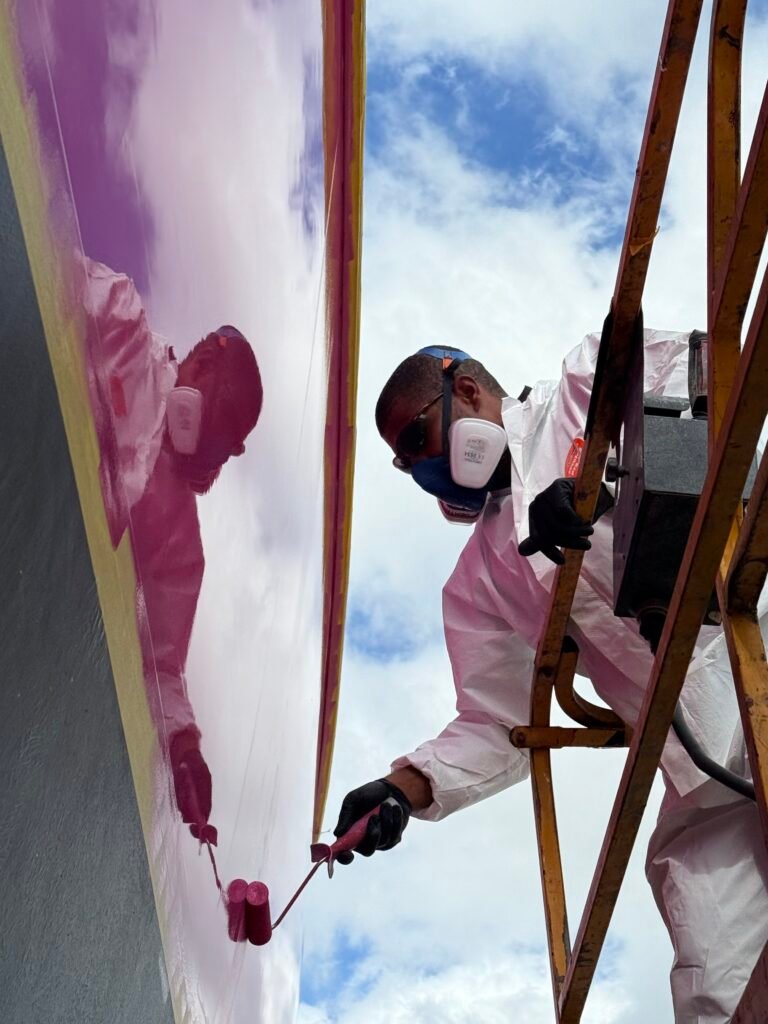
The final stage was the most dramatic. Using Perfection® Pro, International® created a custom Supernova Pink finish inspired by the couple’s previous boat. “I was shocked by the shine,” Darcy said. “The reflection you could see from a rolled application was unbelievable, it came out phenomenal.”
Despite being applied by roller rather than spray, the gloss finish impressed onlookers in a yard filled with superyachts, with workers stopping to admire the result. Online, viewers struggled to believe the finish hadn’t been sprayed.
The entire refit was completed in just four weeks. Darcy and Yvette estimate that the technical support they received saved at least a week of work, and thousands in yard fees, enabling them to continue their voyage toward Portugal, Gibraltar, and the Canary Islands ahead of their first Atlantic crossing. Now restored, Sailing Supernova has launched a charter business in the Caribbean, with long-term plans to continue west and eventually complete a full circumnavigation, fulfilling a promise made on a beach years earlier.