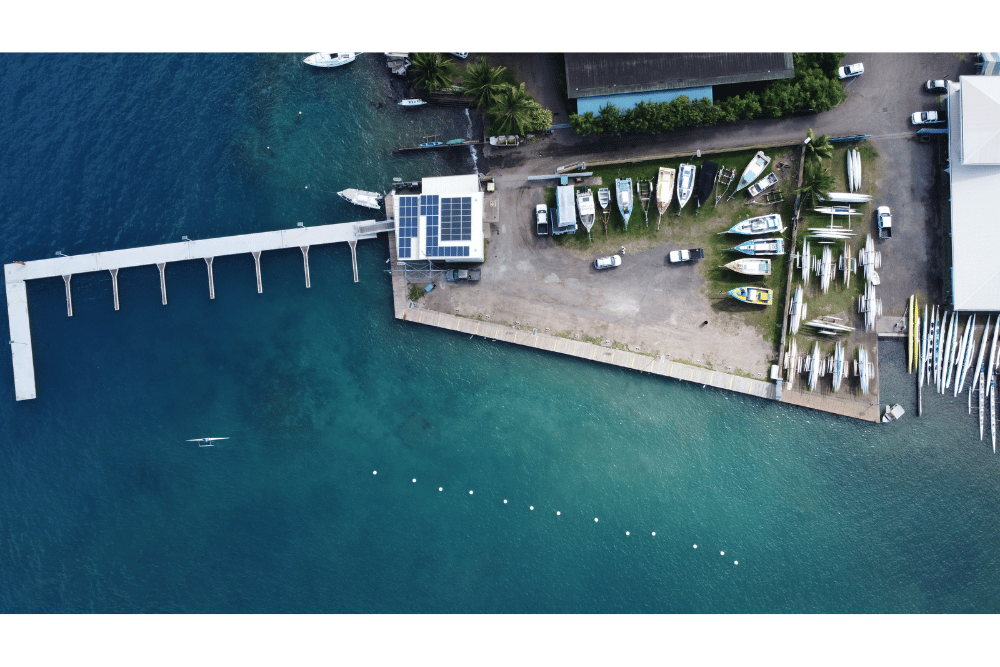

SF Marina has completed two floating concrete dock systems in Tahiti, delivering modern working-waterfront infrastructure for fishing cooperatives in Vai Tupa Bay (Faa’a) and Port Papawain (‘Aruē). Nestled among forested mountains that slope down to soft white and black sand beaches and calm turquoise lagoons, these communities are known for their warmth, hospitality, and vibrant music and dance traditions. The projects were developed in coordination with local municipalities and the Direction des Ressources Marines to support traditional “Poti mārara” coastal fishing vessels with durable, low-maintenance berthing solutions engineered for long-term performance, helping preserve both local livelihoods and maritime heritage.
The installations consist of floating concrete pontoons measuring approximately 83 meters by 3 meters and 99 meters by 4 meters. Each system incorporates aluminum finger piers and gangways and provides organized berthing for 20 to 24 commercial fishing vessels per location. Designed to improve vessel access and dockside safety while maximizing usable harbor space, the layout also reflects sensitivity to the unique local setting, integrating functionality with the natural coastal environment that has long supported Tahiti’s fishing communities.
Tahiti presents a unique marine environment. Situated at an amphidromic point, or tidal node, the island experiences minimal lunar tidal influence and a predictable solar tidal variation of roughly 70 centimeters. The dock systems were engineered specifically to accommodate these conditions through a heavy-chain mooring configuration secured to precast concrete anchors. This approach allows controlled vertical movement while maintaining structural stability and minimizing impact on currents and seabed conditions – a crucial factor in delicate island harbors.
The concrete pontoons were manufactured at SF Marina’s production facility in Wallhamn, Sweden, and transported by ship to Tahiti for final installation. Delivering precision-engineered floating concrete structures across hemispheres reflects the company’s established expertise in executing complex marine infrastructure projects in remote coastal regions.
The use of floating concrete construction provides long service life, structural resilience, and reduced maintenance requirements compared to conventional fixed-pile systems, making it particularly well suited to working waterfront applications where durability and lifecycle performance are essential.
The docks were officially inaugurated in May 2024 by Taivini Teai, Minister of Agriculture and Marine Resources, highlighting continued investment in strengthening Tahiti’s commercial fishing sector and harbor infrastructure while supporting local communities and their maritime traditions.