EXCEPTIONAL VALUE, LUXURY BOATING
The Lannika 68, extraordinary value in today’s luxury boating market.
It wasn’t that many years ago that “Made in China” was synonymous with poor quality, unreliability and lack of backup service. That perception has changed dramatically, and one only has to observe the preponderance of Chinese produced vehicles on New Zealand and Australian roads to understand that consumers of high-tech, expensive transport no longer harbour doubts about Chinese manufactured products.
While it is already true of the automotive industry, it is fast becoming true of the marine industry as well. Boats built in China by reputable manufacturers are approaching and often surpassing well-known brands from Europe, North America, Australia, and of course, New Zealand.
For example, one only has to consider credible names like Kingship, Nordhavn, Cheoy Lee, Selene, Passport and Aquila Yachts, to appreciate that your buying decision may result in the fact that your next luxury craft will be built in China.
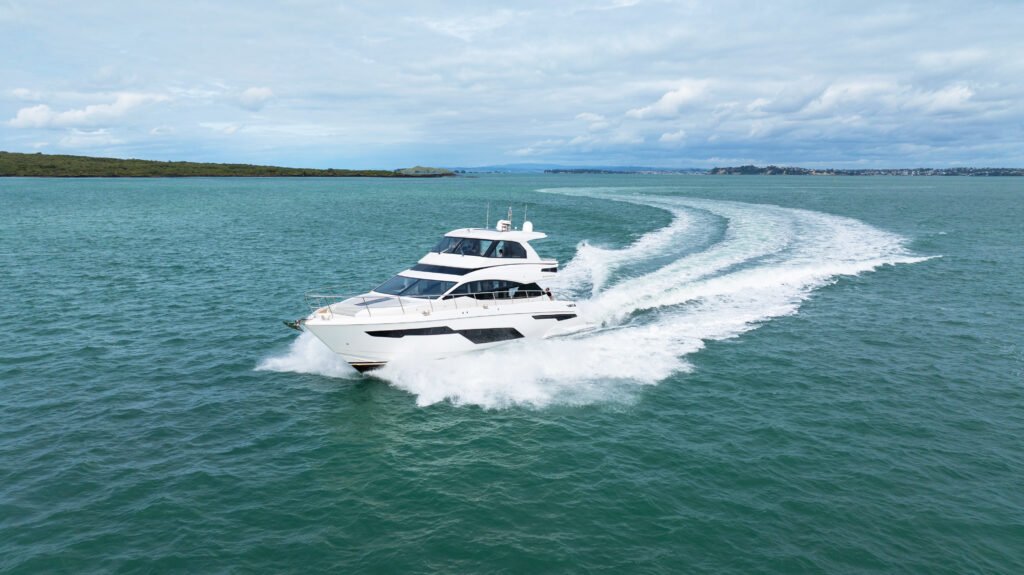
At the recent Auckland Boat Show one particular craft caught the attention of many prospective buyers. This was the Lannika 68 motor yacht which arrived from Shenzhen, Southern China mere days before the show opened. Although the Viaduct Harbour was filled with high quality craft from New Zealand, Australia and Europe, the Lannika 68 still managed to make an impression.
It was this craft, that only a couple of weeks after the show closed, Pacific Powerboat was invited to sea trial and review. With many years’ experience in China as Sales Manager for Maxwell Winches and having visited most of the Chinese boat building yards during this time, Doug Dukeson, the editor of Powerboat Magazine, asked me to write this article.
On board, we had Ronan Matthew, a licensed skipper who doubles his duties with Auckland based Explore Group, Will Wang, the NZ General Manager of Lannika Yachts, along with his two crew members, and additionally our photographer/videographer, the crew from Pacific Powerboat Magazine and me.
EXPERIENCE
Will, originally from China, has lived in New Zealand since 2010 and, after high school at Takapuna Grammar, graduated in Marine Technology at UNITEC and has worked in the marine industry since 2014. Prior to establishing Lannika in New Zealand, Will was involved with several well-known international boat brands, including the likes of Grand Banks, Absolute, Azimut, Maritimo and Riviera.
Now, working from facilities in the Hobsonville Marine precinct, his team of professional contractors carry out a broad range of marine work, from gel coating, painting, fibreglass work, bright work, carpentry, refits, repairs, and maintenance. And, of course, after-sales service for Lannika Motor Yachts, all adding up to credibility and trust.
OUT ON THE WATER
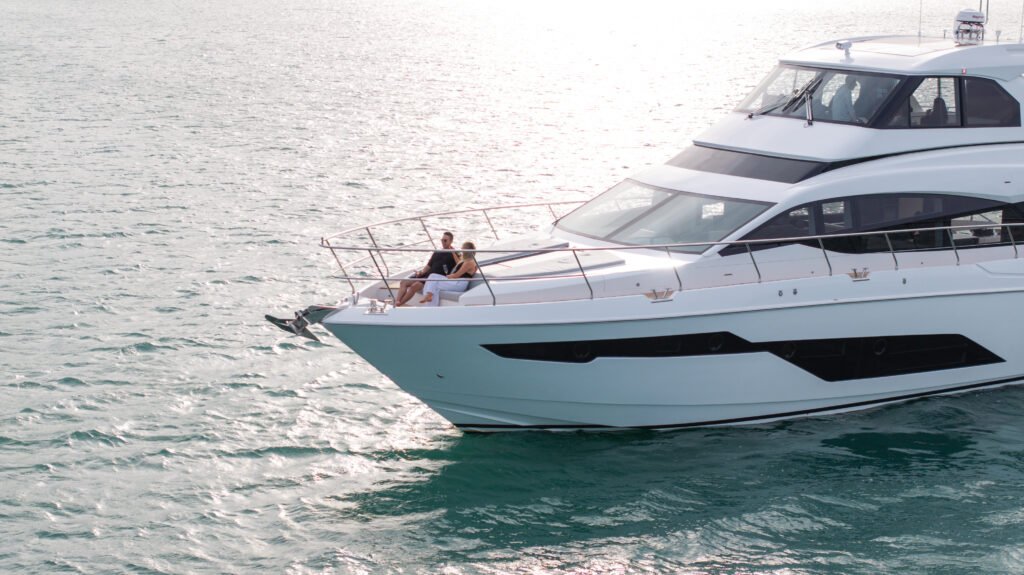
We had been keeping an eye on the weather for several days before the sea trial, as a tropical cyclone was forecast to hit northern New Zealand and were keeping fingers crossed that a favourable weather window would present itself on the day of the boat test. Fortuitously, the weather gods smiled upon us, and although a brisk easterly wind was experienced, the day was fine and lightly overcast. One might say perfect conditions to do a ‘real world’ boat test of a craft this size. The Lannika 68 has an LOA of 20.74 metres, a beam of 5.6 metres and displaces 38.8 tons.
Leaving the Viaduct Harbour, it was decided to put the Lannika 68 through its paces off the western side
of Rangitoto Island, which we figured would give us some protection from the wind for drone videoing and, at the same time, allow us to experience a moderately running sea, lumped up by wind and tide coming through both the Rangitoto and Motukorea channels.
PERFORMANCE & HANDLING
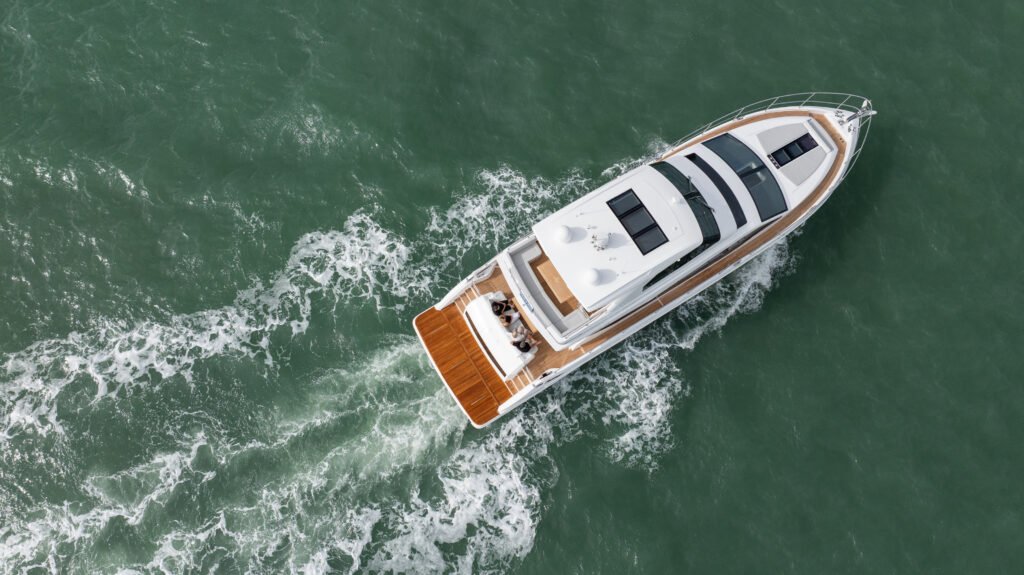
Motoring out of Auckland Harbour at a leisurely and comfortable 10 knots, the craft seemed to be travelling only about 2/3rds of that speed, such was the comfort of the ride, even as we punched into a particularly lumpy sea, telegraphing the storm that would soon hit Auckland.
This gave me a chance to chat with Ronan, our skipper, in order to discuss the boat’s performance and suitability for Antipodean markets. Ronan was quite familiar with the craft, being responsible for the initial sea trials earlier in the month.
As I listened to Ronan, I asked him if he would be willing to write me a summary of his impressions. “No problem”. He replied, “I’ll shoot something through to you”. What better way to get an objective opinion, separate from my own impressions?
So, with minimal editing, here is what our captain had to say.
“As requested, here are my observations from a skipper’s perspective, along with the fuel consumption figures and performance notes:
Low-Speed Cruising (Maximum Economy):
If time isn’t a factor, the most economical speed I found is around 7 knots. At this pace, fuel burn drops significantly to approximately 15–20 litres per hour per engine, making it a very efficient option for longer passages where speed isn’t critical.
Cruising Speed (Economical):
The ideal cruising speed sits around 10–11 knots at approximately 1600 RPM. At this speed, the boat trims nicely and feels very balanced in the water (noting this will vary slightly depending on the vessel’s weight and conditions). Fuel burn was in the range of 40–50 litres per hour per engine, which I’d consider quite reasonable for a vessel of this size.
Medium to Higher Cruising Speed (Moderately Economical):
For a faster cruise, the sweet spot seemed to be around 18 knots at roughly 1950–2000 RPM. At this range, fuel consumption increased to about 90–100 litres per hour per engine. The boat still feels composed here, with good responsiveness and plenty of power available.
Top Speed (Uneconomical):
The maximum speed I’ve achieved so far is around 22 knots at approximately 2300 RPM. This is significantly less economical, with fuel burn climbing to around 130 litres per hour per engine, with only a modest increase in speed. In my view, this isn’t a practical operating range unless absolutely necessary”.
Skipper’s General Impression:
“Overall, I’ve been genuinely impressed with the vessel. It has exceeded my expectations in several areas. The handling is very good, she is predictable and responsive, and there’s plenty of power on hand when needed.
The bow and stern thrusters are strong and make close-quarters manoeuvring fairly straightforward.
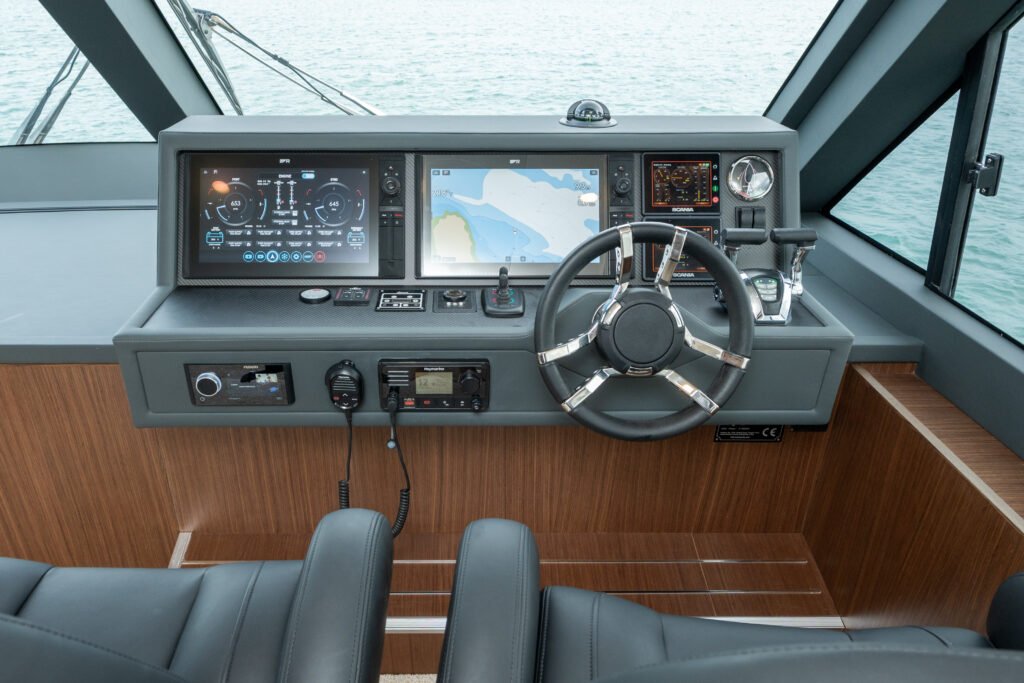
Build quality appears to be solid throughout, and the Raymarine navigation package is a strong inclusion, offering a user-friendly and capable system.
The best way I’d summarise the Lannika 68 in comparison to some of its competitors, is that it comes in at roughly half the price but delivers well over half the capability. It represents strong value in the current market.”
Areas for Improvement:
“From a recreational boating perspective, there are a few features I think I would incorporate at the helm, which would add significant value in future models:
• Autopilot
• Virtual anchor functionality
• Anchor winch controls at the helm
• A camera system to assist with berthing operations
These additions would make the vessel even more accessible and user-friendly for owner-operators”.
Would my subjective impressions as a marine journalist align with Ronan’s objective views as a seasoned ship’s captain? Let’s find out.

BACKGROUND
But first, a bit about this boat and why it has been targeted specifically for the New Zealand and Australian markets.
Lannika Yacht Limited is a relatively new company incorporated and registered in New Zealand in February 2025. It operates as part of a broader international network linked to its parent entity, Shenzhen Lannika Yacht, demonstrating its cross- border, global involvement in the luxury yacht industry. New Zealand-based Will Wang (General Manager), in collaboration with the Lannika boat yard in Guangdong, imports these luxury craft, which have been built in China since 2013.
EXTERIOR
The Lannika 68 is designed by the renowned British designer, Bill Dixon of Dixon Yacht Design, with interior styling by Design Unlimited. Both the naval architecture and interior design are aimed at creating a modern, luxurious and functional motor yacht.
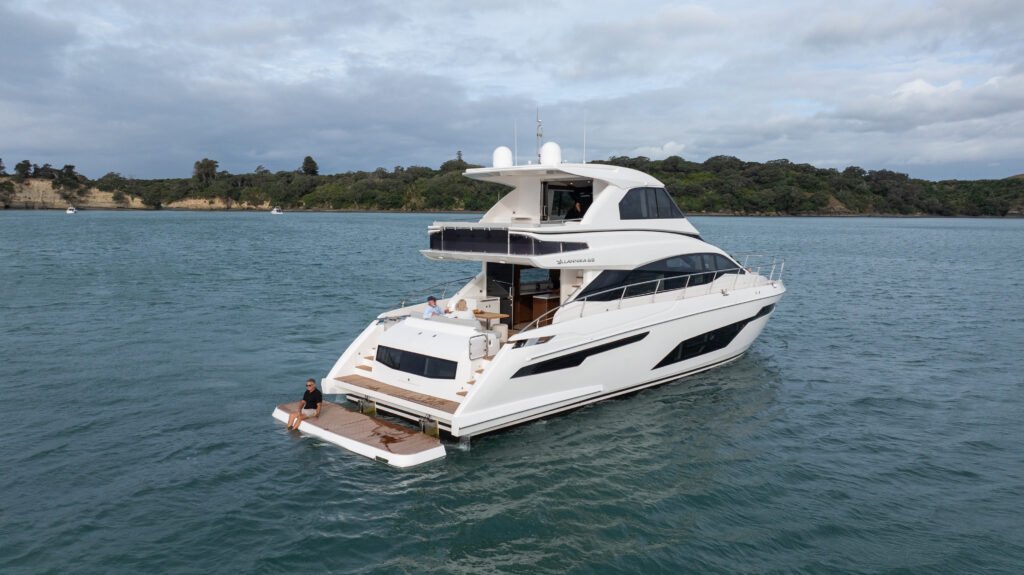
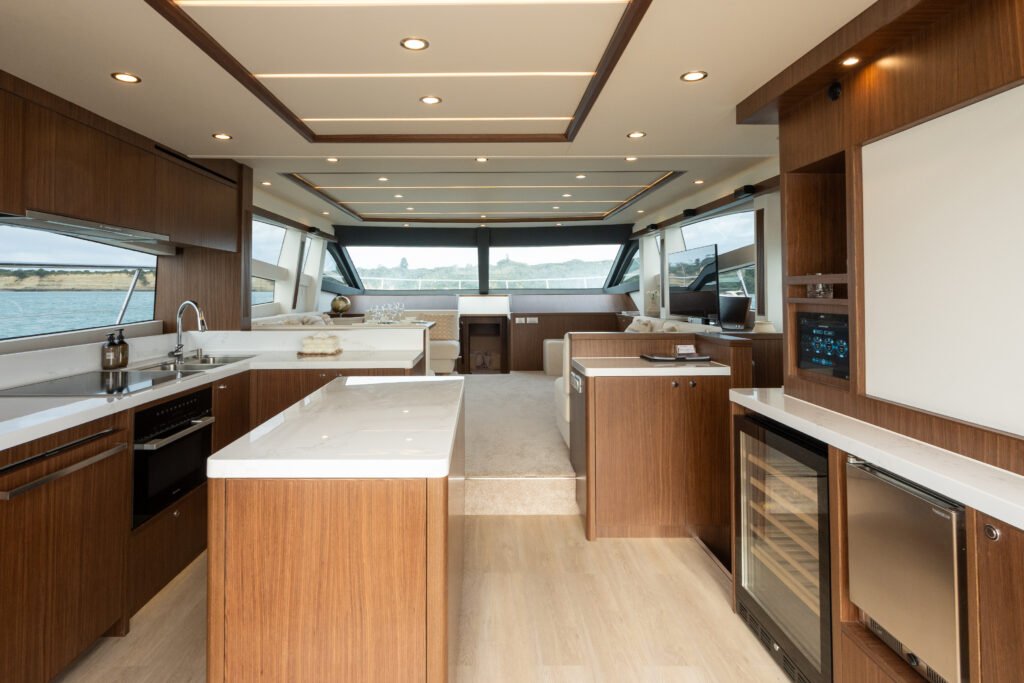
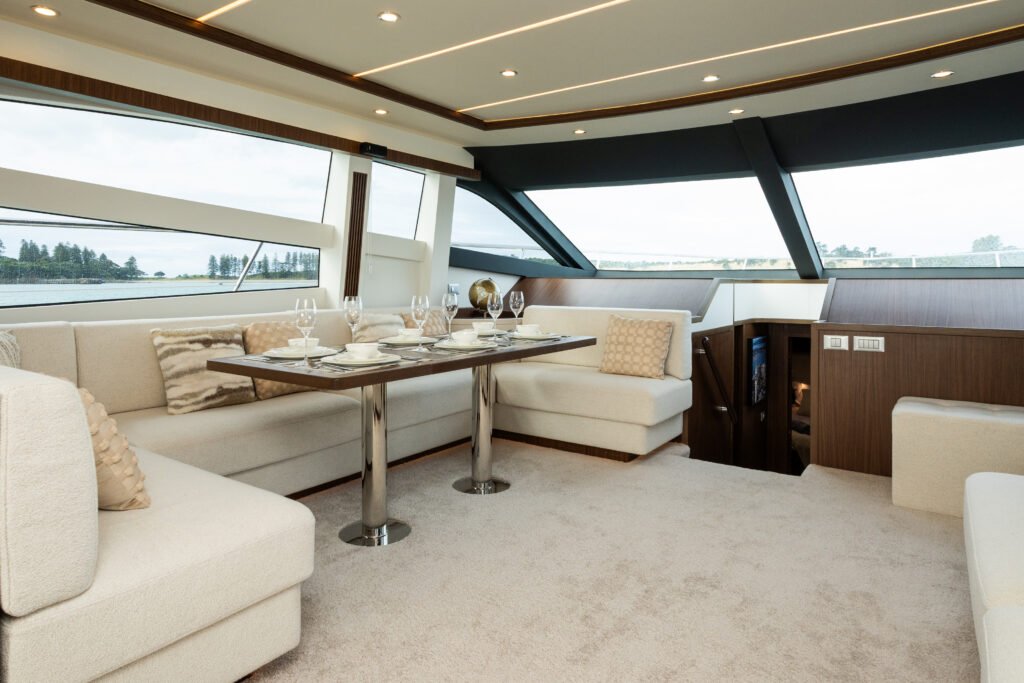
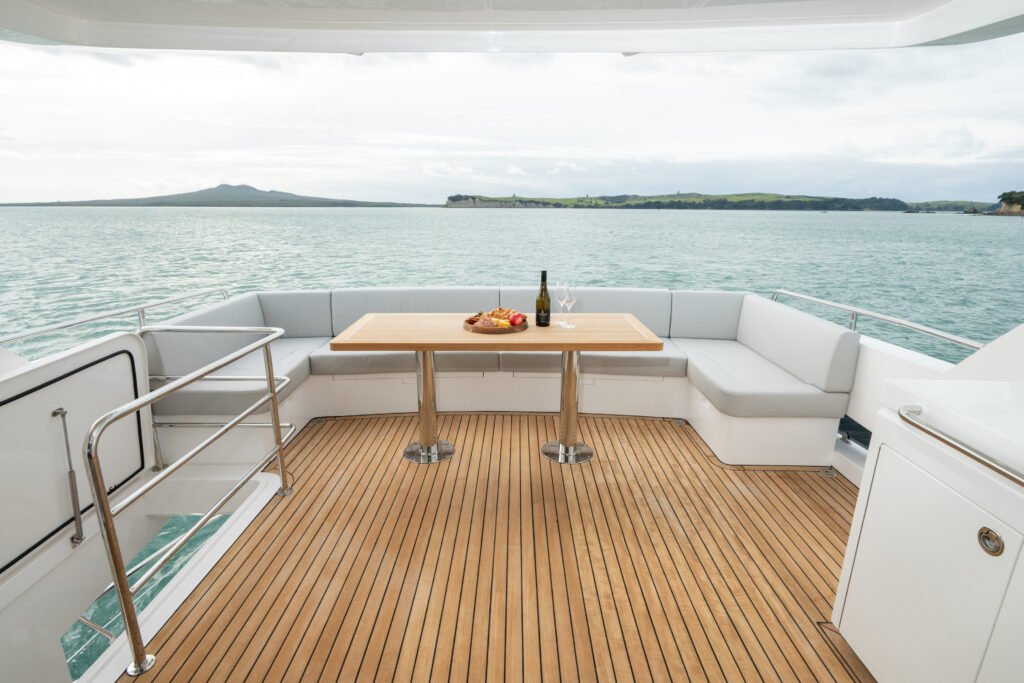
The salon space transitions smoothly aft through the well laid out galley and into the spacious and carefully thought-out stern cockpit, providing additional, open air entertainment space. In combination, all three areas provide a vivacious ambience conducive to entertainment and enjoyment.
The galley, situated between the main salon and the aft cockpit, is a fully equipped modern kitchen, designed for effortless meal preparation, while ensuring the hosts can enjoy the company of their guests and family while preparing meals.
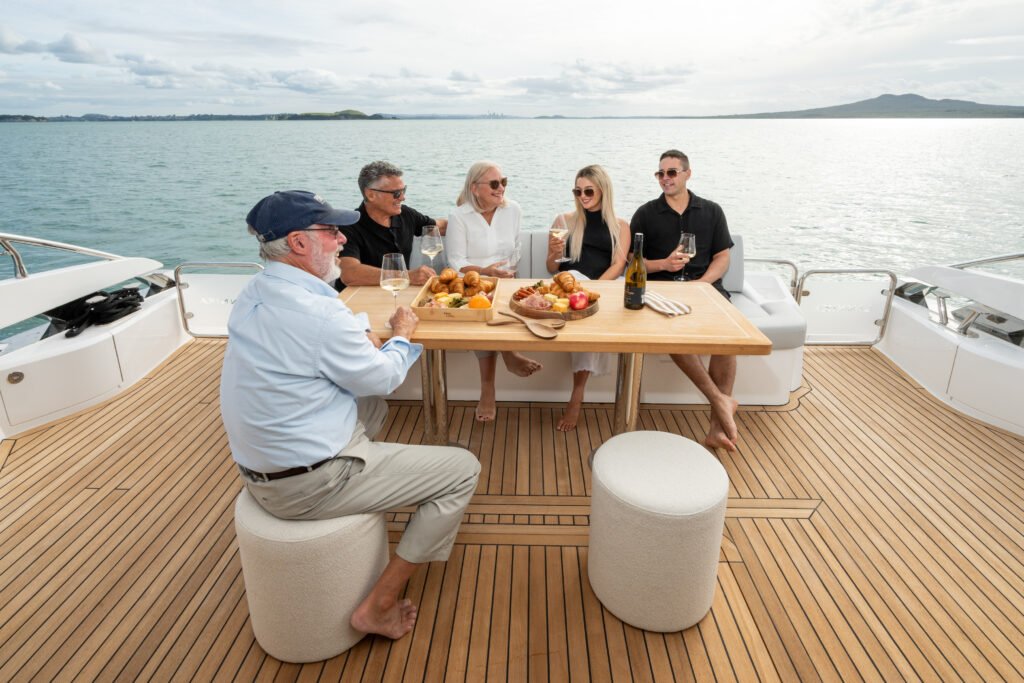
Wide, S/S framed sliding doors provide access to the stern cockpit area which has been custom designed to appeal to Kiwi and Aussie customers.
Leading off from the main salon, two separate stairways connect the lower private accommodation areas. One is centrally located and the other, at the aft, starboard end of the salon, both giving access to all three comfortable staterooms and the laundry room, while enhancing ease of movement throughout the boat. Descending the central staircase from the salon, you enter the expansive forward (bow) stateroom. Should you decide to descend to the accommodation level via the other stairway, you will gain separate access to the guest twin berth starboard cabin as well as to the amidships located VIP stateroom.
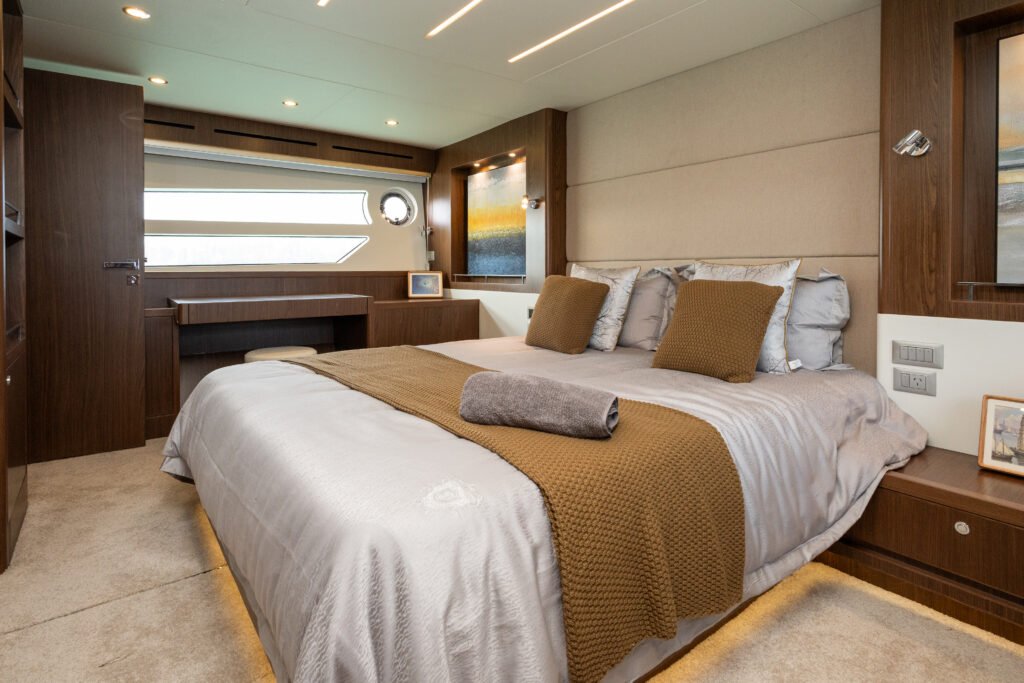
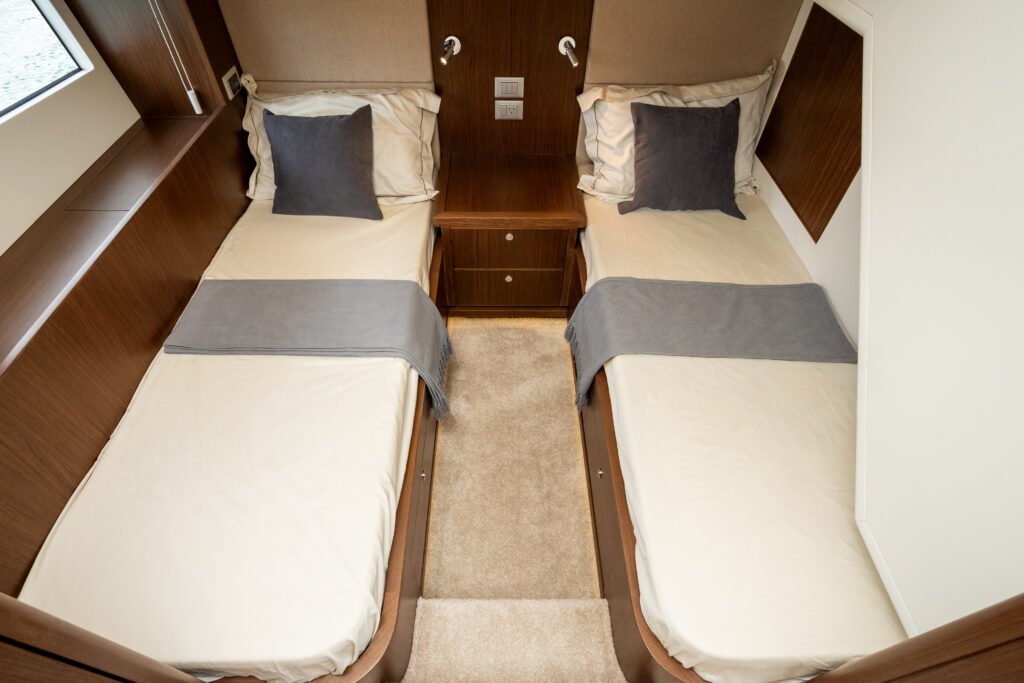
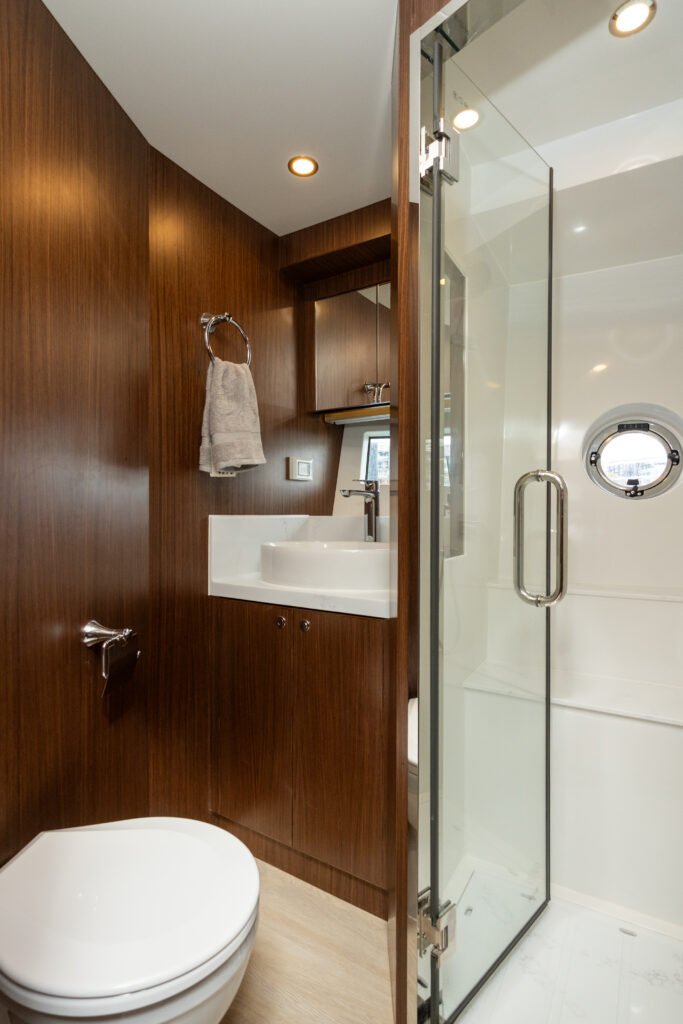
In total, there are three separate bathrooms, all with their own showers and modern fixtures providing privacy and convenience for all on board.
Rounding things off, an exploration of the fly bridge and helm station is in order.
Ascending the starboard stairway leading up from the stern cockpit, through a watertight, hydraulically stayed, clear hatch, one finds oneself in the expansive fly bridge/ helm station area of the vessel.
Two very comfortable ‘captain’ chairs provide good line of sight while seated underway and allow for full, ergonomic access to all controls. The only thing I’d add to Ronan’s ‘areas of improvement’ comments about the helm (and I am being a bit petty), is the addition of cup holders. Let’s face it, we Antipodeans do like to enjoy a drink while enjoying our voyaging, whether it be a hot cup of coffee or something more libatious. Having pointed this out, in conversation with Will Wang, he commented that cup holders could be easily added upon a customer’s request.
Additional feedback from the recent Auckland Boat Show has already been passed back to the factory, with adjustments being made to boat number two, which is currently being built. It is interesting to note that a Lannika 68 can be finished in 10 to 14 months, depending on the extent of customisation.
SUBJECTIVE IMPRESSIONS
You may recall that earlier in this article, I asked the rhetorical question as to whether my subjective impressions would align with the skipper’s objective evaluation of the Lannika 68. Well, mainly yes, but with a few niggles and positives he didn’t mention.
I thought the carpeting was a bit on the cheap side, but when I pointed this out to Will, he said; “Yes we agree, but we only fitted Chinese-supplied carpet at the yard because we needed the boat in New Zealand in time for the Boat Show, fortuitously arriving with only a few days to spare. In future, we will install higher quality, locally manufactured carpet”.
On our way back to Viaduct Harbour, while sitting in the comfortable stern cockpit, with a glass of wine on the table in front of me, I noticed a slight vibration. I discussed this with Ronan and Will. They acknowledged the minor issue and concluded that one of the engine shafts was likely slightly misaligned and would be checked and remedied. To be fair, the boat, with just 11 hours on the clock, had only just made its way into the country and had undergone initial sea trials only the day prior. I’m sure all issues will be resolved when full sea trials are completed.
Overall, having spent a lot of time on similar craft during my 22-year tenure at Vetus-Maxwell, I will admit that the Lannika 68 exceeded expectations. As for my minor grizzles, every new boat has teething issues, but based on my discussions with Will and in tune with his aim to compete in a market of high expectations, I suspect that the Lannika 68 will appeal to potential buyers, especially at the price point of NZD $3,800,000.00. Specifically, when stacked up against similar vessels from other manufacturers.
SUMMARY
Although the New Zealand entity itself is newly established, the Lannika brand is positioned as
an emerging player in the global luxury yacht sector, built around a vision of redefining modern yachting through innovation, craftsmanship, and bespoke design. The brand emphasises advanced marine engineering combined with personalised design and aims to deliver yachts that reflect individual lifestyles rather than standardised production models.
Every Lannika yacht can be fully customised, from layout and design elements to finishes and materials, ensuring that an individual’s particular vessel reflects their own unique character and lifestyle. In Lannika’s own words, their curated approach ensures a collaboration throughout the design process in order to adapt to the customer’s distinctive requirements, guaranteeing that their Lannika vessel is not only luxurious, but truly one-of-a-kind in every detail.
SPECIFICATIONS
LOA 20.74m
Beam 5.6m
Fuel Capacity 5500L
Fresh Water Capacity 900L
Black Water Capacity 430L
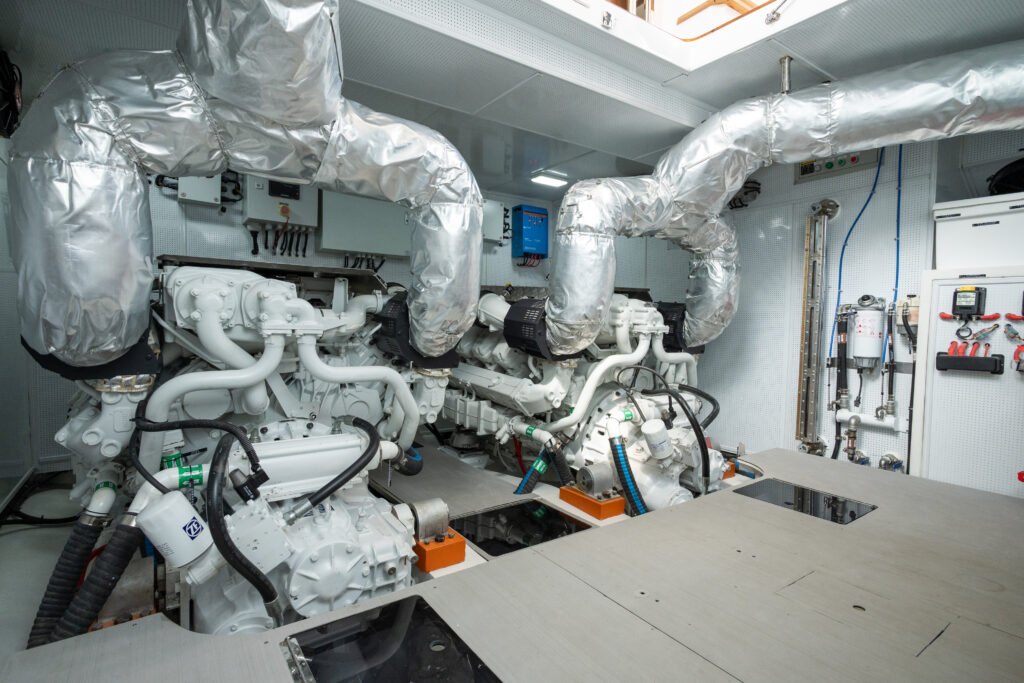
Engines 2 x Scania DI 16 900 HP
Maximum Speed 24 knots
PERFORMANCE DATA
RPM KNOTS L/H RANGE
900 7 35 1100
1600 7 35 642
2000 18 190 521
2300 22 260 465